
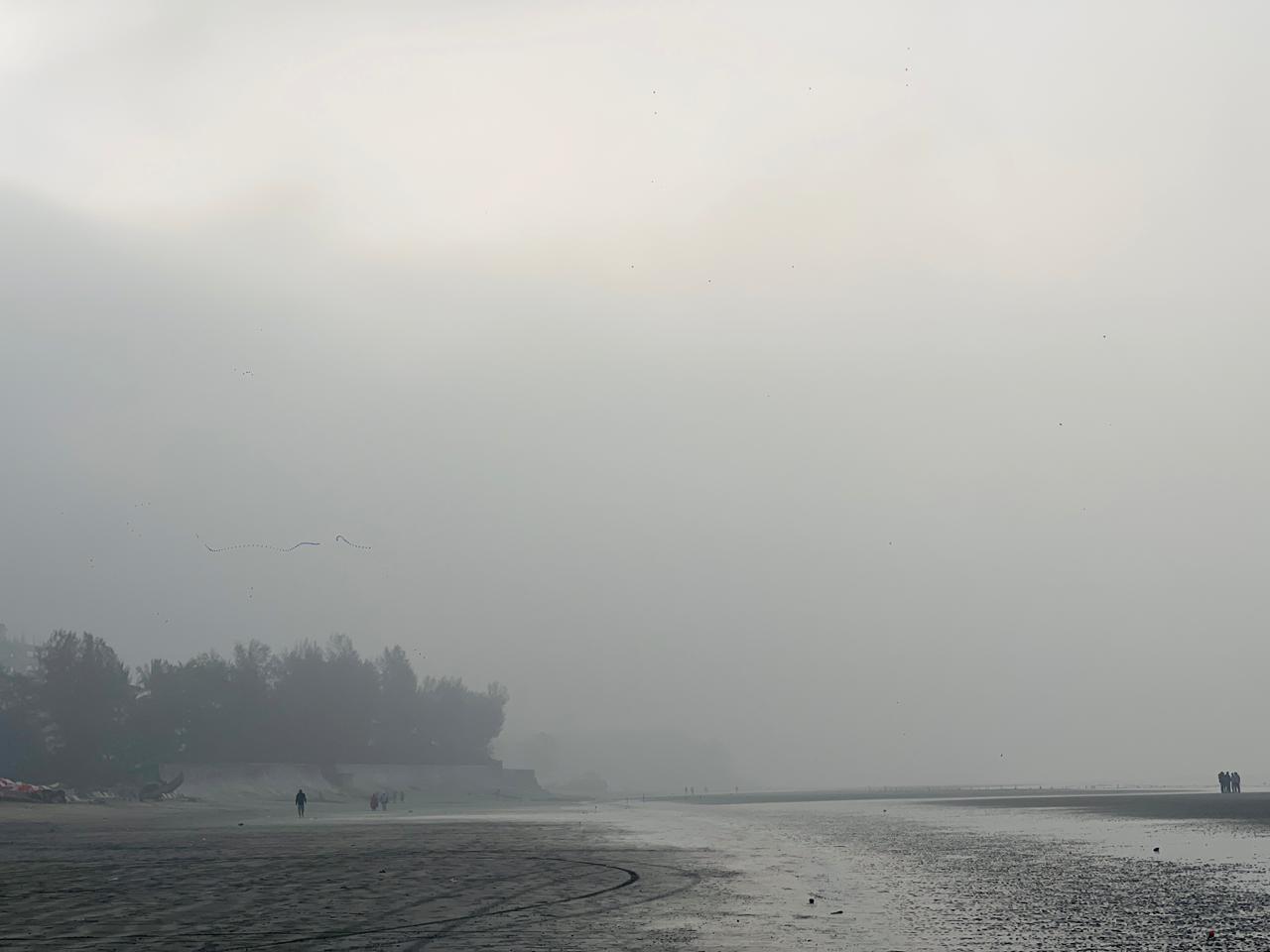
As the third week of Poush unfolds, winter has tightened its grip on the seaside city of Cox’s Bazar. Dense morning fog, chilly winds, and the calm blue sea together signal the season’s firm arrival.
According to the Cox’s Bazar Meteorological Office, the ongoing cold spell has pushed the district’s minimum temperature down to around 13 degrees Celsius.
On Tuesday, the lowest temperature was recorded at 13.5 degrees Celsius.
The sudden decline in temperature has significantly affected daily life. The biting cold, accompanied by strong, chilly winds, has made conditions more uncomfortable, while cold-related illnesses are also on the rise as the weather changes.
Hospitals in the city are witnessing a worrying increase in child patients. Many are being treated for colds and fever, while some have been diagnosed with pneumonia. This has left parents anxious, although doctors reassure them that timely and proper treatment can ensure complete recovery.
Assistant Meteorologist Abdul Hannan of the Cox’s Bazar Meteorological Department said that on Monday, Teknaf and Bandarban recorded lower temperatures than many northern districts of the country—an unusual occurrence. He also noted that rural areas are experiencing harsher cold conditions than urban centres.
Meteorological data show that, along with low temperatures, cold winds are blowing at speeds of 15 to 20 kilometres per hour in Cox’s Bazar. Such weather conditions may persist for nearly a week, he added.
Meanwhile, Cox’s Bazar Sadar Hospital has reported an increase in admissions of children with cold-related illnesses. Hospital statistics officer Selim Ullah said that between January 1 and January 6 this year, 51 children were admitted with winter-related ailments. No elderly patients have been hospitalised so far. Doctors at the hospital are continuing to provide regular medical care.
Doctors issue caution for children and senior citizens
Physicians have warned that the risk of seasonal illnesses rises during winter.
Residential Medical Officer at Cox’s Bazar Sadar Hospital, Dr Sabuktagin Mahmud Shohel, said that cold weather can cause children to suffer from cough, fever, pneumonia, bronchiolitis or asthma flare-ups, diarrhoea, ear and throat infections, as well as dry, itchy skin. Among the elderly, he said, winter increases the risk of colds, flu, pneumonia, breathing difficulties, worsening asthma or COPD, high blood pressure, heart complications, joint and arthritis pain, excessive skin dryness, and even hypothermia.
Emphasising the importance of warm clothing, especially from evening to night, Dr Shohel advised that children should not be taken outdoors unnecessarily in the morning, evening, or night. “Ensuring the use of adequate warm clothing is essential,” he said, adding that asthma patients should take extra precautions during winter.
He also urged people not to self-medicate if cold-related symptoms appear. “Antibiotics should not be taken from local pharmacies without a prescription. Always consult a registered physician,” he cautioned.
Calling for heightened care for children and the elderly during this cold spell, health experts and authorities have urged people to follow advisories issued by the Meteorological Department and the health sector.
Medicine, diabetes, rheumatology, and cardiology specialist Dr Shaheen Abdur Rahman Chowdhury stressed that wearing warm clothes, keeping the body covered, using lukewarm water, maintaining hygiene, consuming nutritious food, drinking sufficient water, avoiding cold winds and crowded places, and seeking prompt medical advice in case of illness are crucial during winter.
By Abdu Rashid Manik and Mohammad Morshed
Photo: Mohammad Morshed