

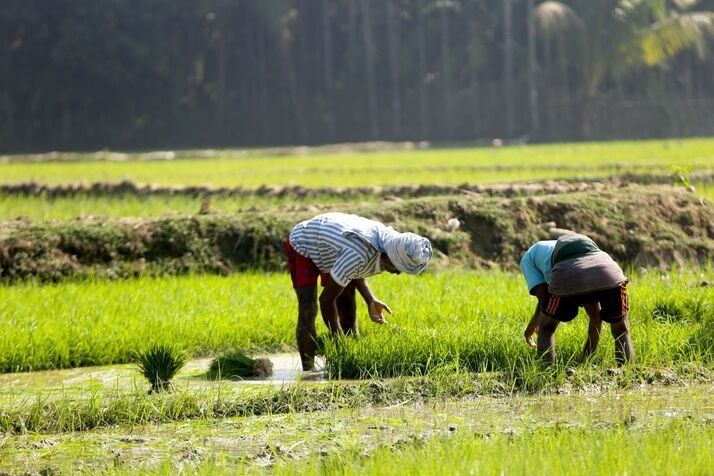
Farmers in several villages in Ramu upazila in Cox’s Bazar are spending busy days transplanting Boro rice as the winter season draws to a close.
Favourable weather conditions and adequate water availability in the fields have enabled farmers to work from morning until evening, bringing a renewed sense of life and greenery to the rural landscape.
A visit to the area shows extensive rice transplantation activities in Garjania, Kachhapia, Khuniapalong, Joarianala, and neighbouring villages. Farmers work in groups in the fields, meticulously toward the end of the planting rice seedlings in neat rows.
Local farmer Abu Taher said that transplanting Boro rice towards the end of winter usually ensures better yields. “This variety matures in a relatively short time and is less prone to diseases,” he said.
He added that Boro rice is one of Bangladesh’s main high-yielding rice varieties grown during the dry season, relying largely on irrigation, and is cultivated from November–December to April–May, following the Aman season.
Another farmer, Nurul Islam, said production costs are comparatively lower when rice is planted during this period.
“If the weather remains favourable, we are hopeful of a good harvest this season as well,” he added.
According to farmers, demand for Boro rice remains strong in the market, making it an attractive option.
Its shorter cultivation period has also contributed to its growing popularity among farmers.
Sources at the upazila agriculture office said that the acreage under Boro cultivation has increased toward the end of the winter season.
If timely fertiliser supply and irrigation support can be ensured, a satisfactory level of production is expected this season.
By Mohammad Morshed
Photo: Hussain Shetu


