
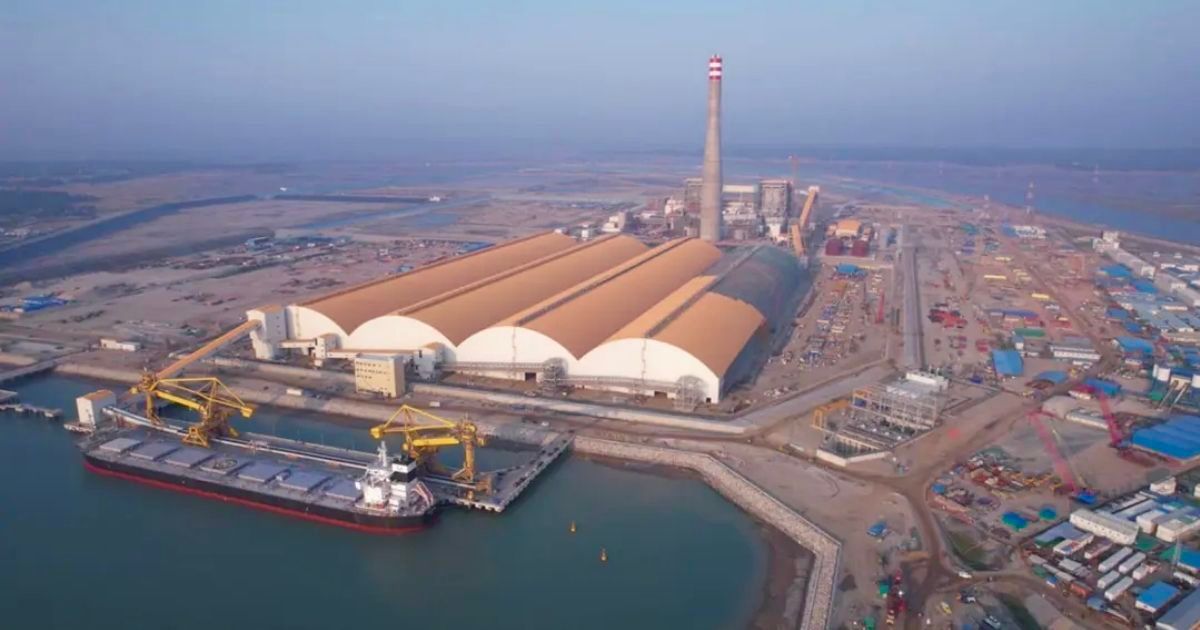
Ending a long wait, construction of the core infrastructure of Bangladesh’s first deep seaport at Matarbari in Moheshkhali has officially begun.
From Sunday (May 3), work started on the most critical components of the port—the jetty and terminal—marking a major milestone for the project.
Syed Refayet Hamim, secretary of the Chittagong Port Authority, confirmed the development, noting that field-level construction commenced a year after the contract signing with the contractor.
The mega project is being implemented with financial and technical support from the Japan International Cooperation Agency. The first package of work is being carried out by two Japanese firms—Penta-Ocean Construction and TOA Corporation.
With an estimated cost of Tk 6,200 crore, this package includes the construction of the main jetty and terminal structures. Although agreements were signed in April of last year, visible construction has now begun following technical preparations and material mobilisation.
At the initial stage, dredging operations are underway using a specialised, large-scale dredger imported from Japan. The process will remove well over 250 million cubic feet of sand and soil from the sea, which will be used for land reclamation and future expansion.
This package aims to complete a 460-metre modern container jetty and a 300-metre multipurpose jetty, along with back-end facilities, within four years.
The project spans about 1,030 acres in Moheshkhali, with a total estimated cost of Tk 24,381 crore. Once operational, the Matarbari deep seaport is expected to transform Bangladesh’s external trade by allowing large mother vessels to dock directly.
According to government plans, construction of the jetty and terminal is expected to be completed by 2029, with commercial operations likely to begin in 2030 if timelines are maintained.
Estimates from the port authority suggest that, once operational, the port will handle at least 1.1 million TEUs annually, with a long-term target to increase capacity to 2.6 million TEUs by 2041.
Once fully functional, the port is expected to strengthen Bangladesh’s maritime economy and emerge as a major transport and trade hub in South Asia.
Cox’s Bazar Life Report
Photo: Collected