
World Teachers’ Day Today
The recognition of Md Ilias, an assistant teacher at Taitong Government Primary School in Pekua, as the best teacher in Chattogram division has brought attention to both individual achievement and the broader challenges facing education in Cox’s Bazar.
Ilias is also among 15 distinguished teachers selected from across Bangladesh for World Teachers’ Day. Yet behind his achievement lies a difficult picture of the education sector, marked by teacher shortages, vacant posts, weak digital infrastructure, inadequate training, and concerns over teachers’ professional status.
The situation emerged from discussions with teachers ahead of Teachers’ Day.
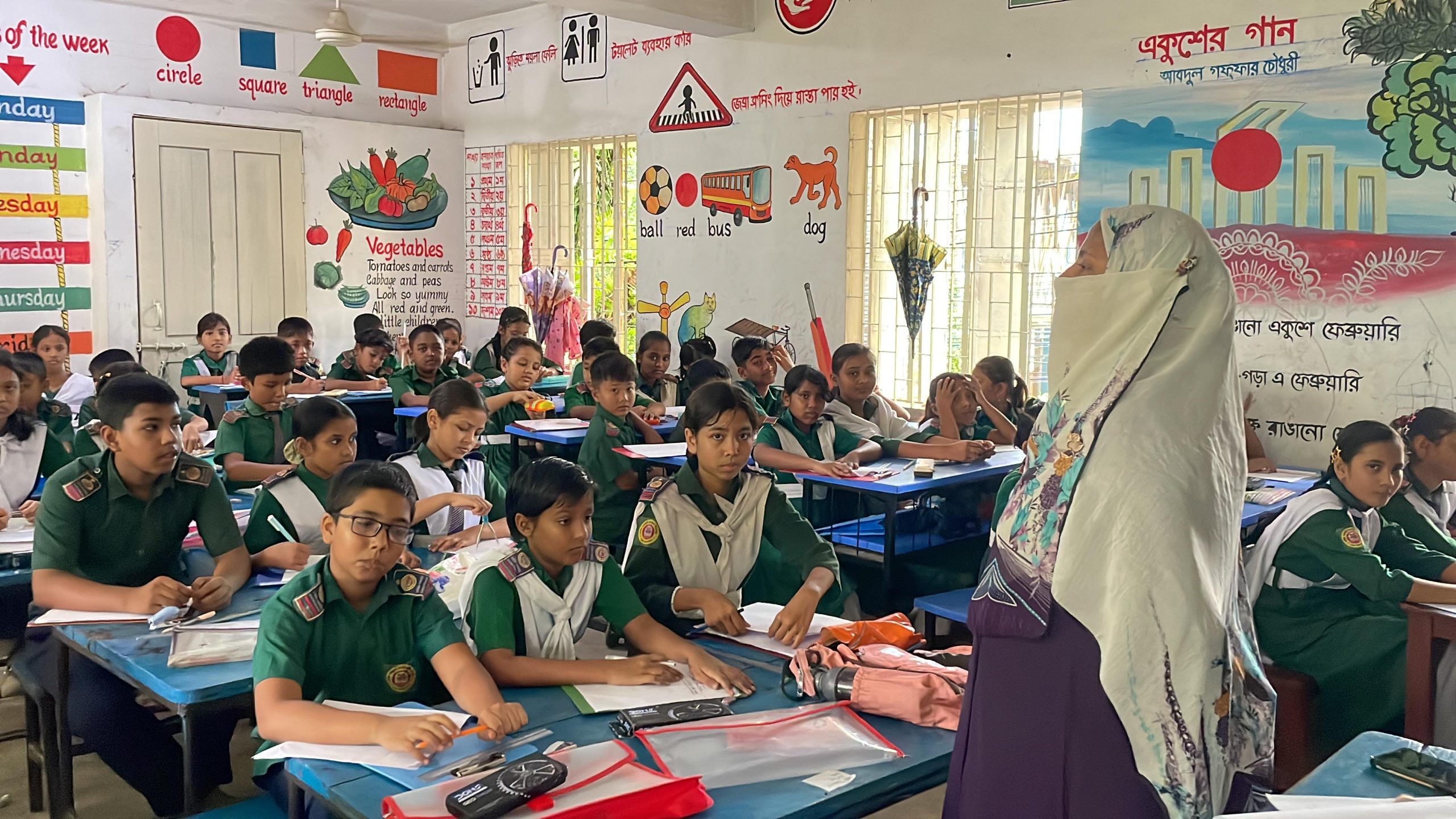
Cox’s Bazar has 658 government primary schools, 4,307 teachers, and 149,088 students. However, the teacher-student ratio varies significantly from one school to another.
Gulshan Akter, assistant primary education officer in Cox’s Bazar, said some schools have significantly fewer teachers than required.
At Sahityika Model Government Primary School, for example, 12 teachers serve around 600 students. In contrast, PMkhali Government Primary School has nine teachers for around 100 students.
“Some schools have an appropriate teacher-student ratio, while others do not. We have informed the government about the matter,” she said.
She said 140 teacher posts had been vacant in primary schools before the latest recruitment drive. Of them, 121 teachers have joined, leaving 19 posts vacant. Some schools also have vacant headteacher posts.
Secondary education also faces shortages
According to Cox’s Bazar District Education Officer Golam Mostofa, the district has 459 secondary educational institutions with 7,031 teachers, 1,694 employees and 230,471 students.
Nine of the district’s 10 government secondary schools have no permanent headteacher. All 10 assistant headteacher posts are also vacant. Around 40 percent of teacher posts in government schools remain vacant, while private schools and madrasas have around 30 percent vacancies, he said.
“Teacher shortages exist in almost every area — the hills, coast and plains. Teachers are transferred between government schools and colleges, but vacant posts are rarely filled completely,” Golam Mostofa said.
Technology has increasingly become part of education, but many in Cox’s Bazar, particularly those in rural areas, still lack adequate digital facilities.
“Digital systems are not fully operational anywhere. In rural areas, it is almost non-existent. There are also infrastructure and internet problems,” he said.
He said that filling vacant posts, providing regular training and improving digital infrastructure were essential to improving the quality of education.
“Teachers need to acquire technological knowledge and prepare themselves to become world-class educators,” he said.
Concerns over teachers’ professional status
Alongside shortages, teachers have also expressed concern about their declining social and professional status in recent years.
Md Ilias, the award-winning assistant teacher at Taitong Government Primary School, said teachers had faced humiliation following the 2024 mass uprising.
“The dignity of teachers has declined significantly. We follow government instructions to observe various national and other days, often with instructions to document and present those activities. Later, when the government changes, teachers can become victims of mob attacks. They are also harassed on social media,” he said.
Ilias alleged that successive governments had used teachers for political purposes, leaving them vulnerable to consequences when political circumstances changed.
Osman Gani, an assistant teacher at Bariapara Model Academy in Moheshkhali, also said teachers’ social status had declined since 2024.
“It is true that teachers’ respect declined considerably after 2024. However, the situation is gradually changing and things are slowly returning to normal,” he said.
Gulshan Akter, however, said no primary school teacher in Cox’s Bazar had been subjected to mob attacks following the 2024 mass uprising.
“No primary school teacher in Cox’s Bazar has been subjected to mob attacks. They are safe. The concerns of teachers are heard, and they are being trained to keep pace with modern technology,” she said.
She stressed that teachers should not be viewed merely as people responsible for carrying out assigned duties; their professional dignity must also be ensured.
“If we cannot respect teachers and the teaching profession, the country and the nation cannot progress. The teaching profession must be respected. Teachers should receive the necessary facilities, and their legitimate demands should be met as far as possible,” she said in a World Teachers’ Day message.
Success despite constraints
Despite these challenges, teachers across the district continue to contribute to improving educational outcomes.
Ilias, who joined the teaching profession in 201, helps improve sports, information technology, and extracurricular activities. He was selected as a Cox’s Bazar district ICT ambassador in 2019 and was named the district’s best assistant teacher in the National Primary Education Medal competition in 2022.
In the same year, Taitong Government Primary School was recognised as the district’s best government primary school.
This year, a student from the school secured the only Talent Pool scholarship from Taitong Union in the primary scholarship examination.
Ilias’s selection among the country’s 15 distinguished teachers for World Teachers’ Day is another recognition of his contribution.
But his success also highlights the wider challenge facing Cox’s Bazar’s education sector.
Education stakeholders say teacher shortages, vacant posts, inadequate infrastructure, limited access to technology and concerns over professional dignity need to be addressed beyond the formalities of Teachers’ Day.
Without enough teachers, modern facilities and a dignified working environment, they say, achieving the desired improvement in the quality of education will remain difficult.
By Abdu Rashid Manik
Photo: Abdu Rashid Manik