
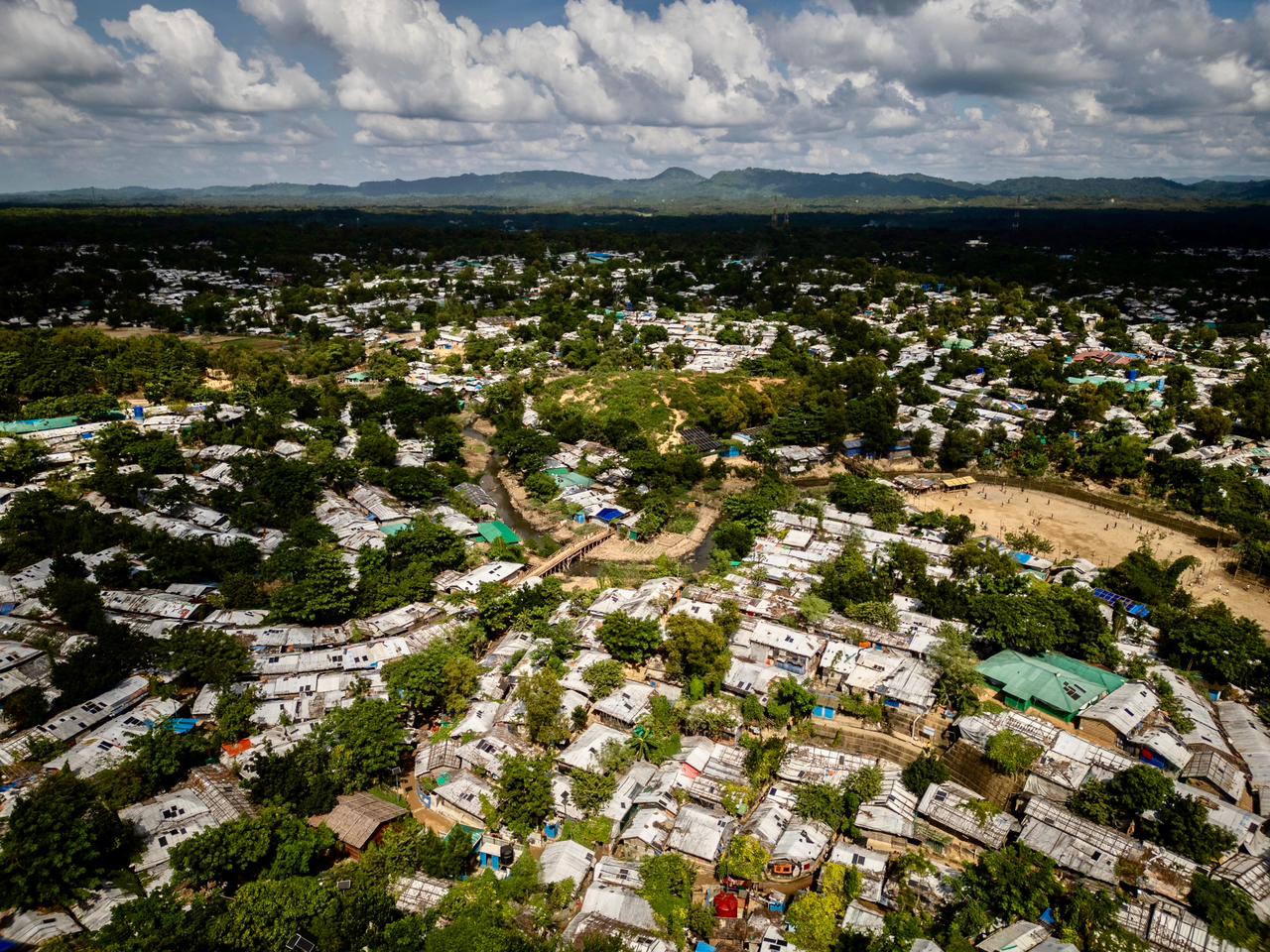
When Bangladesh opened its borders to hundreds of thousands of Rohingya fleeing violence in Myanmar in 2017, it was an extraordinary act of humanity. Nearly a decade later, however, the heaviest price for that decision is being paid by the people of Cox’s Bazar, particularly in Ukhiya and Teknaf.
What began as a humanitarian emergency has become a prolonged social, economic and security challenge. The sheer concentration of refugees has altered the demographic reality of the area and placed enormous pressure on jobs, public services, natural resources and local infrastructure. For low-income residents, competition for informal work has become particularly difficult, while the cost of living has added to their hardship.
Security is another growing concern. Drug trafficking, human smuggling, illegal weapons and organised criminal networks operating in and around the camps cannot be ignored. This does not mean an entire refugee population should be blamed for the actions of criminal groups. But neither should legitimate concerns of the host community be dismissed in the name of humanitarian sensitivity.
There is also a generation growing up inside the camps with limited access to education, skills and any meaningful sense of a future. As international aid and food assistance decline, frustration and vulnerability will only deepen. Left unattended, such conditions can create fertile ground for crime, exploitation and radicalisation.
The environmental cost has been equally severe. Forest loss, pressure on hills and natural resources, and the demands of a vast population have changed the landscape of Ukhiya and Teknaf. Reforestation efforts are welcome, but they cannot succeed without firm protection against further encroachment.
The government has introduced fencing, biometric registration, security operations and relocation to Bhashan Char. Yet gaps in enforcement remain. Camp movement, document fraud, trafficking networks and the flow of narcotics demand stronger oversight and accountability.
Ultimately, better camp management is not a solution to the Rohingya crisis. Safe, voluntary and dignified repatriation remains the only sustainable way forward, and the international community must do far more to create the conditions for it in Myanmar.
Bangladesh has carried its humanitarian responsibility with remarkable patience. Cox’s Bazar should not be asked to pay for it indefinitely with its security, environment and future.
By Salam Abu
Editor