
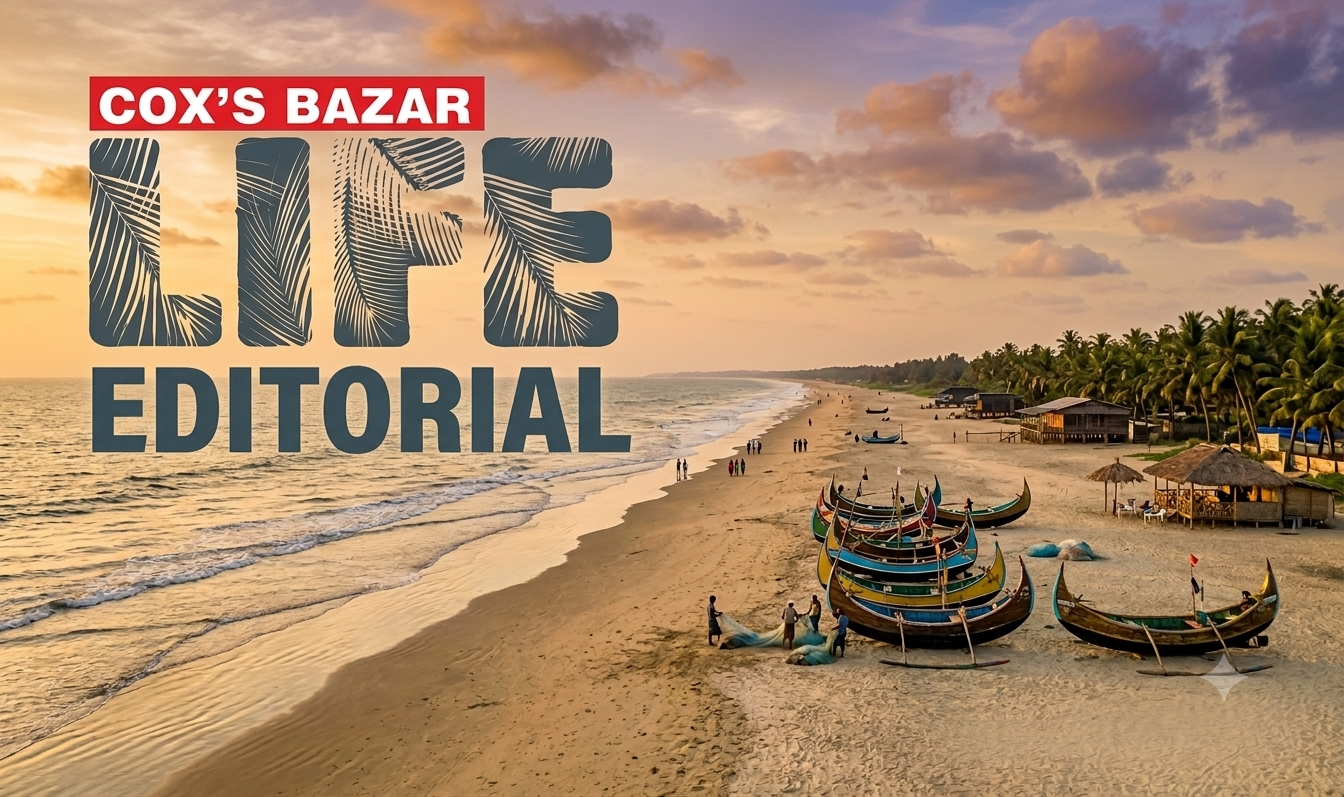
Bangladesh’s 710-km coastline and the vast Bay of Bengal are not just geography; they are the living nervous system of the nation’s economy. From fisheries, shrimp, salt, tourism, and seaweed to ship recycling, ports, and energy, the blue economy holds enormous promise. Studies have estimated the annual economic value of Bangladesh’s blue economy at around $6 billion. Yet one reality often remains hidden: much of this economy’s backbone is sustained by coastal women, whose labour is still not properly reflected in national accounts.
This invisibility is most glaring in fisheries. Nearly 1.4 million women are engaged in fish sorting, processing, net-making, dried-fish production, and shrimp processing. Yet compared with the scale of their labour, their access to formal identity, ownership, and decision-making remains extremely weak. The number of registered women fishers remains tiny compared with the total number of registered fishers. Surveys show that many women fish workers remain outside the fisher identity-card system, leaving them deprived of government support during fishing bans, cooperative membership, and other institutional benefits. For comparable work, women also earn significantly less than men.
Linked to this is women’s largest yet most invisible contribution—unpaid care work. According to BBS and UN Women, unpaid domestic and care work in Bangladesh was valued at about Tk 6.7 trillion in 2021, equivalent to 18.9 percent of GDP; more than 85 percent of this labour was performed by women. Cooking, caring for children and family members, and collecting water generate no wages, yet they keep households and local economies functioning.
The crisis does not end there. Limited land and asset ownership restrict women’s access to credit, insurance, and investment. During cyclones and storm surges, inadequate sanitation, safety, privacy, and essential health facilities in shelters can further increase their vulnerability. Climate change threatens to deepen these inequalities unless adaptation measures become more gender-responsive.
To harness the blue economy’s full potential, women must be seen not only as workers but as economic partners. Including women fish workers in national databases, ensuring fisher identity cards, equal wages and safe working conditions, expanding access to affordable credit and markets, strengthening asset ownership, and making cyclone shelters and climate-adaptation planning gender-responsive should now be priorities. Women’s unpaid care work must also be made more visible in national accounting and policy.
The blue economy’s future depends not only on the sea’s resources but on recognising those who turn them into economic value. Making coastal women’s labour, knowledge, and rights visible is not just a matter of gender justice—it is a prerequisite for Bangladesh’s sustainable economic future.
By Salam Abu
Editor