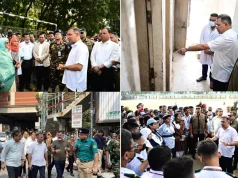

The International Day for Disaster Risk Reduction is being observed today (October 13) with the theme ‘Resilience Starts at Home’ to raise awareness of reducing the risks of natural and human-induced disasters and improving disaster preparedness.
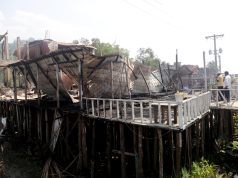
The day is particularly significant for Cox’s Bazar, a disaster-prone coastal district exposed to cyclones, tidal surges, landslides and heavy rainfall. Rohingya camps in Ukhiya and Teknaf also face the risks of fires, landslides and other natural disasters.
Cox’s Bazar district administration said it is organising awareness programmes, rallies, discussions, drills and training sessions to mark the day, with participation from district and upazila administrations, the Fire Service and Civil Defence, the Department of Disaster Management and various local and international organisations.
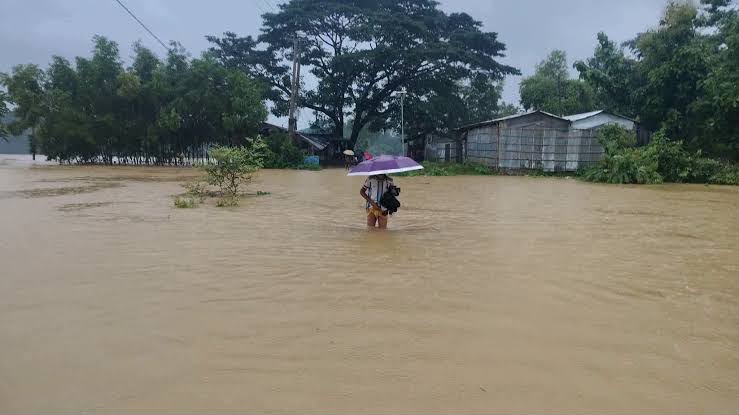
Meanwhile, environmental activists have expressed concern over recurring floods and prolonged waterlogging in Cox’s Bazar in recent years, attributing the worsening situation not only to natural disasters but also to unplanned development and environmentally harmful activities.
HM Nazrul Islam, organising secretary of the Cox’s Bazar district unit of Bangladesh Poribesh Andolon (Bapa), said the severe flooding and persistent waterlogging seen in recent years were alarming.
Environmental activists did not consider the situation merely a natural disaster, as human-induced environmental degradation had played a significant role, he said.
Cox’s Bazar’s geography combines hills and the sea, so rainwater flowing down the hills should drain naturally through rivers and canals into the sea, Nazrul said.
However, unplanned development and environmentally destructive activities were causing water to accumulate in the town and low-lying areas even after light rainfall, resulting in prolonged waterlogging, he said.
Nazrul said the Bakkhali River, a vital waterway for Cox’s Bazar town, and its connecting canals had been affected by encroachment, filling and illegal structures. These activities had reduced the waterways’ natural flow and water-holding capacity, preventing rainwater and runoff from the hills from draining quickly into the sea, he added.
He called for an end to hill cutting; the removal of encroachments from the Bakkhali River and its canals; their re-excavation; and measures to protect ecologically critical areas (ECAs).
Without these steps, he said, protecting Cox’s Bazar from the risks of flooding and waterlogging would be difficult.
The environmental activist also called for immediate, strict legal action and a scientific drainage master plan to restore ecological balance and provide long-term solutions.
He said reducing disaster losses required more than awareness campaigns. Effective measures to protect the environment, ensure planned urbanisation and restore the natural flow of rivers and canals were also essential.
By Mohammad Morshed
Photo: Mohammad Morshed