New research by young researchers in Ukhiya, Cox’s Bazar, shows that climate change is reducing household incomes and putting children’s safety at risk. The findings highlight the effects of environmental problems, including sudden weather changes, severe lightning strikes, and deforestation, on both residents and Rohingya refugees.
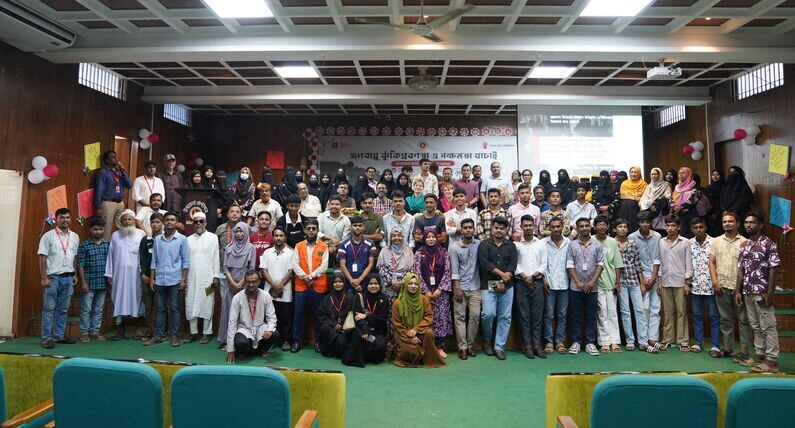
The findings were presented at a research dissemination event held at the Ukhiya Upazila Auditorium on Tuesday, October 27. The young researchers collected data in Palongkhali Union and Rohingya Camp 15 and presented their findings at the event.
The research found that environmental problems reduced household incomes, directly affecting children. It also examined how climate-related risks affect children’s safety and protection.
Government officials, local representatives, and Save the Children officials attended the event. Attendees included Ukhiya Upazila Nirbahi Officer Panna Akter; Save the Children’s Cox’s Bazar head, Golam Mostafa; Caroline, senior climate adviser at Save the Children Denmark; and representatives of the local research organisation GPAT.
Panna Akter said climate change research should be accessible and understandable to everyone, as its harmful effects affect everyone.
“Local administration, ordinary people, women and men must work together to put the findings of this research into practice,” she said.
Caroline said climate change affected more than trees and homes, adding that the research demonstrated how deeply environmental disasters could undermine children’s safety.
“Understanding these issues is essential to ensuring children’s protection in the long term,” she said.
The event concluded with a call for government and non-government organisations to work together to protect the environment and ensure the safety of children in both local communities and the Rohingya refugee population in Cox’s Bazar.
Cox’s Bazar Life Report
Photo: Courtesy