Nine priority projects fast-tracked; land, rehabilitation and skills seen as key tests
The government is pursuing a deep-sea port, power plants, LNG and LPG terminals, a refinery and economic zones around Moheshkhali and Matarbari in Cox’s Bazar, which officials say could create about 2.5 million direct and indirect jobs over the long term.
Chowdhury Ashik Mahmud Bin Harun, executive chairman of the Moheshkhali Integrated Development Authority (MIDA), outlined the plan on September 3, 2025. He said it would be carried out in three phases: 2025-30, 2030-45 and 2045-55.
He said it could add $150 billion to GDP and aims to turn the area into a modern port-based industrial and commercial city, drawing on Singapore’s and Shanghai’s experience.
Nine priority projects
A report published on September 27 said the government had formed a high-level coordination committee to speed up land acquisition, compensation, rehabilitation and implementation of MIDA’s nine priority projects, aiming to advance them by 2029.
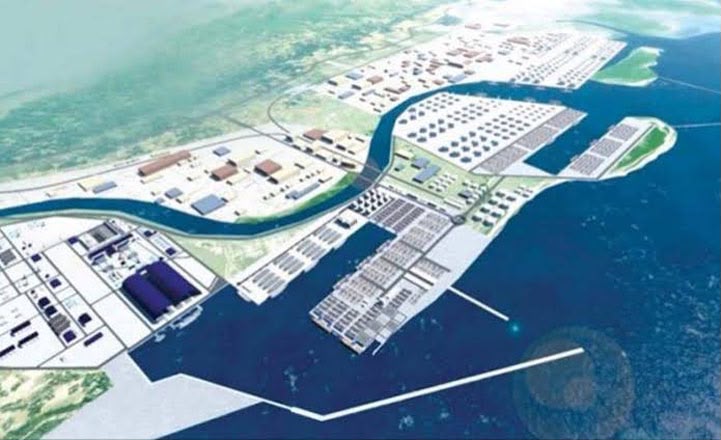
The projects are the Matarbari deep-sea port, a land-based LNG terminal, an LPG terminal and storage, a new floating LNG terminal, the third and fourth coal-fired power plants, an oil refinery and petrochemical complex, a dockyard and shipyard, and a MIDA office.
The projects are at different stages. Some are operating, some are under construction, and others are still at the planning or approval stage.
Port and energy
The first phase of the Matarbari port would include a container and multipurpose terminal, jetties, yards, a terminal building and cargo infrastructure. A road would link it to the national highway, and work is underway on channel depth and other marine infrastructure.
Once operating, the port could create jobs in container handling, warehousing, transport, security, customs services and logistics.
The 1,200MW coal-fired plant at Matarbari, with two 600MW units, is already installed. Details of financing, capacity and the construction status of the third and fourth plants have yet to be confirmed.
Moheshkhali is planned to get a floating LNG terminal and an LPG terminal with storage. Matarbari is to get a land-based LNG terminal. Moheshkhali already has a single point mooring system for crude oil and refined petroleum products.
Prime minister’s remarks
Prime Minister Tarique Rahman visited the Matarbari plant on August 9. He stressed the effective use of existing energy infrastructure, transparency and accountability in project management, and a long-term integrated energy plan.
He said the country must diversify energy sources to meet rising power demand, and that economic viability, environmental impact and the long-term interest of the people must come first in running power plants and large infrastructure.
Economic zones
An economic zone is being developed at Dhalghata in Maheshkhali. On March 10, the Bangladesh Economic Zones Authority and the Bangladesh Water Development Board signed a memorandum of understanding for a 4.15-kilometre connecting road.
The wider infrastructure project, costing about Tk 11.95 billion, includes an administrative building, roads, sewerage, water supply, gas connection, a substation, an effluent treatment plant and a boundary wall. Information on land allocation to investors has been published.
The broader plan envisages seven economic zones around Moheshkhali for port and logistics, industry, energy and fish processing. There is no confirmation that construction has begun in all of them.
Jobs and skills
Officials expect demand for workers in port operations and logistics, power and energy, factories, construction and small businesses such as transport, accommodation, food and repair services. Women could find work in training-based industrial jobs, packaging, food supply, office management and small enterprises.
The plan’s backers say local young people could miss out without the right skills. Welding, electrical installation, heavy vehicle driving, machine maintenance, warehouse management, computer operation and industrial safety are among the skills in demand. Technical certification and safety credentials matter in port operations, power plants, LNG terminals and petrochemicals.
Technical training centres in the project area, training agreements with industry, apprenticeships and local hiring targets are needed, the report said.
Land and livelihoods
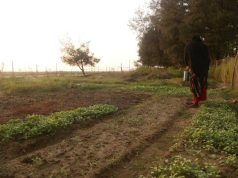
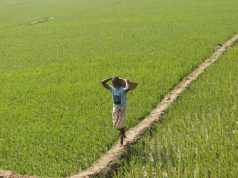
Many residents depend on salt farming, shrimp and fish farming, agriculture and coastal resources. For those who lose land or livelihoods, compensation alone is not enough, the report said. Alternative livelihoods, skills training, small business support and jobs in new industries are also needed.
The coordination committee’s mandate covers rehabilitation, skills development and livelihood recovery. How far these are carried out will be a key measure of whether local people share in the gains.
Environment and safeguards
The expansion of ports, power plants, industrial zones and energy infrastructure could affect land use, the coastal environment, fisheries and livelihoods. Environmental protection, waste management, drainage, disaster preparedness and the rights of affected people need to be ensured alongside construction.
The report said that disclosing project information, ensuring transparent compensation, grievance redress, and non-discriminatory local hiring are needed for benefits to reach local people.
Employment figures unclear
No project-wise job estimates are available. Construction progress, final investment, capacity and hiring plans for several projects have yet to be confirmed.
The report said the real benefit will depend not on how many projects are built, but on how many local people get permanent jobs, how many families regain lost livelihoods, how many young people acquire skills, and how well environmental and social safeguards hold.
By Abdu Rashid Manik
Photo: Collected