
Nestled amidst the azure waters of the Bay of Bengal, Sonadia Island is a remote 9-square-kilometer enclave where life is a constant battle against nature’s challenges.
Located 24 kilometers from Maheshkhali, accessing this isolated haven is no small feat. A single boat, reliant on tidal patterns, makes a daily trip from Ghatibhanga, taking nearly an hour. Miss the boat, and you face a grueling three-hour trek through muddy terrain to reach the island.
With no roads, vehicles, electricity, or urban amenities, Sonadia’s 2,000 residents live in stark isolation. While the island’s eastern side boasts a government school, the western side lacks educational facilities.
For children from the western settlements, commuting two hours to the eastern school was a near-impossible hurdle.
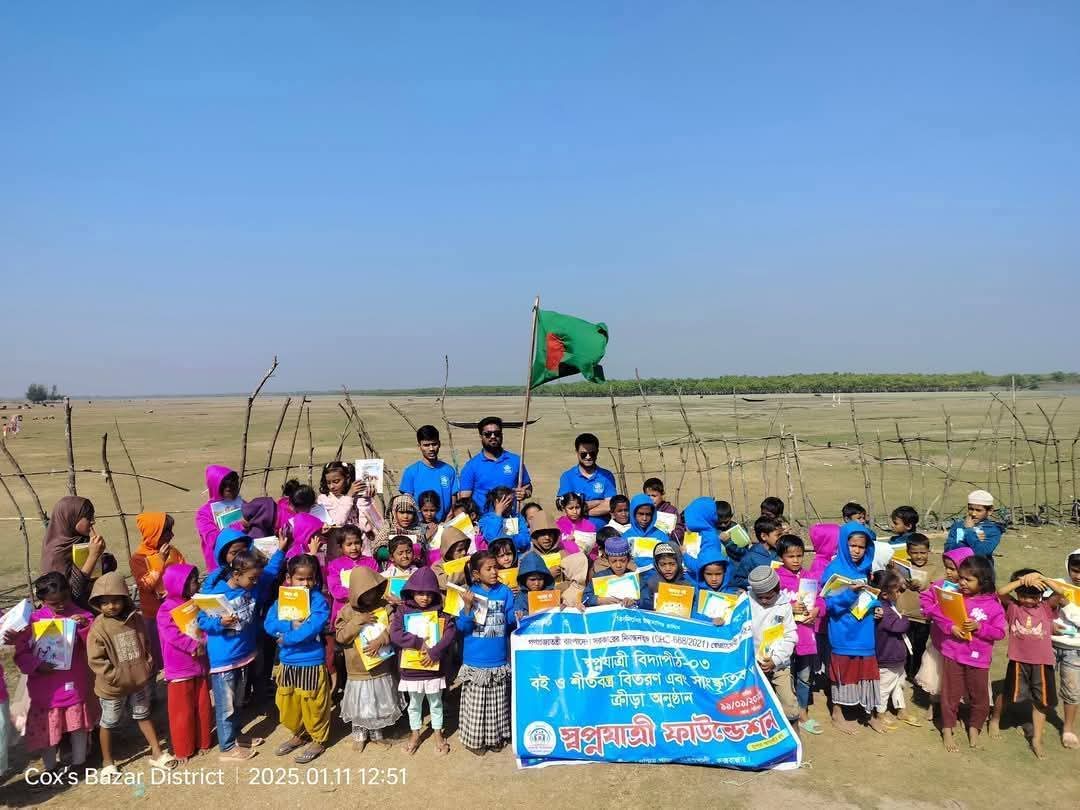
Amidst these adversities, Swapnojatri Bidyapith has been spreading the light of education for the past four years. A beacon of hope, this school in the western part of the island allows children to study in their village. Beyond academics, the institution provides various recreational activities, nurturing a genuine enthusiasm for learning among the students.
The Swapnojatri Foundation’s initiative stands as a testament to resilience and dedication. Running a school is no ordinary achievement in an area without electricity or proper roads. Yet, the foundation has made the impossible a reality through relentless effort and support from the local community.
In a land marked by disorganized living conditions and severe communication barriers, Swapnojatri Bidyapith’s educational strides deserve high praise. It is more than just a school—it is a lighthouse guiding Sonadia’s children toward a brighter and more promising future.
Swapnojatri Bidyapith is not merely an institution; it symbolizes a new dawn of hope, breaking through the isolation barriers and illuminating the path to progress.
By Rajin Saleh
Photo: Courtesy