

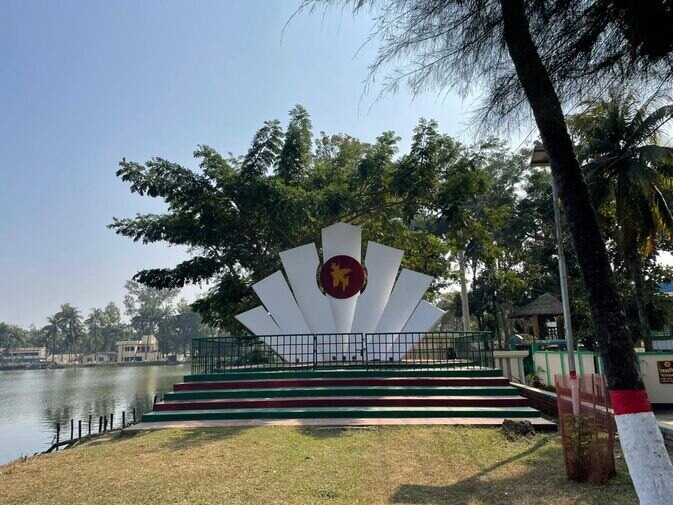
Located at the heart of Moheshkhali upazila headquarters, Aguner Poroshmoni Chattar has emerged as more than just a public square—it has become a key meeting point of the area’s cultural, administrative, and social life.
Blending literature, the spirit of the Liberation War, and elements of modern civic life, the Chattar is steadily growing in popularity among residents and visitors alike.
The square is named after Aguner Poroshmoni, the novel and film based on the Liberation War by renowned writer Humayun Ahmed.
The name has given the space a symbolic identity, transforming it from a physical landmark into a site enriched with literary resonance and memories of the country’s struggle for independence.
Managed under the supervision of the upazila administration, the Chattar regularly hosts national day observances, book fairs, cultural programmes, and various social events. The square takes on a particularly festive look in December, the month of victory, when decorative lighting illuminates the area, creating a celebratory atmosphere across the upazila headquarters.
For local residents and visitors, Aguner Poroshmoni Chattar has become a favourite leisure spot. Families and groups of friends often gather here to spend time together. With comfortable seating arrangements, the square offers a welcoming space for conversation and relaxation. Young people can be seen taking photographs, while children enjoy playing in the open area, turning the chattar into a lively and inclusive public space.
Local resident Abdullah Al Mamun said that Aguner Poroshmoni Chattar is not merely a centre for administrative activities but a symbol of Moheshkhali’s cultural identity.
By carrying the legacy of literature and the spirit of the Liberation War, he said, the square plays an important role in passing on historical and cultural messages to the younger generation.
By Abdu Rashid Manik
Photo: Abdu Rashid Manik