Tourism businesses in Cox’s Bazar have said AI-generated images circulating on social media are creating confusion and damaging the reputation of the country’s major tourist destination.
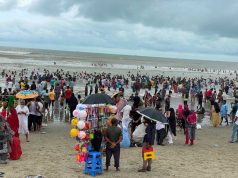
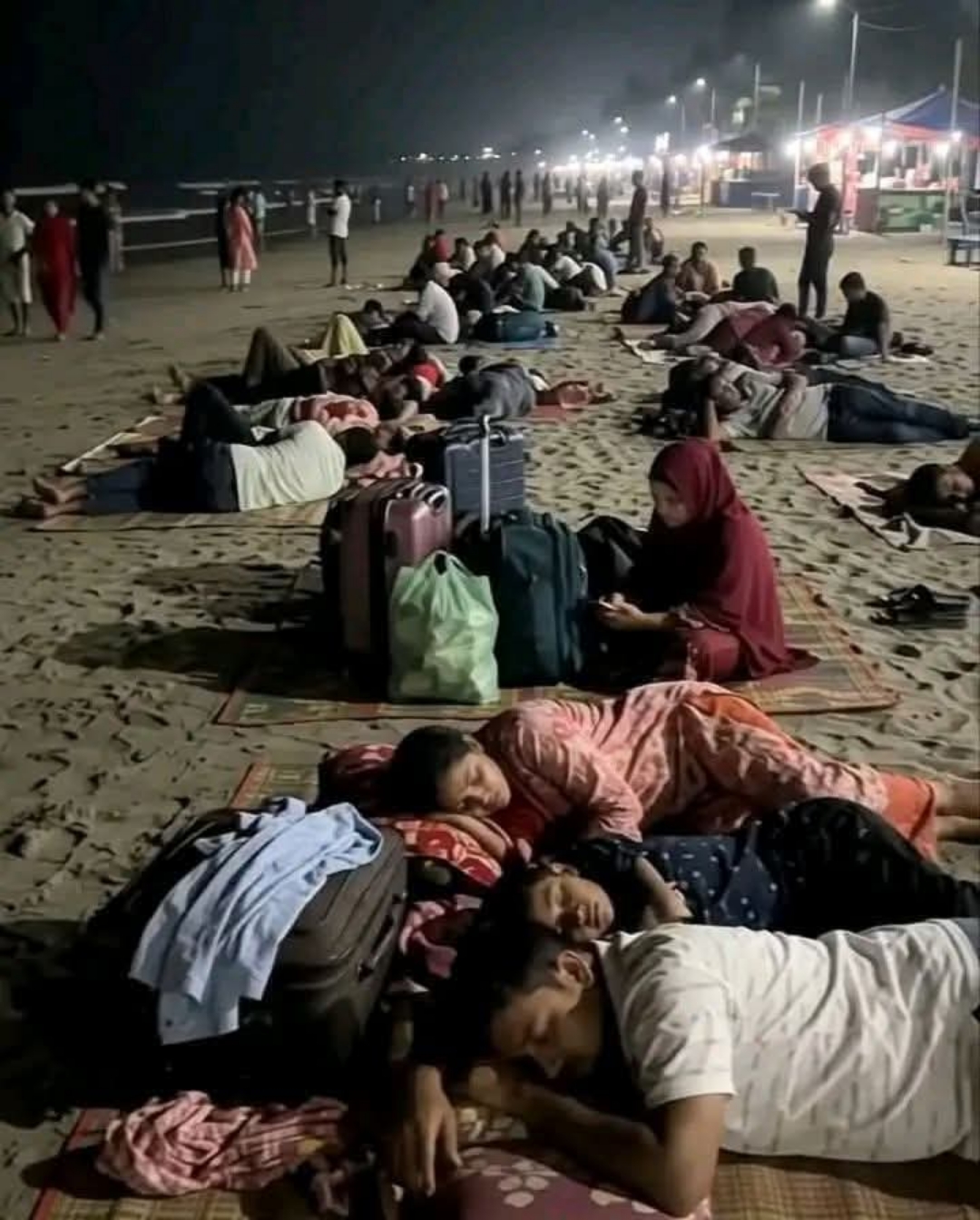
An image showing large numbers of tourists, including women and children, spending the night on the sandy beach has recently circulated on social media. The image is claimed to have been generated using artificial intelligence, raising concerns among tourism stakeholders that misleading visuals and negative publicity could discourage visitors and affect potential foreign investment.
Tourism stakeholders said reporting accidents and problems was part of the media’s responsibility. However, they said isolated incidents, unverified images, and exaggerated presentations could create a negative impression of the entire tourism industry in Cox’s Bazar.
Arman Uddin, a hotel businessman in the Sugandha area, said ensuring tourists’ safety and service quality was a shared responsibility.
“Highlighting problems is important, but it is not right to spread unverified images or information and create panic among tourists.” This practice could harm hotel businesses as well as the entire tourism industry,’ he said.
Hafez Ahmed, a tour operator in Kalatoli, said tourism stakeholders were working to ensure a smooth experience for visitors.
‘If AI-generated images are circulated as real incidents, tourists may be misled. This could adversely affect their travel plans and business activities. Images and information should be verified before being shared on social media,’ he said.
Abul Kashem Sikder, president of the Cox’s Bazar Hotel-Motel-Guest House Owners Association, said the tourism sector should identify and address problems.
‘If fake images or misleading information create a negative impression of the entire tourism industry, hotel businesses and many related sectors could suffer. These AI-generated fake images are negatively affecting tourism in Cox’s Bazar. Accurate information and the positive aspects of Cox’s Bazar need to be highlighted to maintain tourists’ confidence,’ he said.
Tourism stakeholders fear that such publicity could discourage people from visiting Cox’s Bazar and create negative perceptions among potential investors. They said it was also necessary to examine whether anyone deliberately circulated such content to discourage tourism and investment.
The concerns emerged as several potential foreign investment initiatives drew attention to the tourism prospects of Cox’s Bazar and its surrounding areas.
On September 26, Malaysian tourism entrepreneur Tan Sri Syed Yusof Jojo, former Maldivian vice-president and tourism minister Ahmed Adheeb, and Versatilo Group chairman Dr Kamrul Ahsan of Bangladesh met in Kuala Lumpur, Malaysia, and signed a memorandum of understanding.
The proposed initiative envisages an international-standard, environmentally friendly resort on the Cox’s Bazar-Teknaf coast, with potential investment estimated at $500 million.
On October 18, Japanese investors also outlined plans to invest $1.2 billion in Bangladesh’s tourism and hospitality sector. Cox’s Bazar and other tourist destinations were mentioned as potential investment areas, though the plan is expected to proceed through formal proposals and subsequent procedures.
These initiatives have brought renewed attention to the potential of Cox’s Bazar’s tourism industry. Stakeholders fear that misleading information or AI-generated images that misrepresent conditions at the destination could shape prospective investors’ perceptions.
They said verifying images and information before publication or sharing was essential to protecting the tourism sector’s reputation. At the same time, they stressed that genuine problems and irregularities should be reported, while misleading publicity should be avoided.
By Tarekur Rahman
Photo: Collected