
Today is April 29—a date etched in sorrow for the people of Bangladesh’s coastal regions. On this day in 1991, one of the deadliest cyclones in the country’s history ravaged the coastal districts, including Chattogram and the island belts of Cox’s Bazar.
In the dead of night, tidal surges swept through entire communities, leaving behind a trail of unimaginable destruction. According to official estimates, the cyclone claimed 138,882 lives. Thousands more were rendered homeless, their lives irreversibly altered.
One such survivor is Mohammad Hossain, now 55, from North Dhurung Charpara in Kutubdia upazila. That night, he lost nearly his entire family, surviving with only a brother and sister. Their home was wiped out, leaving nothing but memories and grief.
Sitting in his modest house in Cox’s Bazar town, Hossain spoke to Jago News with tears in his eyes.
“The storm had started days before—on April 26—but the warnings kept escalating,” he recalled. “With no real experience, our family stayed home. On the night of April 29, a tidal surge nearly 20 feet high swept away my parents and siblings. I never even got to see their bodies.”
Thirty-five years have passed, but for Hossain, the grief returns every April 29, stronger than ever. “I left the area hoping to forget the pain, but their memories are everywhere,” he said.
Mohammad Hossain is not alone. Hundreds across the coast still mourn loved ones lost to that night. Even after three and a half decades, the pain of loss lingers. April 29 continues to be a day of sorrow when the sky and sea seem to share the grief of the people.
On that fateful day, the Bangladesh Meteorological Department had issued Great Danger Signal No. 9. Yet many residents failed to evacuate, unaware of the storm’s deadly force. After 10 p.m., waves as high as 20 feet inundated the coast. In minutes, families were torn apart—mothers lost children, husbands lost wives, and entire families vanished under water.
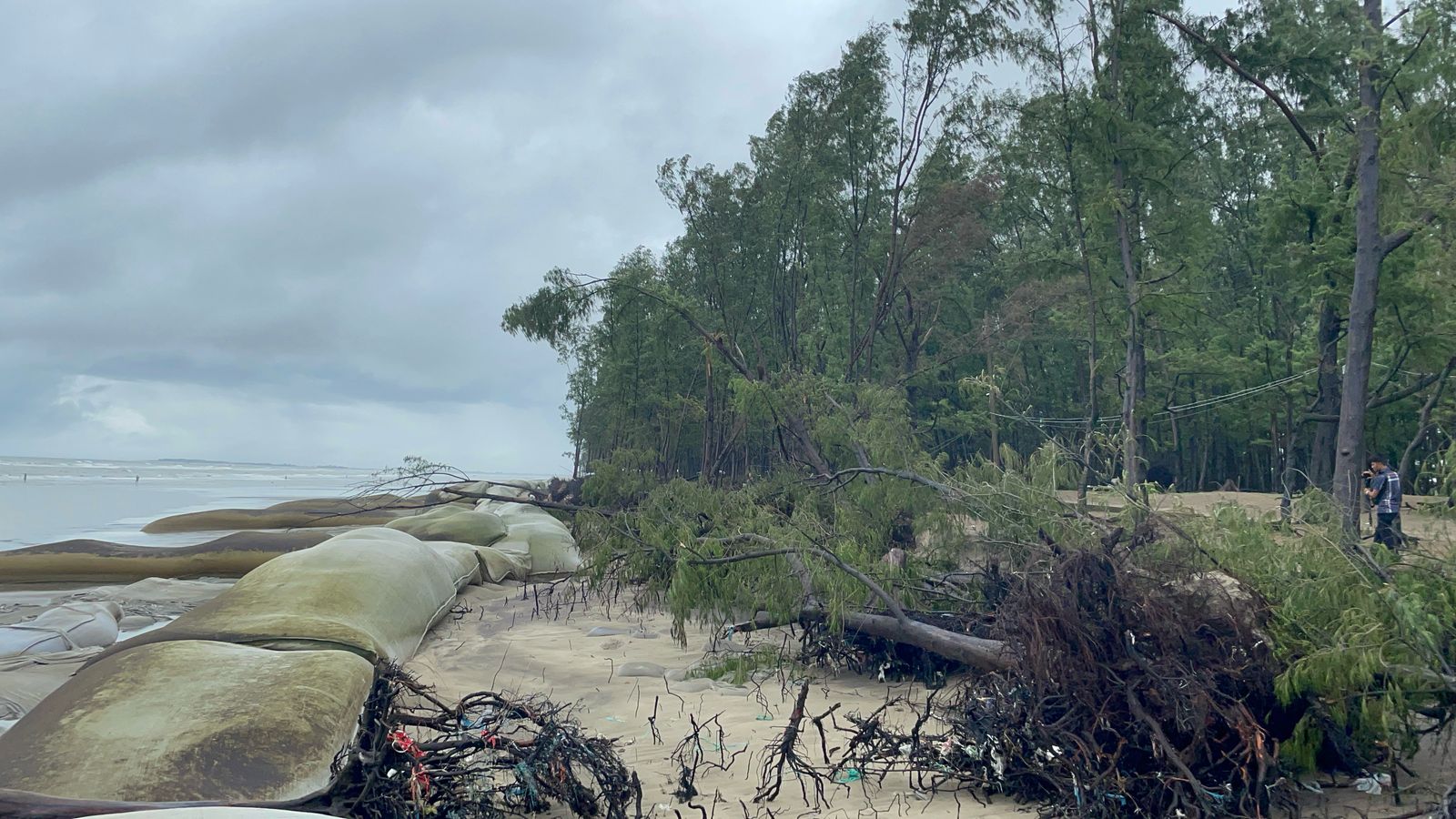
Each year, communities across the coastal belt observe April 29 with special prayers, food distribution to the poor, memorial discussions, and mourning rallies. But vast stretches of the coastline remain unprotected.
Many embankments in areas like Kutubdia, Maheshkhali, Pekua, Eidgaon, Cox’s Bazar Sadar, and Teknaf are still in a fragile state. Millions continue to live with the constant risk of disaster.
Cox’s Bazar Deputy Commissioner Mohammad Salahuddin noted that more than 500 cyclone shelters now serve the district. “The older, abandoned shelters have been replaced by new ones,” he said. “People are more aware today. When a warning is issued, most respond quickly and take refuge. This has helped reduce casualties significantly compared to the past.”
By Abdur Rashid Manik
Representative Photo: Abdur Rashid