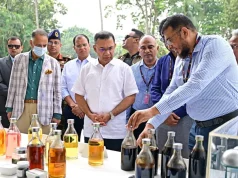


To conserve aquatic biodiversity, the government has established the country’s first-ever ‘Live Gene Bank’ to protect 64 critically endangered native fish species.
The facility, located at the Bangladesh Fisheries Research Institute (BFRI) in Mymensingh, aims to safeguard the genetic resources of indigenous fish varieties, many of which are on the brink of extinction due to environmental degradation and habitat loss.
The institute has successfully recovered 40 endangered species, including 29 in the past decade alone, according to Dr. Anuradha Bhadra, Director General of BFRI.
She emphasized that this initiative aligns with the government’s broader objective of achieving self-sufficiency in fish production while preserving local biodiversity.
The gene bank is expected to play a vital role in ensuring the long-term availability of native fish species through advanced breeding technologies that are already being transferred to farmers.
The sharp decline in native fish populations has largely been attributed to the drying up of natural habitats, climate change, and other environmental disruptions, said Dr. Bhadra.
Over the years, various species have either disappeared or become increasingly rare in natural water bodies. Through this gene bank, scientists can now preserve the germplasm, the genetic material, of endangered fish and breed them in controlled hatchery environments for eventual reintroduction into rivers, lakes, and wetlands.
Dr. Mohammad Ashraful Alam, Senior Scientific Officer at BFRI, said Bangladesh is home to 260 native freshwater fish species, of which 143 are small indigenous varieties. Among them, 64 have already been listed as critically endangered.
He explained that the gene bank has collected and conserved germplasm of 143 species in total, with 98 species preserved in Mymensingh and the rest stored at a secondary facility in the Syedpur Freshwater Substation in Nilphamari.
The BFRI’s approach includes artificial breeding programs that can rapidly increase the population of these species and restore them to their natural ecosystems. If any species becomes extinct in the wild, it can be revived through hatchery-based breeding and released back into the environment for natural regeneration, said Dr. Mohammad Mashiur Rahman, another senior BFRI scientist.
Cox’s Bazar Life Desk/BSS