
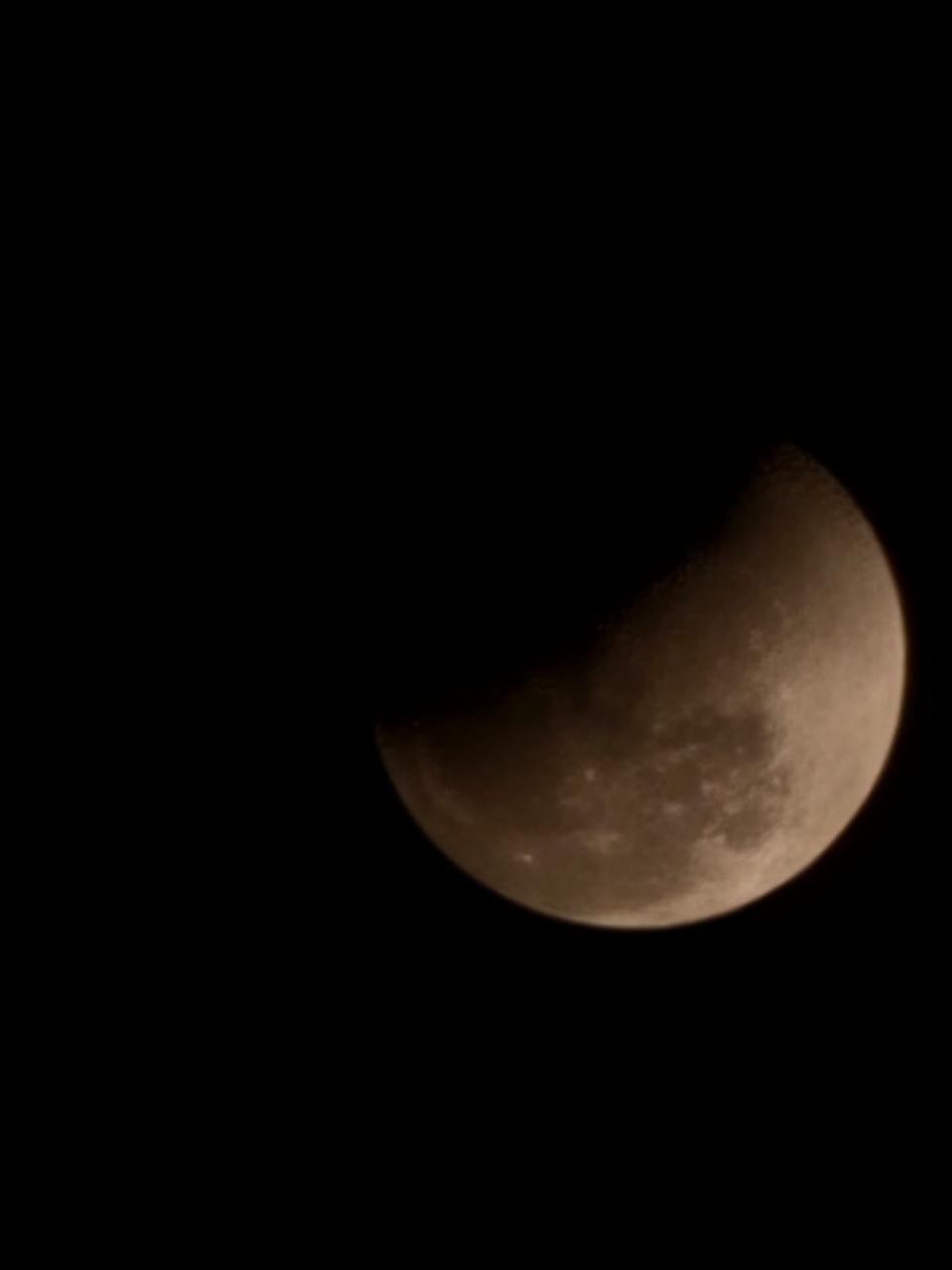
Cox’s Bazar, known for its world’s longest natural sea beach, witnessed a breathtaking celestial event.
The year’s first total lunar eclipse appeared after sunset, casting a deep red glow over the horizon.
Against the sound of crashing waves, the illuminated moon created an almost otherworldly atmosphere. In astronomical terms, this phenomenon is known as a “Blood Moon.”
A total lunar eclipse occurs when the Earth moves directly between the Sun and the Moon, causing the Moon to be fully covered by Earth’s shadow.
Instead of disappearing completely, sunlight bends through Earth’s atmosphere and reflects onto the Moon, giving it a dark red hue. According to NASA, the next opportunity to witness a similar total lunar eclipse will not come before 2028.
On Tuesday evening, as daylight faded and the sun set, a reddish glow became visible on the horizon. Shortly afterward, the full lunar eclipse became clear in the sky.
Tourists and locals visiting the beach paused to enjoy the rare spectacle, with many capturing photos and videos on their mobile phones.
At Laboni Point of Cox’s Bazar beach, local youth Md. Abchar recorded the eclipse on his phone. “I had never seen the moon this red before. At first, I was surprised. Later, I learned it was a lunar eclipse, so I quickly captured photos and videos,” he said.
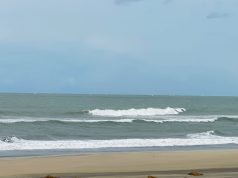
Many present at the beach remarked that the combination of rolling waves and the moon’s mystical red light created a unique ambiance.
Since the eclipse lasted for a considerable time, viewers were able to fully enjoy the rare moment.
Assistant Meteorologist Abdul Hannan from the Cox’s Bazar Meteorological Office said over the phone, “I also observed the lunar eclipse. However, Dhaka usually coordinates such astronomical matters. We did not receive any separate instructions.”
Experts noted that favorable weather conditions and the open sky over the sea made the eclipse especially clear and captivating from Cox’s Bazar.
Both residents and visitors expressed joy at witnessing such a rare cosmic event in the coastal city.
By Abdu Rashid Manik
Photo: Abdu Rashid Manik