
Cox’s Bazar airport is moving towards international operations with the expansion of its runway over the sea and preparations to operate international flights, raising expectations of new opportunities for the country’s tourism sector.
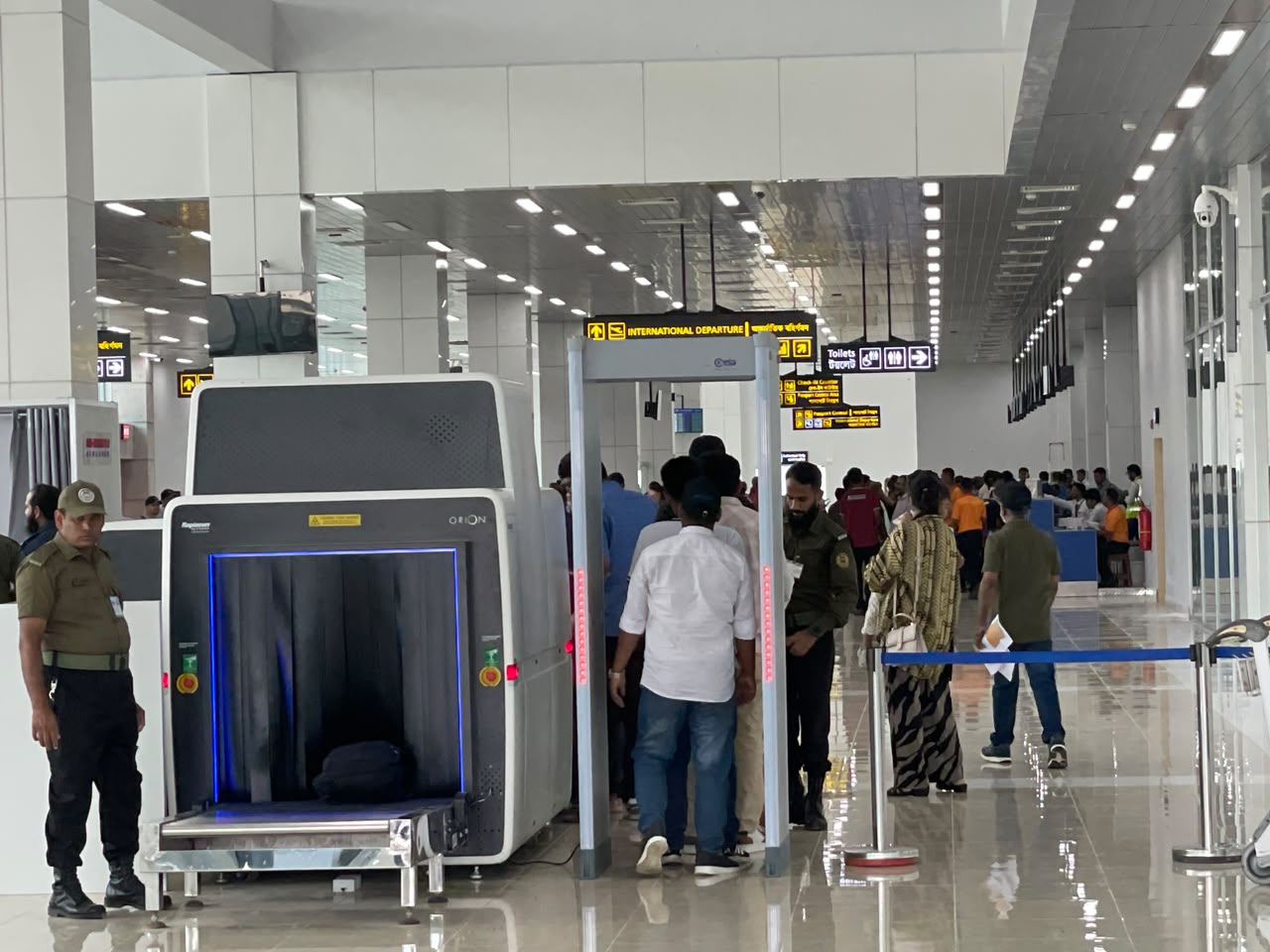
After years of anticipation, trial operations of the international passenger terminal began on Monday morning (September 28). According to project officials, the airport is expected to be ready to operate international flights from October.
M Mosharraf Hossain, coordinator of the runway expansion project, said the asphalt overlay, runway expansion and lighting works had been completed.
“The airport is ready for international flight operations,” he said.
According to the Civil Aviation Authority of Bangladesh (CAAB), the international passenger terminal cost about Tk 362.63 crore and covers 17,956 square metres.
The terminal includes departure and arrival lounges, immigration counters, a boarding bridge, baggage belts, check-in desks, duty-free shops, escalators and lifts, among other facilities required for international passenger services.
CAAB expects the airport’s annual passenger-handling capacity to increase from around 730,000 to 1.8 million after the terminal expansion.
The airport has also built an apron that can accommodate two wide-body aircraft and three Dash-8 aircraft, along with two taxiways.
Country’s longest runway
The runway at Cox’s Bazar airport has been extended from 9,000 feet to 10,700 feet, making it Bangladesh’s longest runway.
The 1,700-foot extension reclaimed around 43 hectares of land from the Bay of Bengal.
The runway has been developed to accommodate larger aircraft, including Boeing 777-300ER and Boeing 747-400 aircraft.
The project also included precision approach lighting on the sea-facing extension and a Category II airfield ground lighting system.
A 1.89-kilometre protective embankment has been constructed to protect the runway from cyclones and tidal surges.
New opportunities for tourism
Direct international air connectivity could make Cox’s Bazar more accessible to foreign tourists while creating opportunities for investment in hotels, resorts, restaurants, transport and other tourism-related businesses.
Tourism expert Helaluddin said internationalisation of the airport could bring significant changes to the tourism sector.
“Improved direct international connectivity would make Cox’s Bazar more accessible to foreign tourists. However, an integrated plan for tourism infrastructure, security and environmental conservation is necessary to ensure the benefits,” he said.
Another tourism expert, Shahjahan Monir, said the runway expansion over the sea and the international terminal had added a new dimension to Cox’s Bazar’s tourism prospects.
“If international routes are introduced, the impact could extend beyond tourism to business, trade and investment,” he said.
Expectations among tourists
Rajesh Sharma, a tourist from Dhaka, said international flights could make travel to Cox’s Bazar easier for both foreign tourists and people from different parts of Bangladesh.
“The changes at the airport could further increase the appeal of Cox’s Bazar as a tourist destination,” he said.
Sujon Kibria, who came from Chattogram, said an international airport could establish direct connectivity between Cox’s Bazar and different countries.
“I hope this will create opportunities not only for tourism businesses but also for employment for local people,” he said.
ANM Helal Uddin, president of the Cox’s Bazar Citizens’ Forum, described the start of trial operations at the international passenger terminal as an important development for the district.
He said international flights could positively impact tourism, business, and the local economy, but stressed the need to ensure tourist safety, environmental protection, and adequate tourism facilities.
Meanwhile, Home Minister Salahuddin Ahmed said a new modern master plan would be prepared for Cox’s Bazar based on a proposal from the Civil Aviation and Tourism Ministry.
He said the main objective of the new master plan would be to develop the region as an international-standard tourism hub.
By Tarekur Rahman
Cox’s Bazar Life Photo