

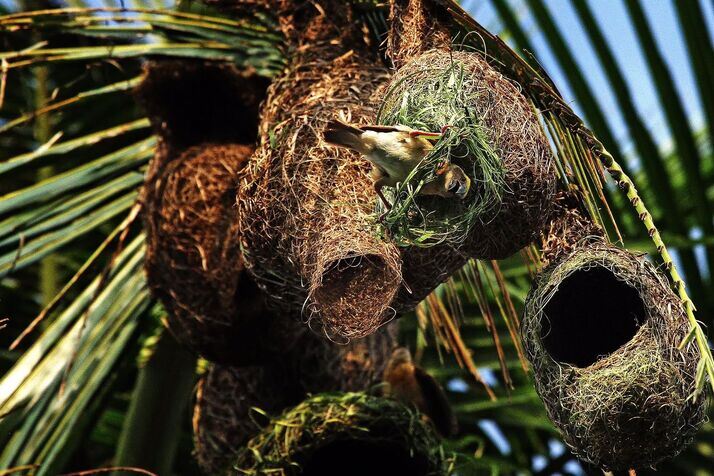
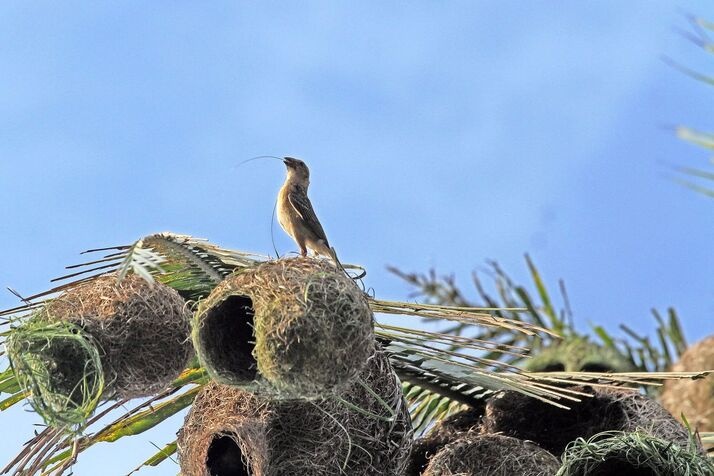
Once an integral part of rural Bengal’s charm, the artistic nests of Babui Pakhis (weaver birds) are now on the brink of extinction. Cox’s Bazar Life recently captured a rare photograph of a few weaver bird nests on coconut trees. Historically, these birds wove their intricate nests on palm trees, showcasing nature’s unparalleled artistry.
In earlier times, villagers were mesmerized by the sight of weaver bird nests dangling from palm tree branches. Using natural materials like straw, twigs, palm leaves, and grass, these birds exhibited remarkable craftsmanship and intelligence. It would take 8 to 10 days to construct a single nest, which was so robust that it resisted tearing with considerable difficulty.
As poetically captured in a famous Bengali verse, “Babui pakhire daki boliche chorai, kure ghore theke kor shilper boroai” (The sparrow scoffs at the weaver bird, marvelling at its artistry despite living in a humble home), the artistic prowess of the Babui Pakhis stood as a testament to the beauty of simplicity.
However, these magnificent creatures and their crafts are vanishing due to environmental degradation, the decline of palm trees, and the impacts of climate change.
The Causes of Decline
Environmentalists attribute the disappearance of weaver birds primarily to the sharp decrease in palm trees, which served as their primary nesting grounds. Rapid modernization and changes in rural landscapes have also disrupted the bird’s natural habitat.
Once, palm trees adorned villages with 100 to 110 nests hanging on their branches. Today, this picturesque scene is but a nostalgic memory. Villages where Babui Pakhis flourished a decade ago now stand bereft of their presence.
The Call for Conservation
Experts emphasize the urgent need for action to save these talented avian architects. Planting and preserving palm trees in rural areas could provide them safe habitats. Furthermore, raising awareness about ecological balance is essential for their survival.
The Babui Pakhis are more than just birds; they represent a valuable aspect of Bengal’s rural heritage. Their extinction signifies a loss far more significant than biodiversity—it erodes a cherished cultural legacy. Everyone should collaborate to preserve these natural artisans and the stories they weave into our shared history.
By Rajin Saleh
Photo: Polash Shikdar