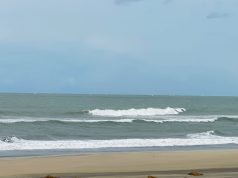

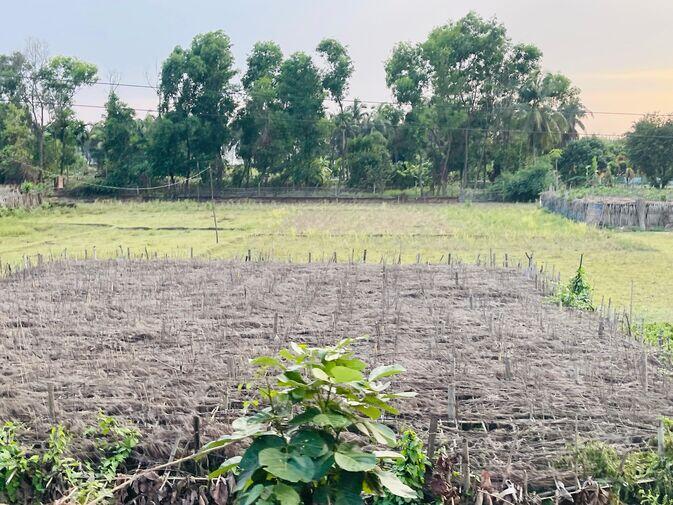
Large green betel leaf gardens lining both sides of Cox’s Bazar–Teknaf Marine Drive are increasingly attracting the attention of tourists travelling along the scenic coastal road. Alongside the beauty of the sea, the neatly arranged rows of elevated betel leaf plantations have added a distinct rural charm to the coastal landscape, particularly on the route to Teknaf.
Local farmers said betel leaf cultivation is now expanding widely across Cox’s Bazar, Sadar, Ramu, and Ukhiya. Although the cultivation was once limited in scale, many farmers are now shifting from paddy and other crops to betel leaf farming as it has become more profitable.
Local farmer Ataul Islam stated that betel leaf cultivation now occupies the land along Marine Drive for almost the year. He said growing demand and favourable market prices have encouraged more people to engage in farming.
He also said that betel leaves can be harvested several times a year from a single garden, making it possible to earn substantial profits even from relatively small plots of land.
He added that betel leaf farming has become highly profitable, and many people in the area now depend on it for their livelihood.
Apart from farmers, many labourers are also involved in building the gardens, maintaining the plantations, harvesting the leaves, and marketing the produce.
Agriculture officials said the region’s coastal climate and soil quality give local betel leaves a distinctive taste and quality. After fulfilling local demand, we also supply the betel leaves to various regions across the country.
Meanwhile, the lush green plantations beside the road captivate tourists travelling along the Marine Drive. Many stop their vehicles to take photographs, while others buy and taste fresh betel leaves directly from local sellers.
Locals believe these betel leaf gardens play an important role in Cox’s Bazar’s economy alongside the tourism industry.
Farmers hope that with proper planning and government support, betel leaf cultivation in the coastal region will expand further.
By Mohammad Morshed
Photo: Mohammad Morshed