

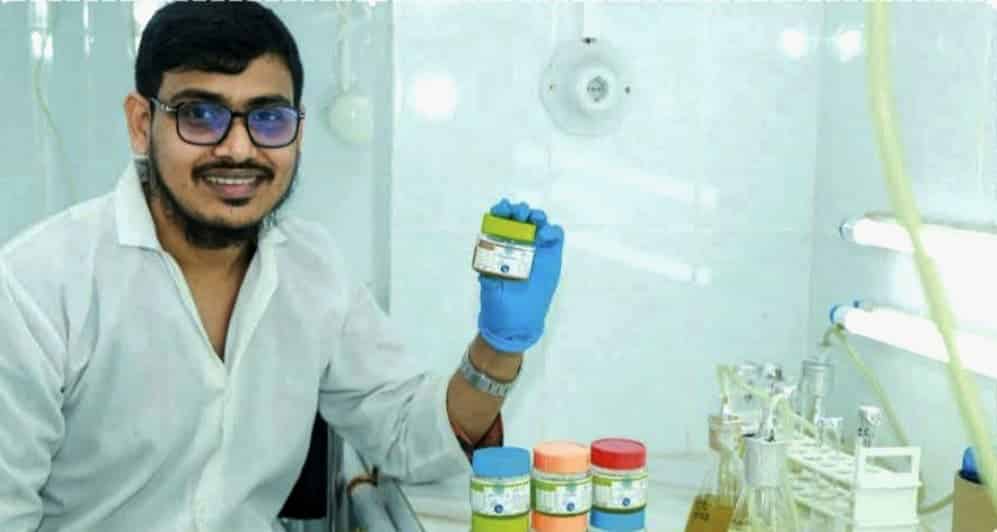
Shrimp and crab hatchery owners along the Cox’s Bazar–Teknaf coast are now seeing higher profits using locally developed microalgae species discovered by scientists at the Bangladesh Fisheries Research Institute (BFRI). Replacing imported microalgae with native varieties has led to a 20% increase in post-larvae production and improvements in quality, all while saving valuable foreign currency.
Lutfur Rahman Kajol, president of the Shrimp Hatchery Association of Bangladesh (SHAB) and a board member of BFRI, shared that around 60 shrimp hatcheries operating along the Cox’s Bazar coast now supply post-larvae to over 300,000 hectares of shrimp and crab farms across the country, most of which cater to export markets. These hatcheries rely on broodstock harvested from the deep sea, artificially spawned to produce larvae.
Previously, imported microalgae and Artemia were used as larval feed. However, due to the inability to thoroughly sanitize these imports, disease outbreaks became common, often resulting in heavy financial losses and even the closure of several hatcheries. The recent innovation of native microalgae by BFRI scientists has presented a game-changing alternative.
According to SHAB sources, the hatcheries in Cox’s Bazar produce 18 to 20 billion shrimp post-larvae annually, requiring 60,000 to 70,000 broodstock shrimp. A single broodstock can lay anywhere from 300,000 to 1 million eggs. Previously, only about 30% of the larvae survived — that figure has now improved to nearly 50%, thanks to the new microalgae.
The breakthrough was made under the leadership of Dr. Shafiqul Rahman, Chief Scientific Officer and Head of BFRI’s Marine Fisheries and Technology Center in Cox’s Bazar. Since 2018, a team comprising Senior Scientific Officer Zakia Hasan and Scientific Officers Zahidul Islam and Turabur Rahman has been conducting intensive research, resulting in this successful innovation.
Dr. Shafiqul Rahman stated that BFRI scientists identified several species of native microalgae suitable as larval feed in the Bay of Bengal. Following multi-phase indoor research and nutrient analysis at the institute’s Live Feed Lab, over four tons of purified algae stock have been distributed — free of charge — in 406 batches to universities, research centers, and shrimp, crab, and coral hatcheries in both the public and private sectors.
BFRI has recently developed algae-based commercial feed products to make stock availability even easier, which can be preserved for 7 to 45 days, depending on the species. Dr. Rahman expressed hope that this innovation will be vital in distributing algae stocks nationwide with greater efficiency and sustainability.
Contributor: Tareque Hasan
Photo: Collected