

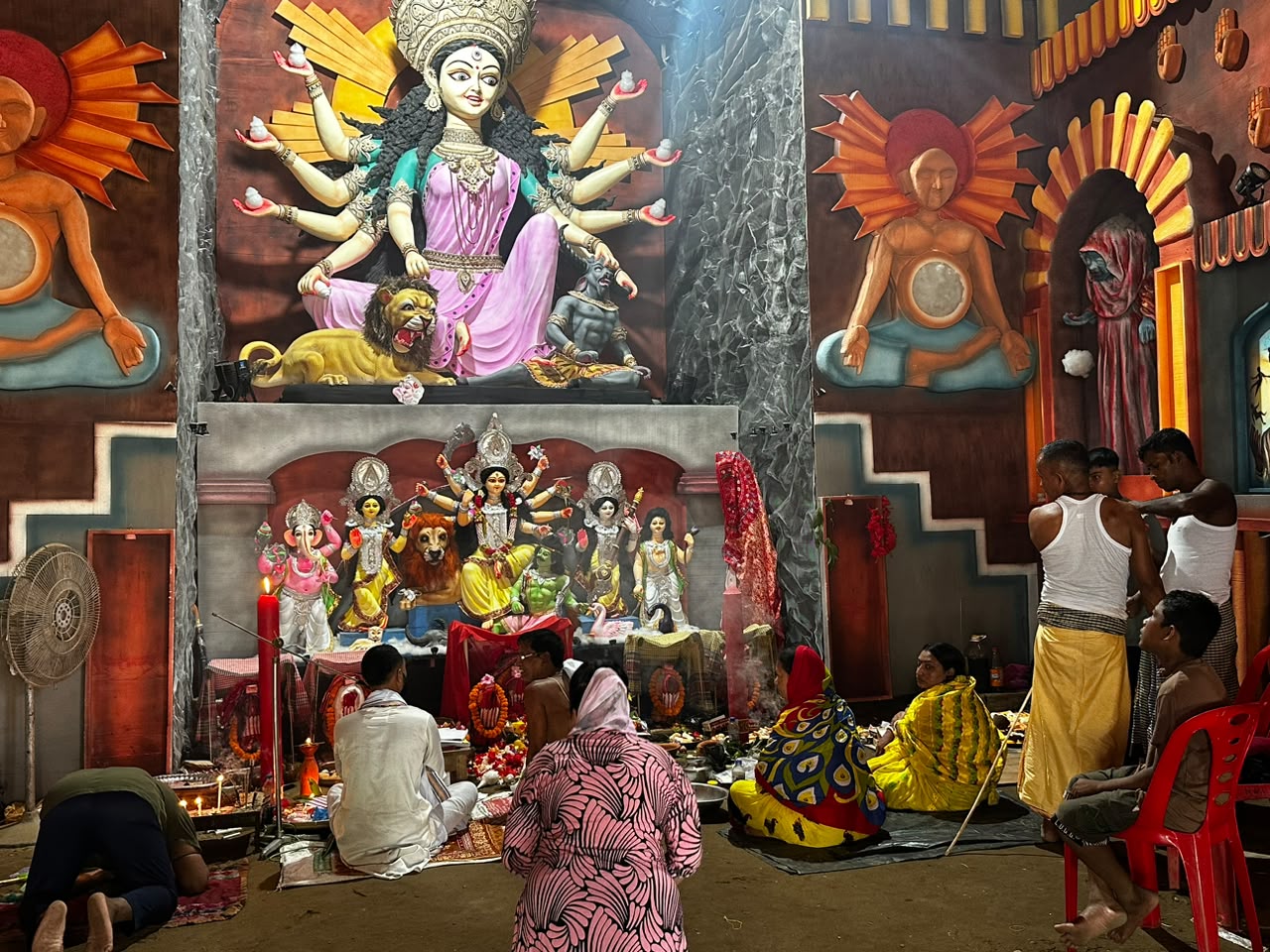
Maha Saptami, one of the most significant days of the Sharadiya Durga Puja festival, is observed across Cox’s Bazar on Saturday, with devotees gathering at temples and temporary puja mandaps to offer prayers and flowers to Goddess Durga.
Religious rituals have been under way since morning, while the sounds of traditional drums and conch shells have added to the festive atmosphere at the mandaps.
At Indrasen Durgabari in the Goldighirpar area of Cox’s Bazar town, men and women of different ages arrived to offer pushpanjali, or floral offerings, at the goddess’s feet. Some carried flowers and bel leaves for the ritual, while others attended the ceremonies with family members.
According to Hindu religious beliefs, Maha Saptami is an important occasion to worship Goddess Durga as a symbol of strength and well-being and to seek the destruction of evil. Devotees pray for peace, prosperity, and welfare for their families, communities, and the country.
Under traditional Hindu rituals, the day’s main ceremonies begin at dawn with the ceremonial bathing of the Nabapatrika, followed by its placement inside the puja mandap. Known as Kolabou, the Nabapatrika is prepared by tying together nine plants: banana, colocasia, turmeric, jayanti, bel, pomegranate, ashoka, mankachu, and paddy.
After the ceremonial bath, the Nabapatrika is placed at a designated spot inside the mandap. The ritual reflects the connection between goddess worship and nature, particularly the plant world.
According to traditional rites, sacred water and other ritual materials are used in the ceremonial bathing of the goddess’s reflected image in a mirror. The goddess’s divine presence is then invoked through prescribed mantras and rituals.
During the Saptami puja, priests worship Goddess Durga according to prescribed rites, including the Shodashopachara, a sequence of 16 traditional offerings and acts of devotion. The ceremonies include chanting mantras, offering flowers and food, and performing arati, a lamp-based ritual.
After morning worship, devotees offer flowers and bel leaves at the goddess’s feet. Religious ceremonies, prasad distribution, and other festivities are scheduled to continue throughout the day, followed by evening aarti amid the sounds of bells, conch shells, and drums.
According to the religious almanack, Saptami worship is scheduled for Saturday from 7:31 am to 9:57 am. However, the Saptami lunar phase will continue into Sunday, so some puja mandaps will also observe Saptami rituals the following day.
Cox’s Bazar Life Report
Photo: Abdu Rashid Manik