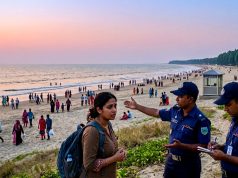

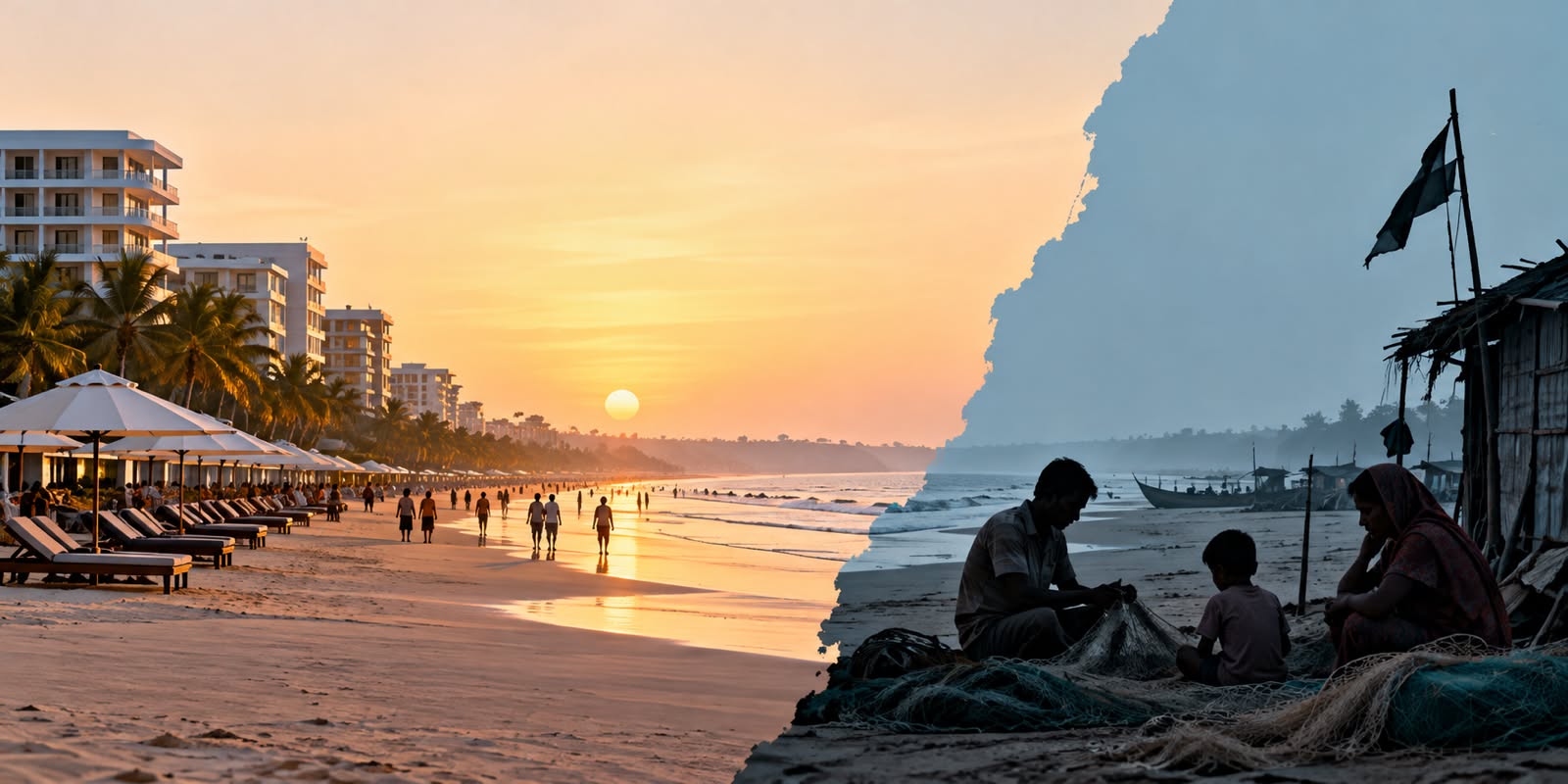
Cox’s Bazar, Bangladesh’s leading seaside destination, generates substantial tourism revenue. Hotels, restaurants, transport operators and other businesses thrive, particularly during holidays. During Eid in 2025, local business organisations estimated tourism-related transactions at Tk 400–700 crore. Yet many local families continue to struggle with poverty, insecure livelihoods and limited economic opportunities.
The contrast raises a question: how much of the wealth generated by tourism actually reaches the people who live here?
One concern is economic leakage. When tourism businesses purchase goods and services from outside the district, or profits flow to investors elsewhere, less money circulates locally. No reliable estimate shows how much tourism revenue leaves Cox’s Bazar. Nevertheless, the distribution of this wealth deserves scrutiny.
Poverty figures reveal the challenge. A World Bank study published in 2019 cited earlier estimates placing poverty at approximately 40% in Teknaf and 30% in Ukhiya. Bangladesh’s National Multidimensional Poverty Index reported that 47.7% of Cox’s Bazar residents experienced multidimensional poverty, reflecting deprivation in education, health and living standards. These measures differ, but both expose longstanding disadvantages.
Education remains another barrier. World Bank research found that roughly one-third of adults in surveyed host communities had never attended school. Without adequate education, vocational training or language skills, many young people struggle to secure better-paid tourism jobs. Yet skills alone cannot resolve inequality. Limited access to investment, business ownership and commercial opportunities can also restrict local entrepreneurs from participating in the growing tourism economy.
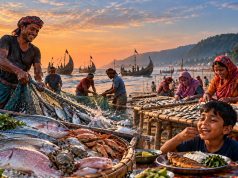
Meanwhile, families dependent on fishing, salt production, dried-fish processing and seasonal employment face uncertain incomes and rising living costs. Economic hardship can push people towards precarious informal work, including unregulated beach vending, while poverty and limited educational opportunities increase children’s vulnerability to exploitation.
Cox’s Bazar needs a tourism strategy that puts local people first. Hotels and resorts should prioritise qualified local recruitment, buy locally produced goods and services, and support small entrepreneurs. Government and industry must expand hospitality training, while corporate social responsibility programmes should strengthen local education and healthcare. Community-based tourism, homestays and traditional crafts could spread economic opportunities more widely, allowing smaller businesses and marginalised households to share in tourism’s growth.
Tourism’s success cannot be measured solely by visitor numbers, hotel occupancy or revenue. Its real value lies in improving lives. Cox’s Bazar will achieve meaningful prosperity only when the wealth generated along its coastline is reflected in the incomes, employment and living standards of its people.
By Salam Abu
Editor