
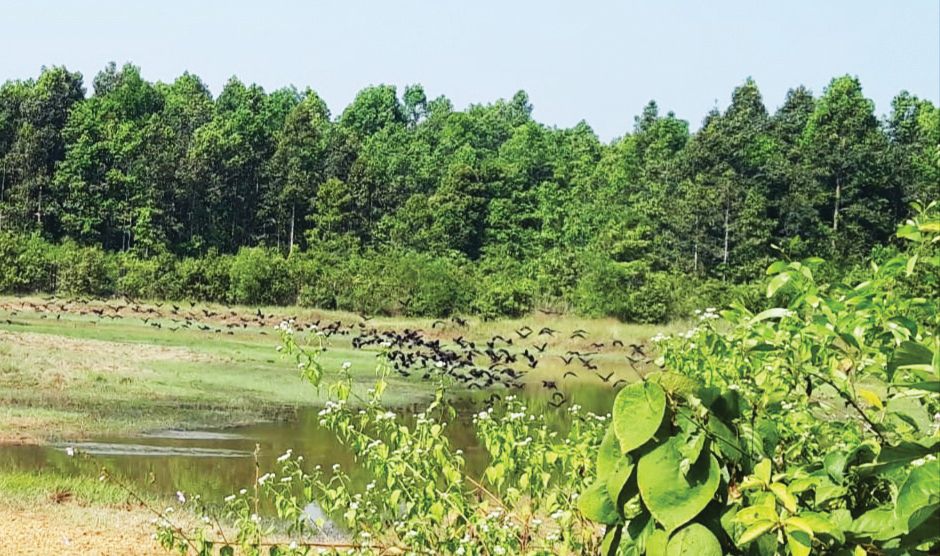
Dulahazara Safari Park in Chakaria, Cox’s Bazar, has once again come alive with the arrival of migratory birds as winter tightens its grip. In recent days, flocks of these seasonal visitors have been seen roaming in and around the herbivore enclosures and adjacent areas of the park, drawing a steady stream of tourists eager to enjoy the spectacle.
Having travelled thousands of miles, park authorities said the birds are moving in groups around the park’s lake area.
Visitors are particularly captivated by the sighThe sight of the birds swimming and taking flight over the clear waters particularly captivates visitors.t of the birds swimming and taking flight over the clear waters.
Despite the annual arrival of migratory birds, many observers suspect a slight decrease in their numbers this season due to climate change and adverse environmental conditions.
According to wildlife officials, migratory birds begin their journey south each year in early November and December as winter sets in north of the Himalayas. Fleeing the cold of Siberia, Mongolia, China, Nepal, Xinjiang, and colder regions of India, they head towards the milder climates of South Asia. During this period, Bangladesh becomes a temporary home to large numbers of migratory birds, with Dulahazara Safari Park emerging as one of their key habitats.
Safari Park sources noted that the harsher winter this season has resulted in a modest decline in the number of birds. Despite this, their calls have filled the park’s skies and lake area, adding vibrancy to the landscape. Most of the birds rest on the lake, and a large proportion belong to various duck species.
Among the migratory birds spotted are shovellers, pochards, flycatchers, garganey, little grebes, pintails, teals, moorhens, comb ducks, waterhens, sandpipers, and kingfishers. Other species occasionally seen include lapwings, plovers, wagtails, pipits, red-crested pochards, northern pintails, and stilts.
Manjurul Alam, acting officer-in-charge of Dulahazara Safari Park, said, “Every yea,r migratory birds arrive at our park’s lake. They have come this year as well, though in slightly fewer numbers than before. The drop is mainly due to the intense cold. We have instructed our staff to remain vigilant at all times so that visitors do not disturb the birds in any way.”
The seasonal presence of these migratory birds continues to enhance the park’s natural charm, offering visitors a rare glimpse of wildlife on the move while underscoring the need to carefully conserve their habitats.
By Abdu Rashid Manik
Photo: Courtesy