
The salty waters of the Bay of Bengal have created a unique coastal ecosystem along Bangladesh’s shores. Nurtured by nature, this environment hosts remarkable diversity in both flora and fauna. In the muddy coastal flats shaped by the rhythm of tides live a variety of unusual creatures. Among them is the fascinating mudskipper—a fish that does not live entirely in water like most others.
Among coastal communities, the fish is known by several local names. Some call it meowa fish, while others call it minnu fish. Regardless of the name, locals generally do not eat it. Instead, the fish, often seen darting around on muddy tidal flats, stands as a unique representative of the region’s biodiversity.
A fish that walks
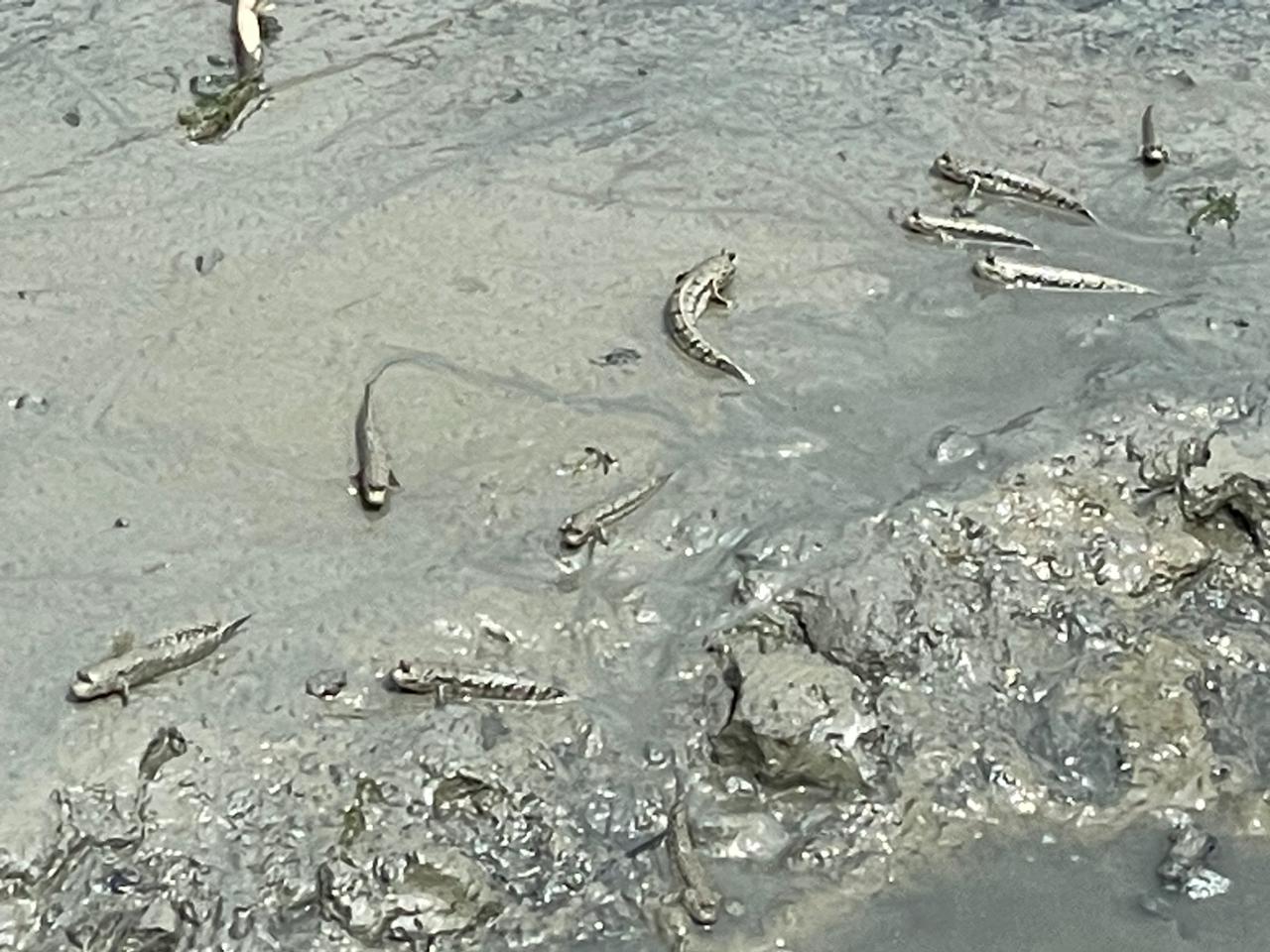
One of the most remarkable features of the mudskipper is that it not only swims but can also “walk.” Using its two pectoral fins near the chest like small limbs, the fish supports its body and moves across mudflats or even leaps forward. As a result, it appears more comfortable on muddy ground than in water.
When the tide rises, the muddy fields come alive with activity. Mudskippers can be seen hopping, darting, and scrambling across the soft ground, creating a lively spectacle in the intertidal zone.
The mudskipper typically has a long, cylindrical body measuring about six to nine inches in length. Its body is marked with brown stripes and numerous greenish spots. A spiny dorsal fin along its back further distinguishes the species.
Its eyes are particularly unusual. Large in proportion to its body, the eyes protrude from the top of its head, allowing the fish to observe its surroundings almost like a periscope.
The mudskipper also has a unique breathing system. It can absorb oxygen directly from the air through its gills and can also breathe through its moist skin. However, to maintain this ability, its body must remain wet at all times, which is why the fish stays close to muddy areas and water.
Scientifically known as Periophthalmus sobrinus, mudskippers display amphibian-like behaviour. They move freely between water and mudflats, adapting comfortably to both environments. These creatures typically live for around five years.
With its distinctive body structure, behaviour, and lifestyle, this small mud-dwelling fish adds a unique dimension to the biodiversity of coastal ecosystems. The mudskipper stands as a striking example of nature’s remarkable adaptation.
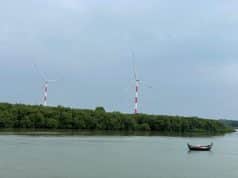
Photographs captured from the coastal area of Nunia Chara in Cox’s Bazar offer glimpses of the intriguing life of this unusual fish, reminding us that Bangladesh’s coastline is not only a place of scenic beauty but also a rich reservoir of diverse wildlife.
By Abdu Rashid Manik
Photo: Abdu Rashid Manik