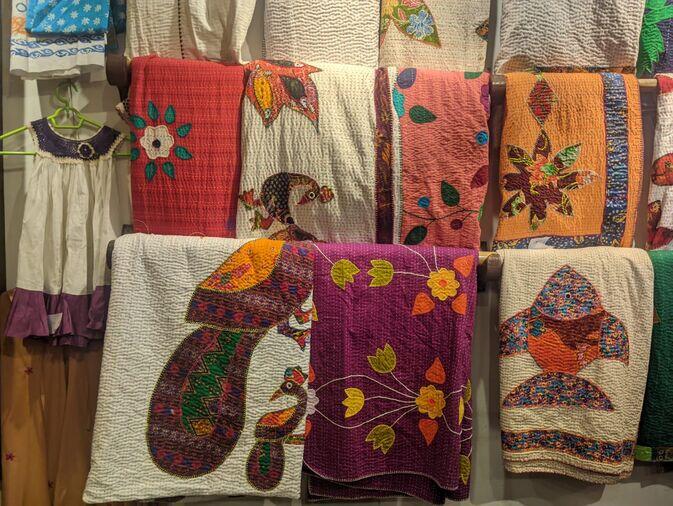
Intricately hand-stitched Nakshikantha (embroidered quilts), once a symbol of rural life in Bangladesh, have found their way onto the shelves of urban souvenir shops.
Traditionally crafted by village women as a form of artistic expression and domestic utility, these quilts are now sought-after items cherished for their cultural and aesthetic value.
For generations, women in rural areas have poured their creativity and skill into making Nakshikantha, often as a pastime or a way to save for their families.
Today, these handcrafted masterpieces are more than just household items—they serve as cultural ambassadors, showcasing the essence of rural craftsmanship and heritage in urban markets.
Despite being affordable, each Nakshikantha reflects its makers’ rich artistry and dedication. Souvenir shop owners report that these quilts are trendy among customers, who view them as collectible and eco-friendly gifts.
For city dwellers, a Nakshikantha is not just a product but a memory of rural tradition and a token of cultural pride.
This initiative has significantly impacted the economic empowerment of rural women, providing them with a sustainable source of income. At the same time, it fosters a deeper appreciation for rural heritage among urban consumers.
With growing support, the artistic charm of Nakshikantha is expected to reach wider audiences, encouraging more women to embrace this craft and achieve financial independence.
By bridging rural craftsmanship with urban demand, Nakshikantha symbolizes unity between generations, cultures, and communities.
By Rajin Saleh