
The Rakhine community resides in approximately 26 villages within the Choufaldandi area of Cox’s Bazar. Their primary source of income is the production and sale of “Nappi.”
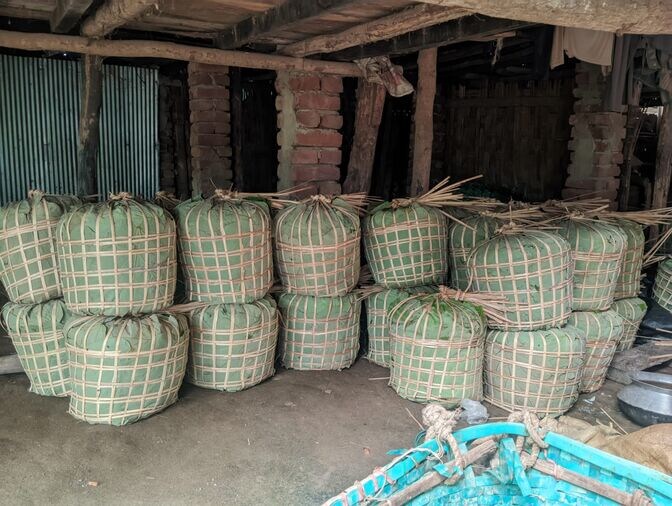
Shila May, a Rakhine woman, was seen wrapping processed nappi in bamboo and gamari leaves and placing them in a particular bamboo basket containing around 20 kg of nappi.
She sells at wholesale and retail, priced at Tk13,000 per maund and Tk400 per kg. Nappi is a favorite dish among the hilly Chakma people.
Shila May said that the food is also known as shidol, a favorite dish of the Tripura people. Nappi can be mixed with water or consumed directly, doubling the dish’s flavour. Like dried fish, nappi can enhance the taste of almost any curry.
The production of nappi takes place primarily along the coastal embankments.
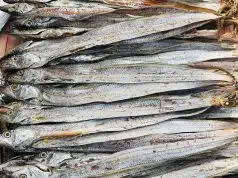
Uthela, a nappi trader, informed Cox’s Bazar Life that they gather tiny shrimp and other small fish from the sea, pound them with wooden mallets, and then dry them under the sun. They repeat this process three times before packing and readying the final product for sale.
Fishermen and Rakhine families are busy all day preparing nappi on spread-out mats on the banks of the Choufaldandi Canal. Similar scenes are familiar in villages like Dakhin Para, Mog Para, Jaliya Para, Majher Para, and Madhya Para.
In the Choufaldandi Union of Cox’s Bazar, Nappi production directly or indirectly supports nearly 10,000 families.
With proper government support, the export of nappi could generate substantial foreign currency, contributing to the local economy and preserving the cultural heritage of the Rakhine community.
By Rajin Saleh