
As Bangladesh observes Rural Women’s Day on October 15, women in Cox’s Bazar’s villages continue to make important contributions to the rural economy, often out of public view.
While tourism drives much of the district’s economy, many rural women earn money by growing vegetables in their yards, raising ducks and chickens, planting rice with their families and catching fish in rivers and canals. Their work helps support household expenses, increase family incomes and pay for their children’s education.
Women in different villages of Ukhiya upazila are particularly involved in agriculture and related activities. For many, farming not only supports their families but also provides a key source of income.
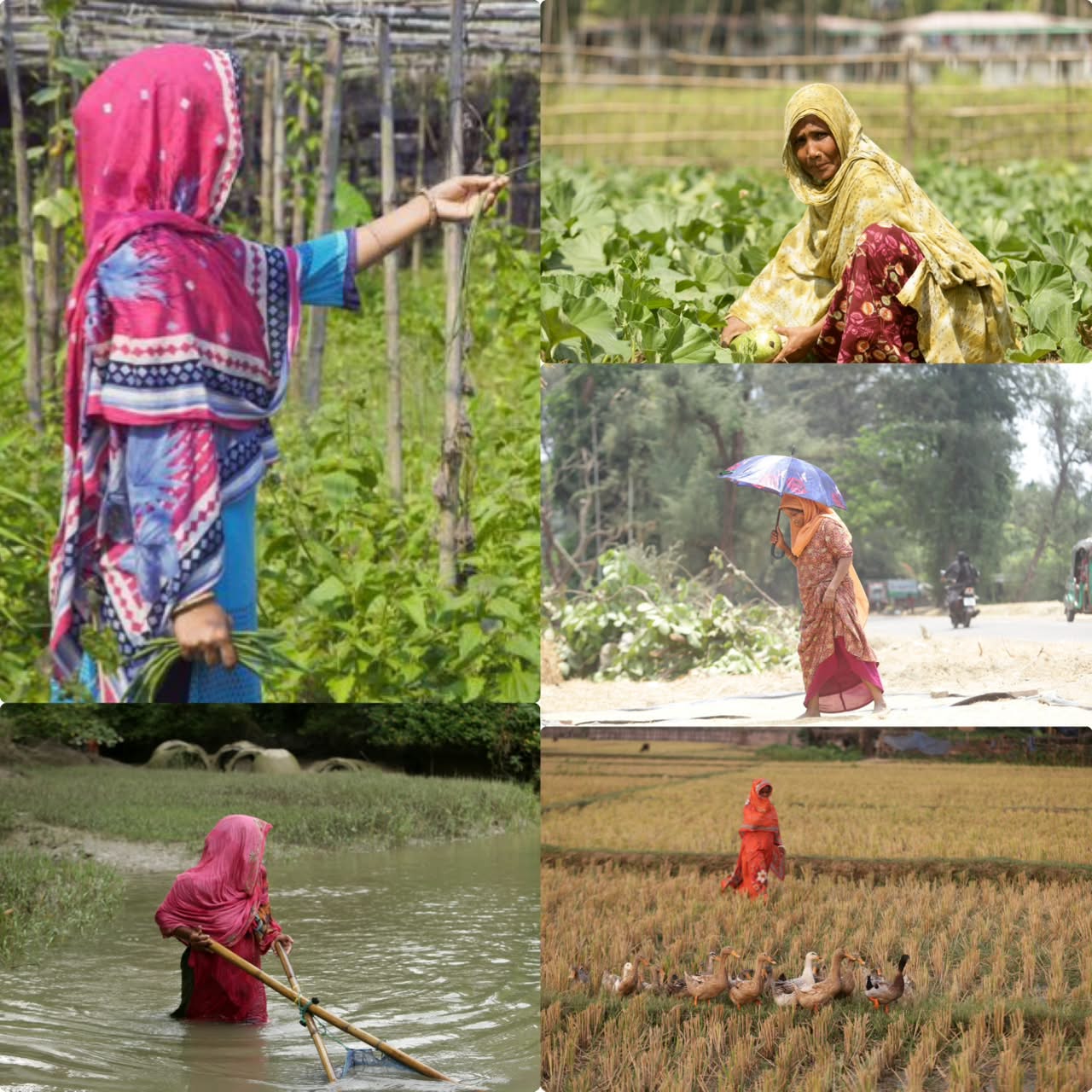
Sanjida, a housewife in Ukhiya, grows various vegetables in her yard and sells the produce wholesale. She uses the earnings to meet household expenses and pay for her children’s schooling.
“I enjoy growing vegetables. I help my husband support the family, and I can also cover my children’s school expenses with the money from selling vegetables. I earn more than Tk 15,000 a month from vegetable cultivation,” she said.
Monowara Begum, a resident of Sonarpara in the same upazila, earns her living by raising ducks using traditional household methods. She sells the ducks at local markets and earns more than Tk 10,000 a month. Her income plays an important role in meeting family expenses alongside her husband’s earnings.
Housewife Jamila Akter works with her family members in agricultural fields, including planting rice. She said women’s labour, alongside that of male family members, was essential to crop production.
“We help the men in our family with agricultural work. We work together, and that makes crop production possible. During the harvest season, our income from selling rice exceeds Tk 100,000,” she said.
In rural Ukhiya, some women also depend on fishing for their livelihoods. Halima Begum, from Pechar Dwip along the Marine Drive, is one of them. She goes out early every morning with a small net to catch fish. The money she earns from selling her catch supports her family. Despite the difficulties, she continues to work every day to make ends meet.
Nurjahan, meanwhile, grows bottle gourds on land around her home. Selling the produce provides additional income and helps cover household expenses.
These women’s experiences reflect the diverse ways rural women contribute to the economy. Whether working in agricultural fields, growing vegetables in home gardens, raising poultry or catching fish, they help increase household incomes and support the local supply of agricultural produce and food.
However, their contributions often receive little formal recognition. Their labour, skills and initiatives not only strengthen household finances but also help women become more economically self-reliant.
Women in Ukhiya and other rural areas of Cox’s Bazar show that contributing to economic progress does not require a large-scale enterprise. By using their skills, labour, and resources, they can play a significant role in supporting their families and communities.
The agriculture extension department in Ukhiya said rural women contribute significantly to agricultural production and the local economy. The department provides training at different times to improve women’s skills, introduce modern cultivation methods, and help increase production.
The department said greater women’s participation in agriculture can raise household incomes and make the local economy more dynamic.
By Mohammad Morshed and Hussain Shetu
Photo: Hussain Shetu