The monsoon has brought a burst of colour and fragrance to St Martin’s Island, where the fruits of the screw pine tree, locally known as Kiyagula, have begun ripening across the island’s coastal landscape.
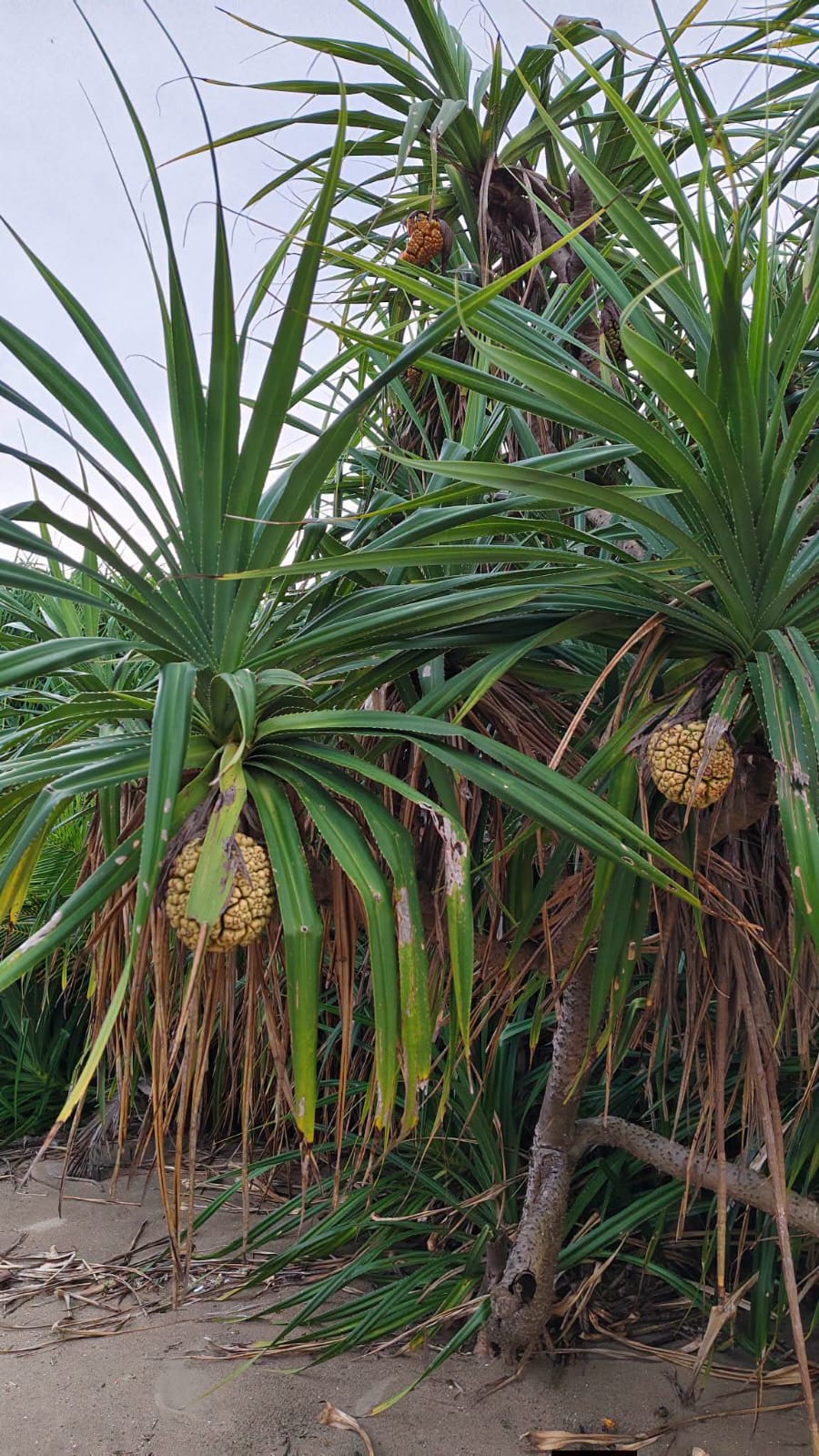
Known for its intensely fragrant flowers and ecological importance, the screw pine (Pandanus odorifer) is one of the island’s characteristic coastal plants. As the fruits ripen at the onset of the rainy season, they turn bright red before falling to the ground, filling the surrounding air with a sweet aroma that often resembles that of ripe tropical fruit.
St Martin’s is home to large numbers of screw pine trees, which thrive in the island’s sandy coastal terrain. Although the fruit resembles an edible tropical fruit, local people say only the small seeds inside are edible. Extracting them, however, is a time-consuming process, meaning the fruit is valued more for its fragrance and appearance than as a food source.
Local resident Taiyab Ullah said islanders had grown up surrounded by screw pine trees.
“When the fruits ripen, they turn bright red and spread a sweet fragrance.” From a distance, it feels as though some delicious fruit has ripened nearby. During the monsoon, the scent of the flowers fills different parts of the island,’ he said.
The male screw-pine trees produce clusters of cream-brown flowers during the rainy season. Although modest in appearance, the blossoms release a strong fragrance that lingers for nearly a week, perfuming coastal paths, scrubland and the island’s natural groves.
Beyond their ornamental value, screw pine trees play an important role in protecting fragile coastlines. Their extensive root systems help bind sandy soil and reduce coastal erosion, making them a valuable natural barrier against the impacts of tides and storms.
Residents said the species requires little maintenance and grows well in sandy coastal areas, making it suitable for wider plantation in erosion-prone coastal belts and islands. They believe expanding screw pine plantations would strengthen coastal protection and enhance the region’s natural beauty and biodiversity.
As the sweet scent of ripening Kiyagula drifts through the damp monsoon air, St Martin’s once again showcases one of its most distinctive seasonal attractions, where nature’s fragrance and coastal resilience come together.
By Abdu Rashid Manik
Photo: Abdu Rashid Manik