
From lush green fields and golden paddy lands to the shaded thickets of rural Bengal, a remarkably brave little bird can be found in nearly every corner of Bangladesh. It lacks flamboyant colours, has no peacock-like plumage, nor the melodious voice of a parrot.
Yet a single sharp call from this bird is often enough to halt even a fierce predator in mid-air. This bird is the Drongo—locally known as Finge.
Despite its small size, the drongo’s courage, intelligence, and agility have earned it a unique status in the natural world.
Known in English as the Black Drongo and scientifically as Dicrurus macrocercus, it is a familiar but extraordinary presence across the Bangladeshi landscape.
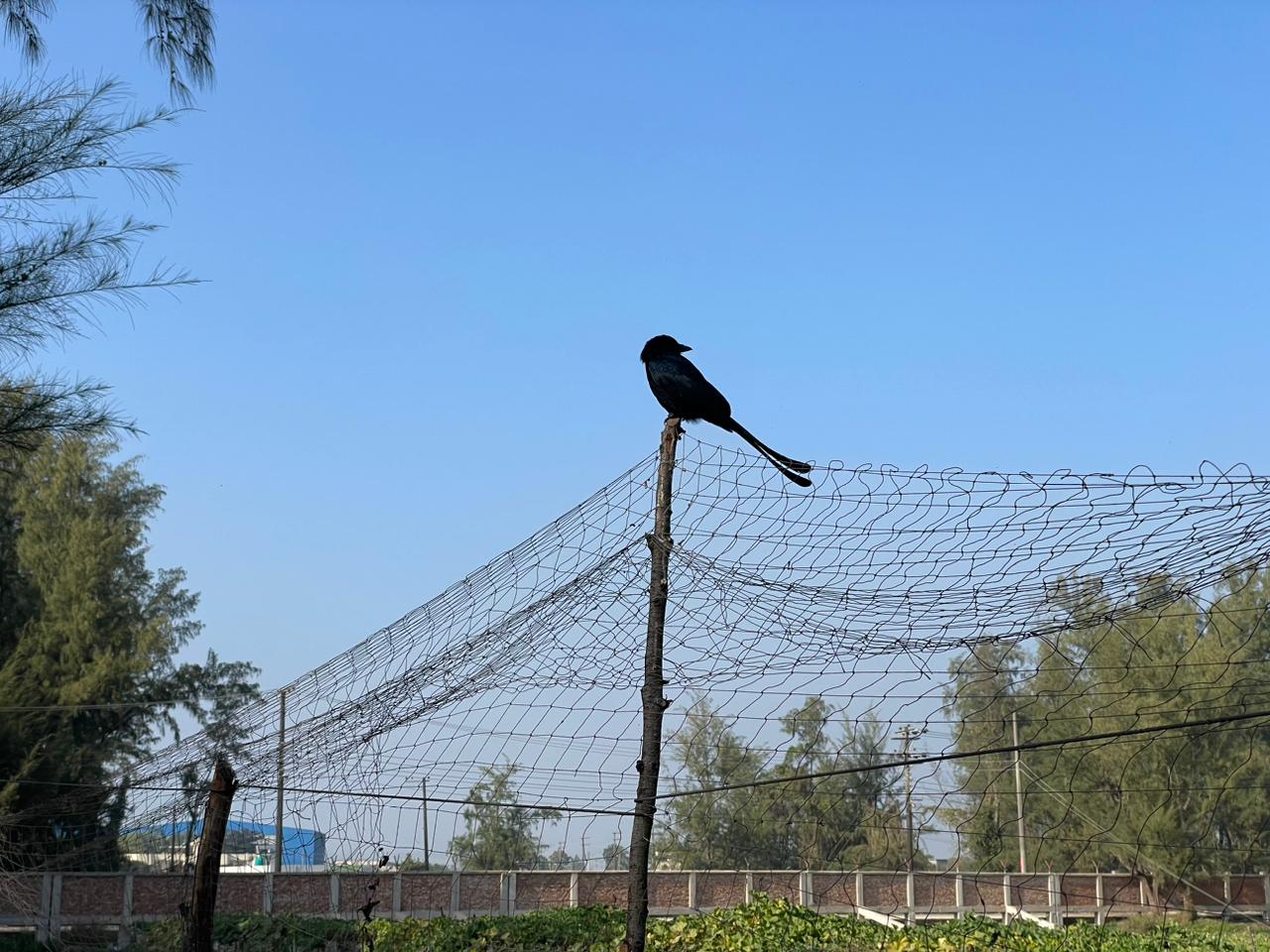
Recently, drongos were spotted in a mobile agricultural field near Kabita Chattar in Cox’s Bazar. The accompanying photographs were taken there.
Usually jet black, the drongo occasionally displays a bluish sheen or a faint brown tint on its body. Its long, forked tail, piercing eyes, and upright posture make it easy to identify. Above all, the drongo is known for one defining trait—it is fearless. In the vast theatre of nature, it stands out as a vigilant guardian.
It is not uncommon to see this tiny bird chasing much larger and more aggressive species such as vultures, hawks, kites, or crows. As if patrolling the open fields and farmlands were its daily duty, the drongo takes on threats far bigger than itself without hesitation.
According to Bangladeshi birdwatchers, the drongo is among the bravest native birds, actively confronting predatory species and alerting or protecting other birds in the vicinity. For this reason, it is widely regarded by farmers and nature lovers as both a courageous and beneficial bird.
The drongo’s contribution to agriculture is equally significant. By feeding on insects, it satisfies its own needs while safeguarding crops, vegetable gardens, and trees. Grasshoppers, beetles, leaf-eating insects, and other harmful pests form a major part of its diet.
This is why farmers often refer to the drongo as a “friend in times of danger.” Its role in promoting pesticide-free farming and maintaining ecological balance is invaluable.
Beyond courage, the drongo is also highly intelligent. Zoologists note that it can mimic the calls of other birds and cleverly use this ability to hunt. By imitating certain calls, it lures insects and small creatures closer, seizing them at the right moment. Scientists describe this behaviour as “clever mimicry”—a striking example of strategic intelligence in a seemingly ordinary bird.
Drongos are seen year-round, though spring marks their breeding season. During this time, male drongos become more vocal, perform display flights, and build sturdy nests in shrubs or trees to attract mates. Coconut, jackfruit, and bamboo groves are common nesting sites. Though small, their nests are well-built and secure. Typically, the female lays 2 to 4 eggs, and both parents share the responsibility for incubation and raising the chicks.
However, rapid urbanisation, the spread of mobile towers, indiscriminate tree felling, excessive use of pesticides in agriculture, and expanding human settlements are steadily reducing the population of drongos and other native birds. Their calls, flight patterns, and stories of bravery risk becoming confined to the pages of books.
Protecting the drongo means protecting nature itself. The drongo is not just a bird—it is a symbol of courage and a lesson in resilience and self-defence. A small yet powerful warrior in the natural world.
Even today, in places like Zia Udyan or Suhrawardy Udyan in Dhaka, school fields in small towns, open rural landscapes, or along riverbanks, the drongo’s sharp “chanch” call still startles passersby. It feels as though this tiny bird is awakening a forgotten sense of courage within us.
Nature teaches us many lessons, and the drongo is a living embodiment of those teachings—standing silently as a symbol of bravery, intelligence, and selfless service, watching over the skies, field,s and hearts of Bangladesh.
By Abdu Rashid Manik
Photo: Abdu Rashid Manik