

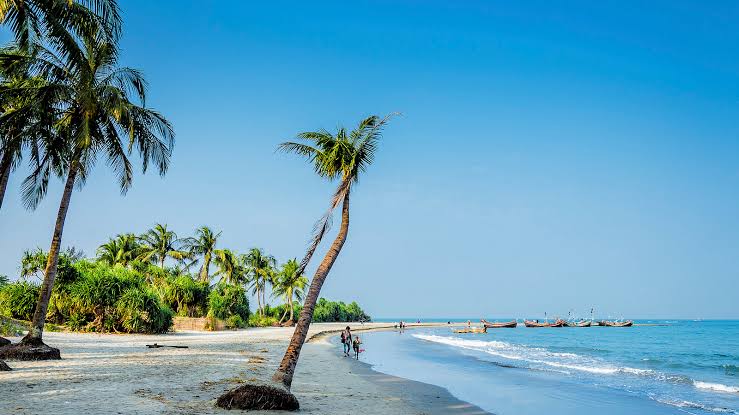
Nestled along Bangladesh’s southeastern coastline, the picturesque coral island of Saint Martin’s is a natural wonder and a place of historical intrigue. The origins of its name carry a fascinating backstory, often overlooked in mainstream narratives.
Nearly 250 years ago, Arab traders frequently stopped at this island during their voyages, referring to it as “Jazira”, meaning “island” in Arabic. Over time, local fishermen planted coconut trees across the island, and it became popularly known as “Narikel Jinjira”, translating to “Coconut Island.”
However, in the early 1900s, a British survey team formally incorporated the island into British India. This replaced the island’s native name, renamed “Saint Martin’s” after a British Christian saint. Gradually, this name became widely recognized and accepted.
Today, Saint Martin’s Island spans approximately 8 square kilometers (5 square miles) and is home to around 7,000 residents. As Bangladesh’s only coral island, it holds ecological and environmental significance beyond its reputation as a popular tourist destination. However, in recent years, excessive tourism and ecological neglect have placed the island under severe threat, raising concerns about its future sustainability.
By Rajin Saleh
File Photo