
Cox’s Bazar town is often synonymous with tourist crowds, traffic noise, and relentless concrete expansion. In such a bustling urban setting, the chirping of birds has become an increasingly rare sound.
Yet, in the heart of this busy coastal city, a quiet sanctuary has taken shape at Baitush Sharaf School and College, offering refuge to a wide variety of birds.
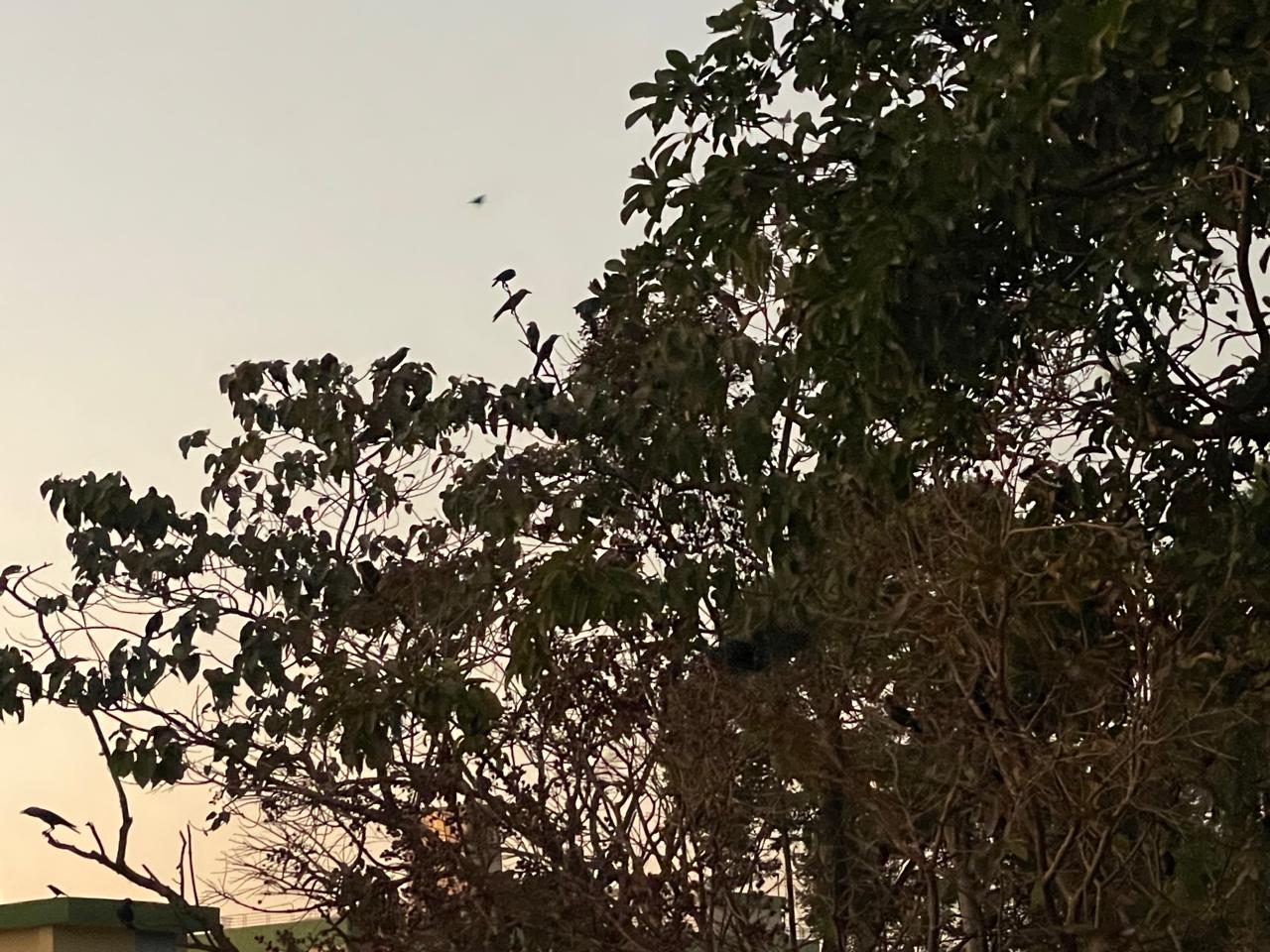
As dusk falls each day, the campus comes alive with birdsong. Branches fill with returning flocks, some settling into their nests while others call out to their companions.
Leaving the city’s clamour behind, the grounds seem to breathe in a rhythm set by nature itself.
The sight of trees teeming with avian life greets visitors entering the campus in the evening. It is as if a fragment of wilderness has survived within the urban sprawl, turning the educational institution into a safe and peaceful habitat for birds.
MM Sirajul Islam, director general of the Baitush Sharaf Complex and an educationist, told Cox’s Bazar Life that the presence of birds is the result of conscious and careful planning.
‘We have constructed large buildings and expanded the school and college, but everything was done in a planned manner,’ he said. ‘Every tree was carefully preserved during development. That is why birds have chosen this campus as a safe place.’
He added, ‘If there are trees, there will be birds; and if there are birds, the environment will survive. We will protect these trees as a sanctuary for birds and ensure their safety.’
Environmentalists say such green, protected pockets within cities are vital for the survival of urban birdlife. Planned developments like Baitush Sharaf School and College, they argue, can serve as a model for maintaining ecological balance alongside urbanisation.
In the fast-paced life of Cox’s Bazar, the campus has become more than just an educational institution. It stands as a living example of coexistence with nature — a tranquil address for birds amid the city’s noise and haste.
By Abdu Rashid Manik
By Abdu Rashid Manik