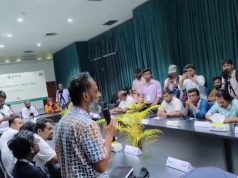
As the 13th national parliamentary election approaches, a civic dialogue focusing on development, representation and public interest issues in Cox’s Bazar was held in the district town on Saturday.
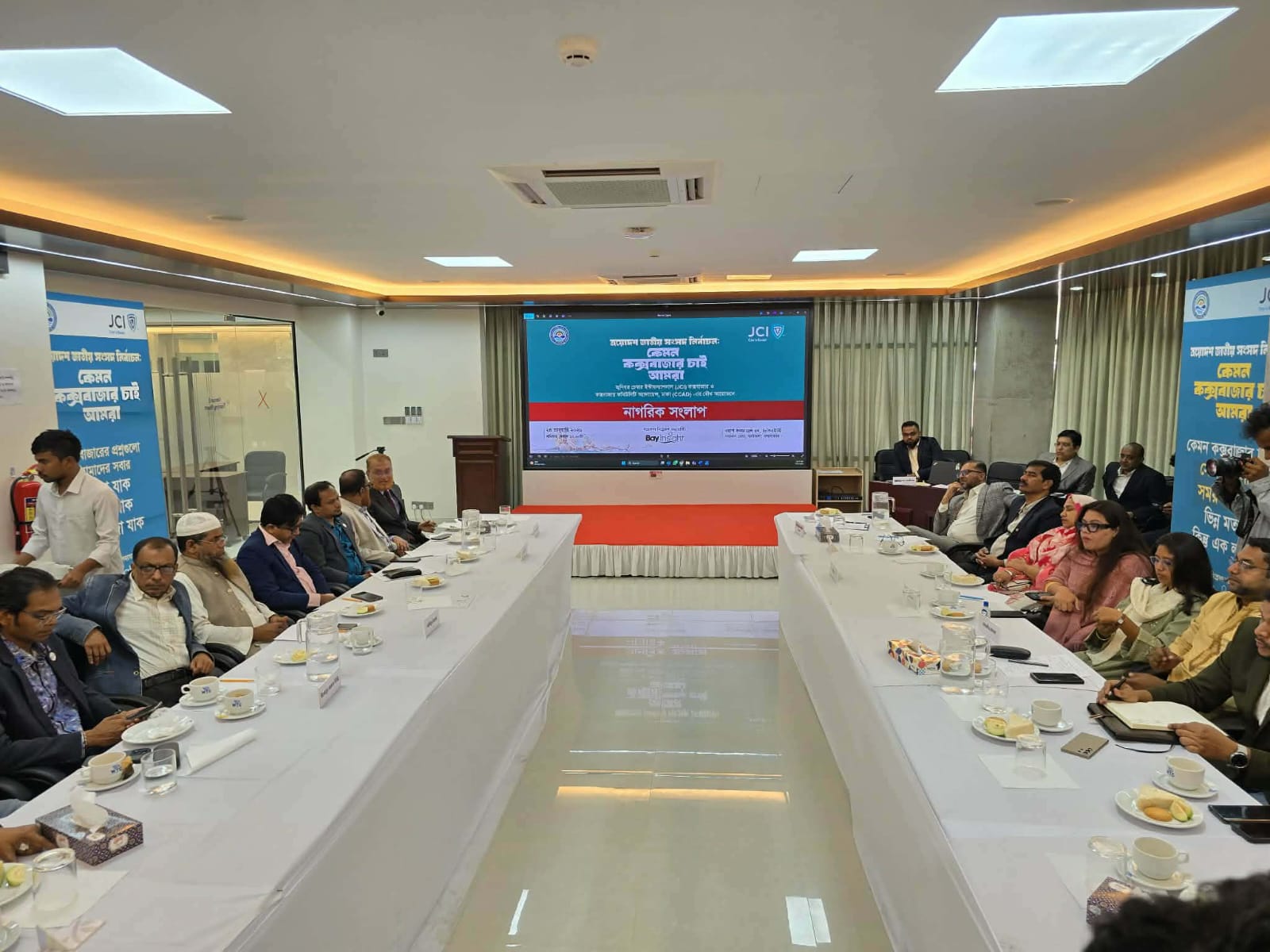
The dialogue took place at the Wash Conference Hall in Cox’s Bazar city and was jointly organised by Junior Chamber International (JCI) Cox’s Bazar and the Cox’s Bazar Community Alliance, Dhaka (CCAD), with Bay Insight serving as the research partner.
Titled ‘13th National Parliamentary Election: What kind of Cox’s Bazar do we want?’, the event featured open discussions on local development, tourism, environment, security, employment, health, education, women’s empowerment, and political accountability.
Development projects: who benefits?
Speakers at the dialogue said that, despite the implementation of a series of megaprojects in Cox’s Bazar, their tangible benefits for local people remain unclear.
Monowar Jisan, the president of JCI Cox’s Bazar, stated, “Cox’s Bazar is implementing large-scale projects, but the real question is—who are these developments for?” How much are local people benefiting in terms of employment, quality of life and security?”
He emphasized that unless local communities become active stakeholders in planning and implementation, development would not be sustainable.
Tourism-led economy and local entrepreneurs
Participants expressed concern that despite Cox’s Bazar being the country’s leading tourist destination, the sector does not fairly benefit local entrepreneurs and workers.
Tourism entrepreneur Mizanur Rahman Milki said, “Investment in tourism is increasing, but the space for small local entrepreneurs is shrinking. Without addressing this disparity, tourism cannot become sustainable.”
Vice-president of the Red Crescent Society, Riaz Mohammad Shakil, said that while coastal tourism is managed in an environmentally friendly manner in many countries, such practices are often restricted or neglected in Cox’s Bazar.
Environment and unplanned urbanisation
Environmental risks and unplanned urban growth raised serious concerns.
Advocate Md Jahangir said hill cutting, forest encroachment and destruction of the coastal ecosystem posed long-term threats to the very existence of Cox’s Bazar.
CCAD chief coordinator Mohibbul Moktadir Tanim said, “Our data analysis shows that without proper integration of environmental protection into development projects, Cox’s Bazar will face severe risks in the future.”
Security, borders and public trust
Speakers also highlighted public anxiety over border security, drug trafficking, human trafficking and the Rohingya crisis.
Politician Riaz Mohammad Sakil said, “Without security, people lose confidence in development. If living conditions are unsafe, neither tourism nor investment can be sustainable.”
NCP general secretary Omar Faruk said drug trafficking, the Rohingya crisis and human trafficking were interlinked issues, calling for the formation of a border development authority and declaring Ukhiya and Teknaf as special zones.
Political leadership and accountability
Participants stressed the need for realistic planning and accountable leadership, rather than mere electoral promises.
CCAD organiser Shah Newaz Chowdhury said, “After elections, the connection between elected representatives and citizens disappears. This culture must change.”
Cox’s Bazar district secretary of Jamaat-e-Islami, Zahedul Islam, said the persistence of long-standing problems reflected the absence of accountable leadership.
Women, education and health
Cox’s Bazar Women Chamber of Commerce president Jahanara Islam said the repeated question—what kind of Cox’s Bazar do we want—itself indicated stagnation, calling for technology-driven development and greater women’s leadership.
Student Afifa Ulfa stressed the need to expand technical and vocational education opportunities for women alongside formal education.
Rights activist Hasna Hurain said the health sector remained underdeveloped, while professionals willing to work there were often discouraged.
Economy, industry and trade
Vice-president of Cox’s Bazar Chamber of Commerce Sheikh Ashiquzzaman said the Teknaf land port had remained closed for three years, with around $9 million stuck in Myanmar, and called for its reopening along with the expansion of the Chattogram–Cox’s Bazar highway to four lanes.
Businessman Ashraful Huda Siddiqui Jamsed warned that the salt industry was on the verge of collapse and urged the government to intervene to protect local salt farmers.
Organisers’ remarks and recommendations
Organisers said the dialogue was not a political platform but a space for civic engagement and public interest discussion.
Organiser Hedayet Aziz Mithu said, “We want youth leadership and citizens’ voices to be reflected in policymaking.”
At the end of the programme, organisers said the opinions and recommendations raised during the dialogue would be compiled and formally submitted to political parties and policymakers.
Cox’s Bazar Life Report
Photo: Courtesy