

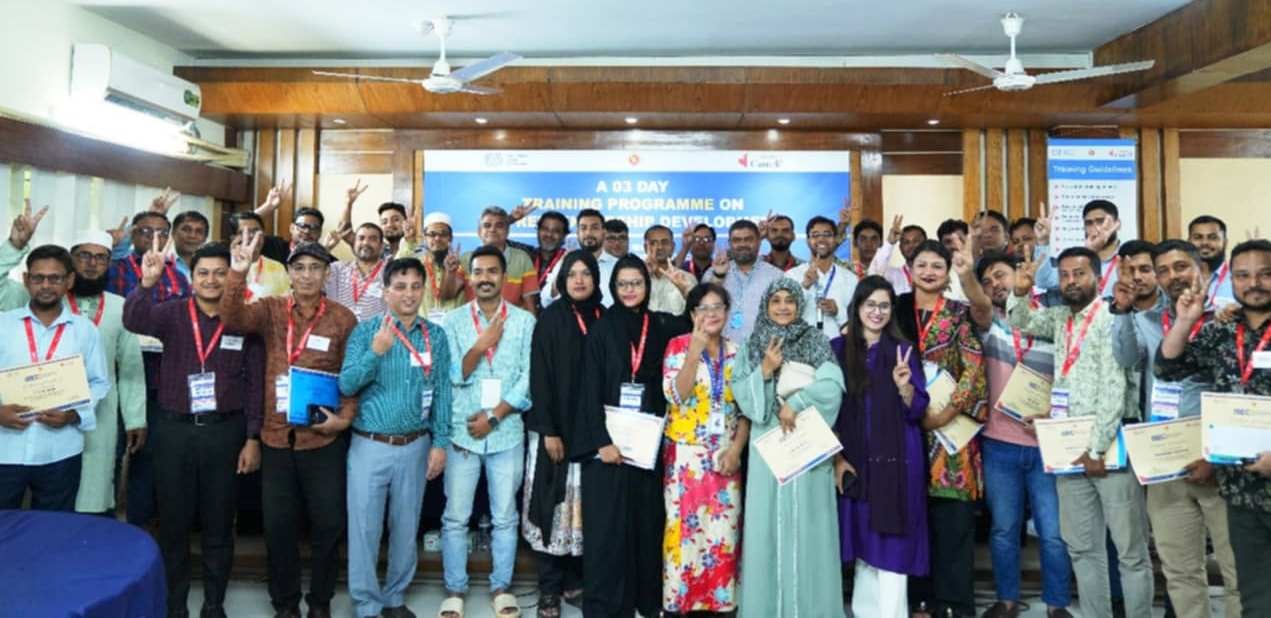
Enroute International Limited, under the “Improving Skills and Economic Opportunities for the Women and Youth in Cox’s Bazar (ISEC)” project supported by the International Labour Organization (ILO) and funded by Global Affairs Canada (GAC), successfully concluded 11th batch of a three-day Entrepreneurship Development Training at Cox’s Bazar.
The event aimed to enhance the business capabilities of local hotel and restaurant owners, with 36 enthusiastic participants attending from May 27 to 29, 2025. The training program, titled “Entrepreneurship Development Training”, provided practical and interactive sessions on marketing, financial planning, customer engagement, and business development.
Participants engaged in role-plays, group activities, product analysis, and case studies that focused on promoting Cox’s Bazar as a vibrant tourist destination.
The event was graced by M. Naveed Akbar, (National Programme Manager, ILO, Cox’s Bazar) who lauded the initiative and emphasized the importance of youth and women’s active participation in the tourism economy.
He remarked, “Cox’s Bazar has untapped potential. When our entrepreneurs are trained and empowered, they not only grow individually, but they also uplift the entire community.”
Md. Ibrahim Khalil Bhuiyan, Team Leader of the ISEC Project, delivered his insights into the project’s strategic objectives, stating, “Our goal is to provide participants with not just knowledge, but confidence—to turn their ideas into viable businesses that contribute to local development.”
Also present were Mr. Abul Kashem, President of the Hotel Owners’ Association, and Mr. Mohammad Ali, President of the Restaurant Owners’ Association. Both emphasized the critical need for training programs like these to improve service quality and strengthen the tourism ecosystem in Cox’s Bazar.
Mr. Kashem noted, “As hotel owners, we are the frontliners in the tourism experience. This training helps us understand the business beyond operations—it connects us with the bigger picture of economic sustainability.”
Mr. Ali added, “Restaurants are cultural ambassadors. Learning how to brand, market, and manage finances better ensures we offer more than just food—we offer experiences.”
The training successfully bridged knowledge gaps, encouraged entrepreneurial innovation, and created a platform for local business networking.
By Adbur Rashid Manik
Photo: Courtesy