

Eid is meant to be a celebration — a time of joy, togetherness, and festivity. But for thousands of Rohingya children and adolescents living in the refugee camps of Ukhiya and Teknaf in Cox’s Bazar, Eid-ul-Azha has become little more than just another date on the calendar.
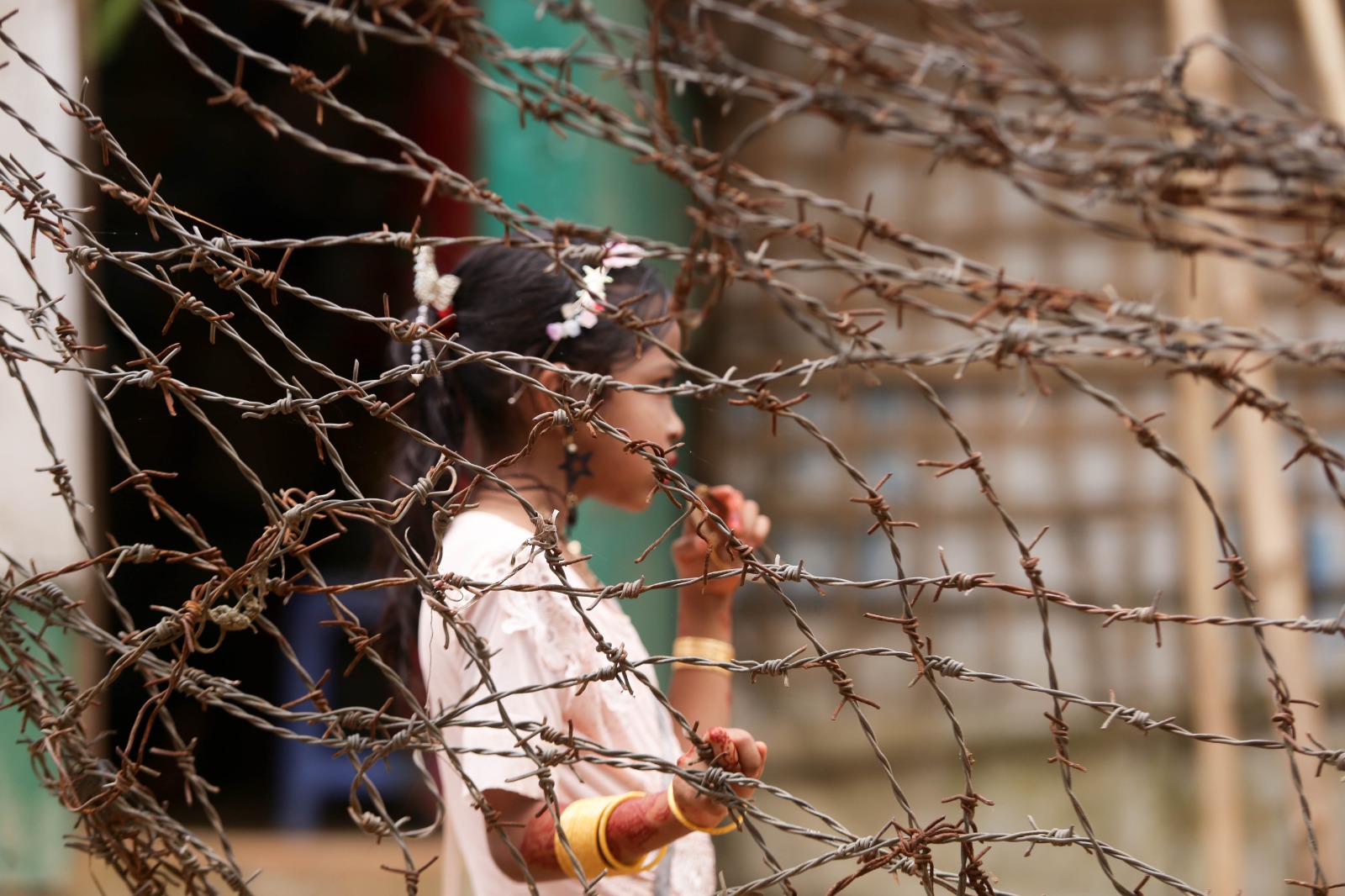
On a day when children elsewhere are filled with excitement and dressed in new clothes, the scene inside the Rohingya camps tells a very different story. Surrounded by barbed wire fences and heavy restrictions, these children live in silent confinement, their faces etched with melancholy rather than delight.
Even on this special day, they are unable to roam freely. There are no playgrounds, no open fields, no spaces for celebration. The absence of entertainment or organized festive activities turns the occasion into just another ordinary — and often isolating — day.
Though some children wear new clothes, a question quietly hangs in the air: where will they go, and who will see them? Their disappointment speaks volumes. Without parks, games, or cultural programs, they’re left to wander near their shelters or remain indoors, missing out on the childhood joy Eid is meant to bring.
Strict security and movement controls at the camps make it nearly impossible for the children to experience Eid outside the confines of their restricted world.
Organizations working on child rights have long emphasized the importance of play, freedom, and joy in the emotional development of children. Yet, in these camps, even the most basic of such rights remain out of reach.
On a day that symbolizes joy and unity, these children remain trapped — not just physically behind barbed fences, but in a silent psychological prison that highlights a deeper, ongoing humanitarian crisis.
By Abdur Rashid Manik
Photo: Hussain Shetu