
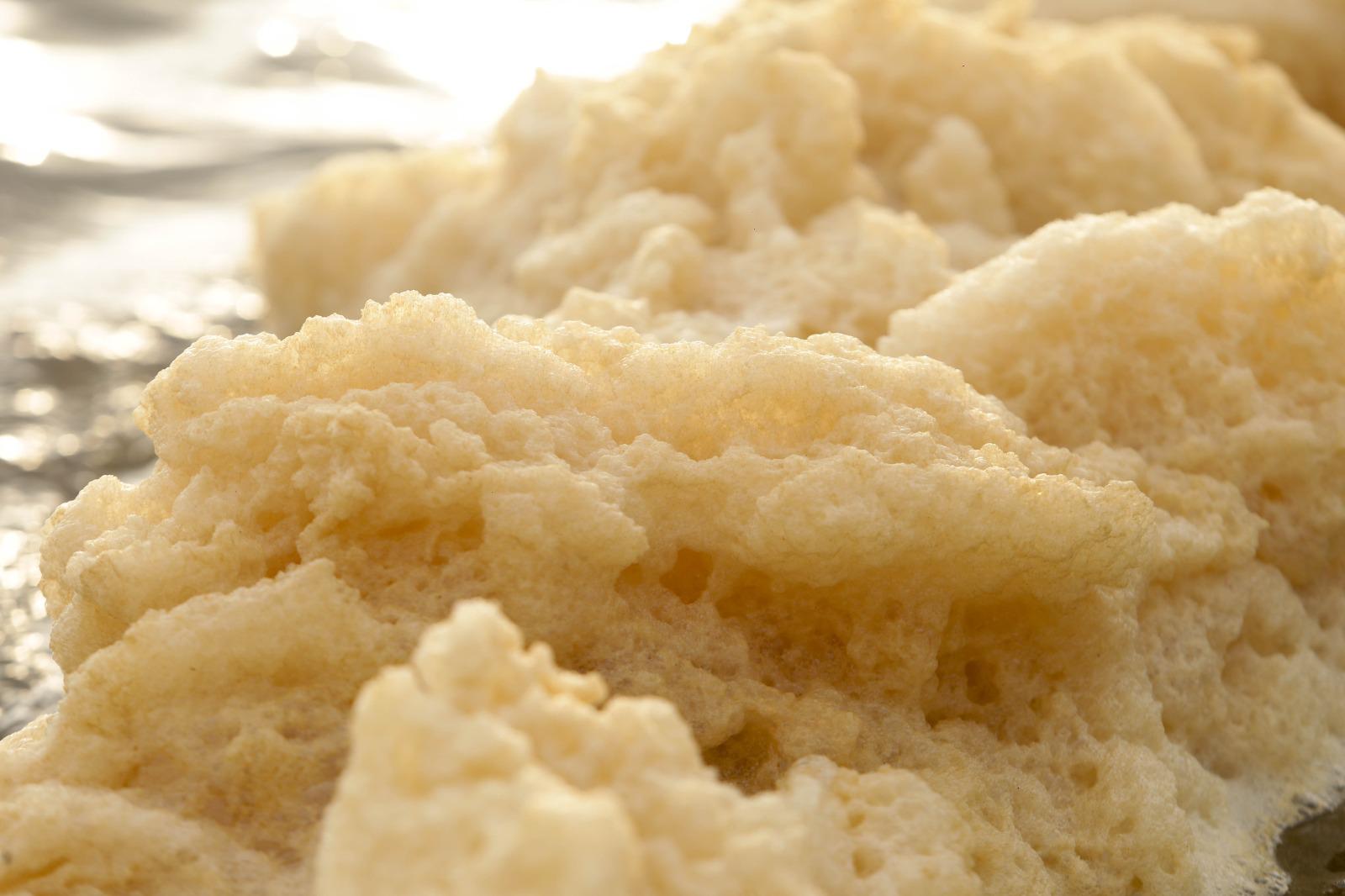
Along the coastal regions of Cox’s Bazar, a remarkable natural phenomenon known as marine foam can be observed. This foam forms at the surface of the sea when dissolved organic matter, such as algae or plankton remnants, mixes with the movement of air and water currents.
The dynamic action of the ocean waves transforms these organic particles into foam. While marine foam is usually white, it can occasionally take on a light brown or green hue due to the presence of algae or other substances.
This natural process plays a significant role in maintaining environmental balance and is essential for the marine ecosystem.
Environmental Impact of Marine Foam:
Marine foam is not just a natural occurrence; it has an important environmental impact. It is an integral part of the oceanic ecosystem, providing essential nutrients for marine life and contributing to the nutrient cycle.
Marine Foam and Human Life:
In human life, marine foam can have various effects. In some instances, it becomes an attractive natural spectacle for tourists, boosting the growth of coastal tourism industries. However, if the foam is made from polluted substances, it can pose health risks. Contaminated foam may cause skin and respiratory issues for those exposed to it.
The Future of Marine Foam:
The future of marine foam is uncertain due to the impacts of environmental change and pollution. Climate change and the increasing sea temperatures could alter the process by which foam is formed, potentially disturbing the natural balance that exists today.
By Mohammad Morshed
Photo: Hussain Shetu