
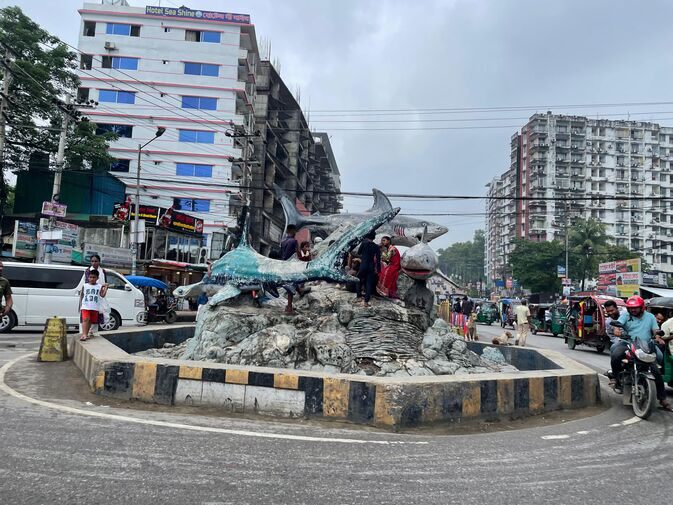
The clock struck eleven in the morning, yet the scene outside felt more like the fading light of dusk settling over the city. Heavy clouds blanketed the sky, and a light drizzle had kissed the streets just moments earlier. In such an atmosphere, anyone might wonder—is this really morning?
A certain melancholy lingered around, as though nature wished to slow down. The white and gray layers of cloud muted the daylight, while the cool breeze carried the damp, sweet scent of fresh rain, weaving a mood both somber and soothing.
Yet, against nature’s stillness, the city’s rhythm refused to pause. The rush of office-goers reminded everyone that morning was indeed underway. Some hurried on foot, others hopped into rickshaws, while cars ferried workers toward their destinations.
Tourist buses from Dhaka began arriving one after another, pulling into the city’s bustling zones. Sleepy-eyed passengers stepped down, some with cameras dangling from their necks, others adjusting backpacks as they hurried toward hotels. This movement painted a contrasting picture on the half-awake streets, where morning, evening, and night seemed to blur into the same canvas of busyness.
With its veil of gloom, nature attempted to set the tone, but the pulse of human necessity outshone it. This very contrast revealed the city’s essence: where the whims of weather ultimately bow before the demands of life and travel.
And so, under clouds and drizzle, a new day began in half-light that felt like twilight. A morning that looked like evening—yet carried within it all the pace, pulse, and roar of life.
Sometimes, nature bends the perception of time. But human life marches to its own rhythm, blending morning, afternoon, and dusk into one ceaseless flow.
By Abdu Rashid Manik
Photo: Abdu Rashid Manik