
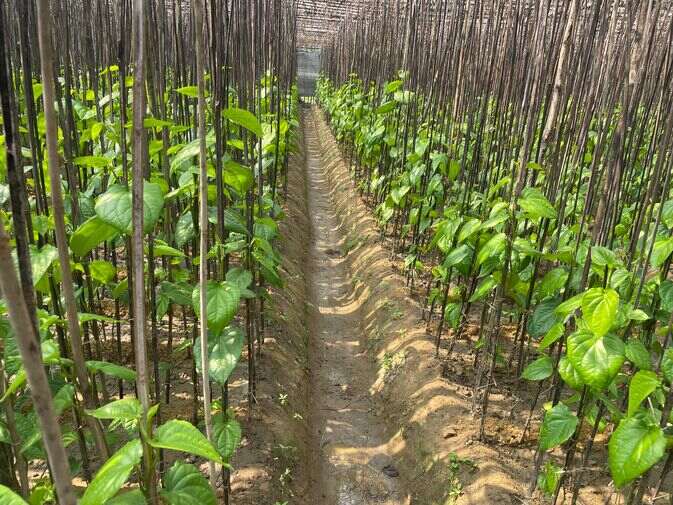
Moheshkhali, Bangladesh’s only hilly island, is widely known for its hills, sea, and natural beauty, as well as its distinctive sweet betel leaf or misti paan, which has earned nationwide recognition.
Renowned for its sweetness and unique aroma, Moheshkhali’s betel leaf has become one of the island’s most important cash crops.
Betel leaf cultivation in Moheshkhali is more than an agricultural activity—it is a heritage passed down through generations.
Thanks to the hilly terrain and unique soil composition, betel vines in the area can survive for two to three years, allowing experienced farmers to cultivate the crop with exceptional care and skill.
Large-scale betel leaf farming is practised on the hilly slopes and agricultural lands of Bara Maheshkhali, Hoanak, Kalamarchhara, Choto Moheshkhali, and Shaplapur unions.
Around 4,000 acres of land host more than 13,000 betel gardens, producing leaves that meet domestic demand and are also exported to several countries, including those in the Middle East.
Farmers say betel leaf cultivation continues throughout the year in hilly areas, while in agricultural lands it generally lasts about 9 months, from September–October through June.
After harvesting from the gardens, farmers sell the leaves at local markets, making it their primary source of livelihood.
Maheshkhali Upazila Agriculture Officer Md Abdul Gaffar said, “Due to varietal differences and unique soil characteristics, Maheshkhali’s betel leaf is much sweeter than those grown elsewhere in the country.
This is why it enjoys strong demand nationwide. Yields have been excellent this season, and farmers are receiving satisfactory prices.”
By Abdu Rashid Manik
Photo: Abdu Rashid Manik