

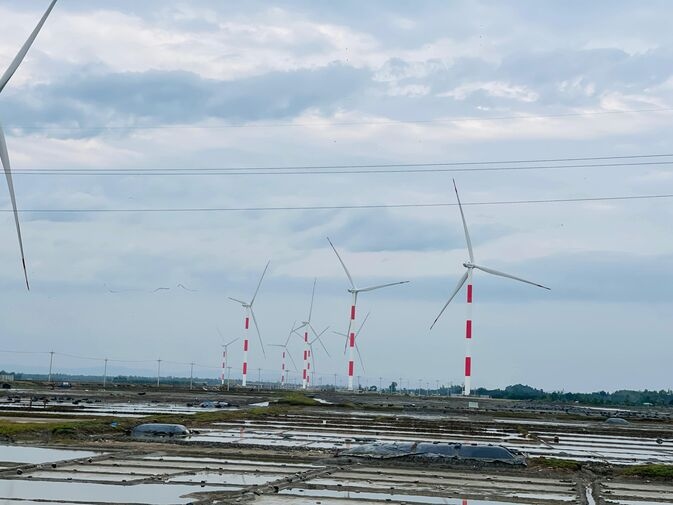
As global energy pressures continue to affect Bangladesh’s power sector, a quiet transformation is taking place along the coast of Cox’s Bazar, where wind is being harnessed to generate electricity for the national grid. The Khurushkul–Chaufaldandi wind power plant has emerged as a symbol of both technological progress and growing tourism interest in the region.
Launched on March 8, 2024, the project features 22 turbines, each with a capacity of 3 megawatts, bringing the total installed capacity to 60 megawatts. US-DK Green Energy BD Limited implemented the project, receiving financing support from China’s SPIC Weiling Power Corporation.
According to the Bangladesh Power Development Board, all electricity generated is directly supplied to the national grid. From March 2024 to February 2026, the plant has produced around 184 million units of electricity. On average, it has generated about 10 megawatts per hour, roughly 17 per cent of its installed capacity.
An official from the board’s Independent Power Producer Cell described the output as encouraging, noting that solar power projects typically operate at around 20 per cent capacity.
The project involved an investment of approximately $120 million. The government purchases electricity at a rate of 12 cents per unit, amounting to around $22 million in total purchases over two years. Officials estimate that it may take about a decade to recover the investment, while the turbines are expected to operate for nearly 20 years.
Despite its promise, the project faces challenges. Experts say initial expectations targeted a 23 per cent output rate, but recent variations in wind speed have led to lower-than-expected generation.
However, they believe the decline is likely due to temporary natural fluctuations and expect performance to improve as conditions stabilise.
A visit to the site shows that most turbines are operational, although seasonal variations are evident. Power generation tends to decline in winter when wind speeds drop and increase during the summer months.
Engineers say electricity generation begins at wind speeds of 3 metres per second and reaches full capacity at around 9 metres per second.
Unlike solar power, which stops at sunset, wind energy can be generated at any time of day as long as wind is available, particularly from afternoon through night.
From a land-use perspective, wind energy also offers advantages. While one megawatt of solar power requires about three acres of land, a 3-megawatt wind turbine needs only about 20 per cent of that area.
Experts believe Bangladesh’s coastal regions hold significant potential for wind energy.
Various national and international studies suggest that large areas of the country have suitable wind conditions, which could enable the generation of several thousand megawatts of electricity in the future.
By Mohammad Morshed
Photo: Mohammad Morshed