
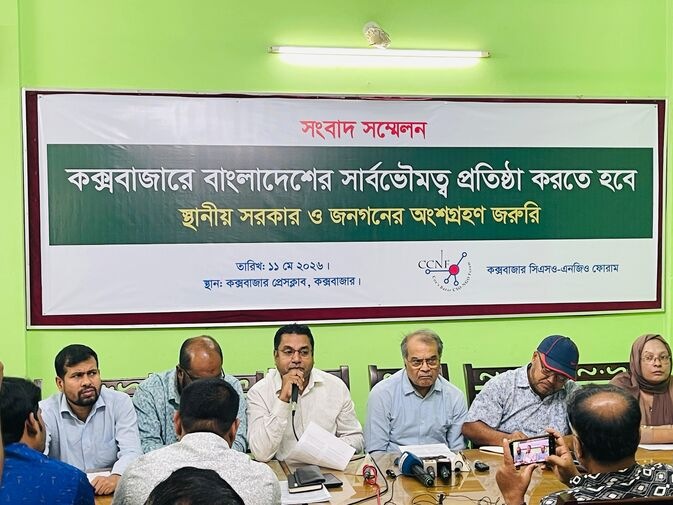
Local organisation Cox’s Bazar Civil Society NGO Forum on Monday raised a series of demands aimed at ensuring the interests, employment opportunities, and participation of local people in decision-making processes related to the Rohingya crisis.
At a press conference held at the Cox’s Bazar Press Club at 11:00am, the organisation called for greater importance to be given to the opinions and participation of local residents in all Rohingya-related activities and initiatives.
In its proposal, the organization said all Rohingya-related programs should be implemented only with approval from the local administration and the government.
It also demanded that no development or humanitarian activities be carried out without consulting local communities.
Among those present at the press conference were Rezaul Karim, CCNF member secretary Jahangir Alam and union parishad member Helal Uddin.
The organization alleged that limited local participation in fund management and various projects created inequality in the region.
It demanded greater transparency and accountability in the use of funds, alongside increased involvement of local institutions in project implementation.
CCNF also stressed the need to ensure employment opportunities for local residents working for NGOs and international organisations in the district.
It said the tendency to recruit employees from outside Cox’s Bazar should be reduced and priority should be given to skilled local manpower.
The organisation further demanded the inclusion of local government representatives and elected public representatives in the RCT framework for managing the Rohingya camps.
According to the organization, the involvement of local representatives, including members of parliament, is essential to protecting the interests of host communities.
The proposals also stated that frustration among local residents was increasing due to the lack of visible progress in the Rohingya repatriation process over the years.
In this context, the organization called for the formation of an effective Rohingya Repatriation Commission to oversee repatriation efforts and provide accurate information to local residents.
CCNF also emphasised the need for consultation with local NGOs, public representatives, and affected communities before any visits to Rohingya camps or major policy decisions.
The organization urged authorities not to implement any plans while disregarding the opinions of local residents.
It also claimed that the Rohingya crisis was having social, economic, and environmental impacts on the host community in Cox’s Bazar.
The organization demanded transparency and proper utilisation of the 25 percent support allocated for host communities, including the disclosure of expenditure details and beneficiary information.
Cox’s Bazar Life Report
Photo: Courtesy