
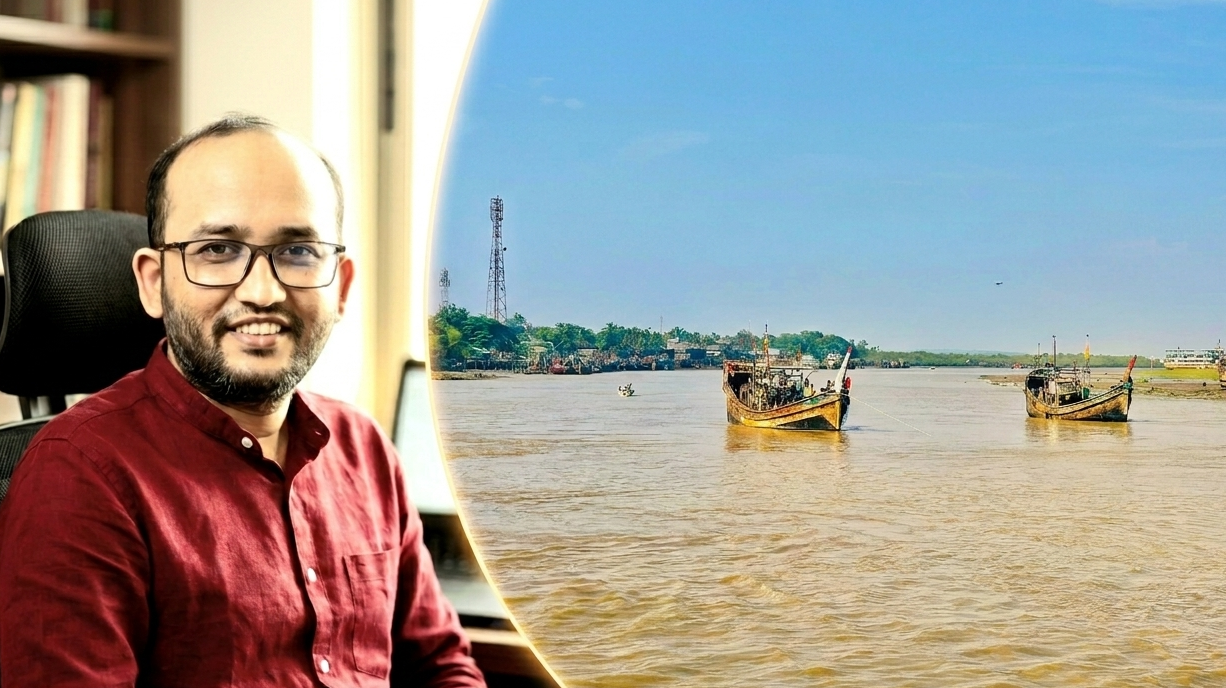
The Bakkhali River, flowing through the heart of Cox’s Bazar—the home of the world’s longest natural sea beach—is today a river in distress. Once regarded as the lifeline of the district and a vital environmental and economic artery, the river is now under relentless assault from pollution, waste dumping, and encroachment.
Its deteriorating condition is not merely destroying an aquatic ecosystem; it is gradually creating the conditions for a long-term environmental crisis across the entire region.
It must be remembered that the Bakkhali is not just another river. It is inseparably linked to the survival of Cox’s Bazar itself. If the river dies, the district’s environment, biodiversity and tourism economy will suffer irreversible damage.
Toxic waste poisoning water and soil
Over the years, the Bakkhali has effectively become a dumping ground for household waste, polythene, single-use plastics, market refuse, and even hazardous medical waste. Most of the city’s drains and canals discharge directly into the river without any form of treatment.
As a result, tonnes of solid and liquid waste enter the river every day, severely reducing dissolved oxygen levels and degrading water quality. The river’s once-rich fish resources are now on the verge of collapse.
The Bakkhali and its estuary were once important breeding grounds for numerous fish and crab species, as well as dolphins. Today, pollution and toxic contaminants have severely damaged the aquatic ecosystem. Many indigenous fish species are declining rapidly, while the polluted river water ultimately flows into the Bay of Bengal, threatening marine biodiversity, sea turtles, and other coastal wildlife.
Loss of mangroves weakens natural protection
The river basin was once lined with extensive mangrove forests, locally known as para forests. These forests played a critical role in preventing riverbank erosion and served as a natural shield against cyclones and storm surges.
Unfortunately, thousands of mangrove trees have been cleared recently to facilitate encroachment and unplanned development along the riverbanks. The destruction of this natural buffer has accelerated erosion, increased sedimentation, and made Cox’s Bazar more vulnerable to natural disasters.
At the same time, accumulated waste and sediment have reduced the river’s navigability and water-holding capacity. Even moderate rainfall now contributes to waterlogging and flooding in parts of Cox’s Bazar municipality and surrounding low-lying areas.
Salinity intrusion and water security concerns
The degradation of the Bakkhali is also affecting groundwater recharge processes. As the river becomes shallower and less able to maintain freshwater flow during the dry season, saline water from the sea is moving farther inland.
This increasing salinity poses a serious threat to freshwater resources in Cox’s Bazar and may eventually contribute to a severe drinking water crisis if effective measures are not taken.
Urgent action needed
Protecting the Bakkhali River requires immediate and coordinated intervention. Authorities must ensure proper waste management, prevent untreated wastewater from entering the river and undertake scientific river restoration programmes.
Simultaneously, authorities must take strong legal action against those responsible for river pollution and encroachment. Implement relevant court directives and recommendations from the National River Conservation Commission effectively and without delay.
Equally important is public participation. Local media, environmental organisations and ordinary citizens must work together to transform river conservation into a sustained social movement.
The future of Cox’s Bazar is closely tied to the future of the Bakkhali River. Protecting this river is not only an environmental obligation but also an investment in the district’s economic sustainability, public health, and long-term resilience.
HM Nazrul Islam
Organising Secretary, Bangladesh Poribesh Andolon (BAPA), Cox’s Bazar District