
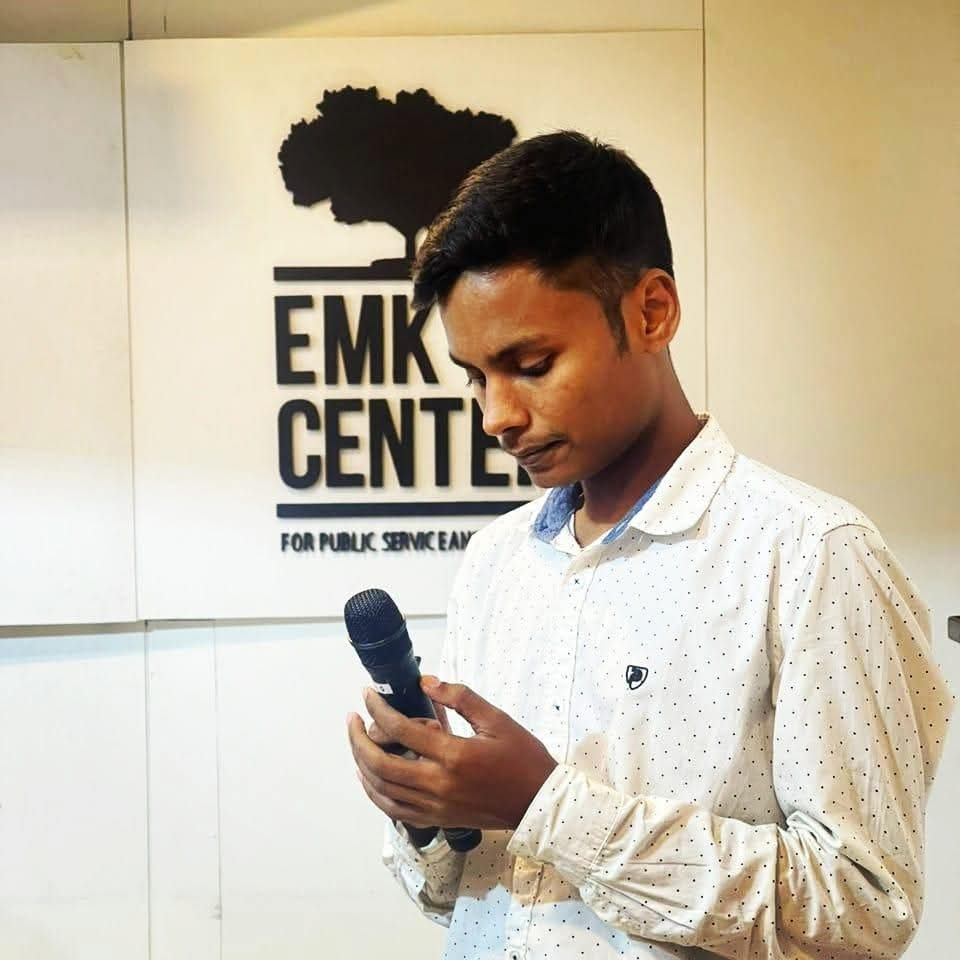
From coastal communities in Bangladesh to broader efforts to strengthen youth leadership, Shahrukh Karim has built his work around climate justice, environmental protection, social inclusion, peacebuilding, and community development.
A youth organiser, climate justice activist and development worker, Karim has strong ties to Maheshkhali in Cox’s Bazar, one of Bangladesh’s climate-vulnerable coastal areas. Coastal life, climate change impacts, and the daily struggles of marginalised communities have shaped his outlook and leadership.
For Karim, climate change is not merely an environmental crisis but a question of human rights, livelihoods, education, safe water, social justice and the security of future generations. He believes the most affected communities and young people must partner in decision-making and solution development, not just participate in discussions.
JYDA Bangladesh: A platform for youth leadership
Karim founded Youth Action for Justice and Development (JYDA Bangladesh), a government-registered, youth-led non-profit voluntary organisation working on climate justice, environmental conservation, youth empowerment, education, peace and social cohesion, civic participation and disaster-resilient communities.
Under his leadership, it has built a volunteer network of more than 100 people across the country, including more than 10 paid volunteers. Karim seeks to build an inclusive youth leadership structure by strengthening volunteers’ skills, accountability and teamwork, equipping young people to contribute to planning, implementation, research, resource mobilisation and accountable decision-making, not just participate in activities.
Climate justice and environmental action
Climate justice is a principal area of Karim’s work. His initiatives focus on the risks coastal communities face, environmental change, plastic pollution, threats to livelihoods, and the need for locally driven climate adaptation.
Through JYDA Bangladesh, he has been involved in awareness campaigns, tree planting and community-based initiatives. He has also contributed to Climate Memory Map: Stories of the Coast, Solutions for the Future, which documents coastal communities’ experiences, environmental changes and potential solutions.
Karim believes awareness alone is not enough; meaningful local participation, evidence-based initiatives, institutional cooperation and the inclusion of marginalised voices in policy discussions are also essential.
Youth empowerment, education and social cohesion
Karim’s work extends to education, leadership development and social cohesion. Through his previous initiatives, he has reached more than 2,000 students, young people, volunteers and community members through activities on climate education, leadership, child marriage prevention, social cohesion and capacity-building. For him, youth empowerment means creating opportunities for young people to identify community problems, develop solutions and lead change.
In peacebuilding, he emphasises inter-community dialogue, mutual respect and cooperation. In a diverse region such as Cox’s Bazar, he believes youth participation and community trust are essential to sustainable peace.
Disaster response and community support
In disaster-prone Cox’s Bazar, Karim has coordinated youth volunteers during emergencies, identified affected people’s needs, and supported relief distribution. He believes disaster preparedness, local leadership and volunteer training are equally important.
Partnerships and institutional development
JYDA Bangladesh strengthens youth leadership and civic participation through training, networking, and partnerships with local communities, youth networks, civil society, and development organisations. Karim is also interested in institutional capacity-building, including volunteer management, accountability and data protection. He believes long-term change requires not only good intentions but also strong institutions, transparent management and responsible leadership.
Recognition and future ambitions
Karim’s achievements include being a finalist for the Leaders Summit & Hero Award 2022, having ActionAid feature his work, and being recognised as the best team leader by the JYDA team.
His long-term ambition is a Bangladesh where young people play an active role in determining their future, climate-vulnerable communities enjoy fairer rights and opportunities, and local initiatives are better connected to national policymaking.
“I dream of building a Bangladesh where young people’s voices are not only heard but also translated into real change through their leadership and initiatives. For climate justice, social cohesion and sustainable development, we must connect local experiences with national decision-making.”
By Mohammad Morshed
Photo: Courtesy