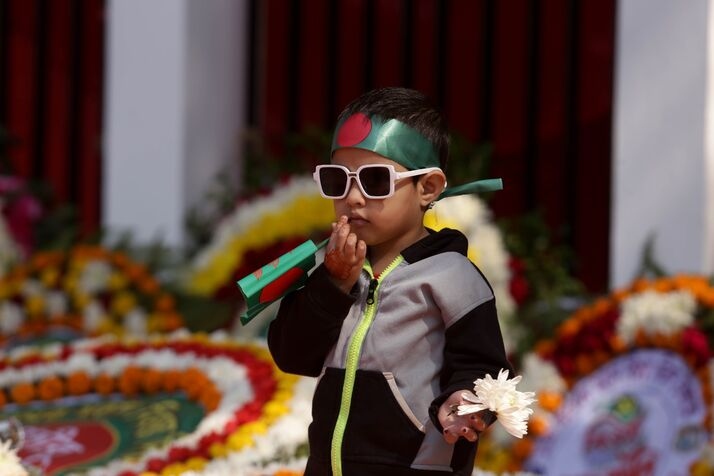
It is the morning of Victory Day. The premises of the Cox’s Bazar Central Shaheed Minar are filled with reverence and affection as people from all walks of life arrive with flowers to honour the martyrs of 1971. Amid the crowd, one sight stands out most vividly—the children.
They are wearing red and green and holding national flags in their hands. Their faces are full of excitement and curiosity.
The children are not just here to lay flowers; they are here to meet history for the first time, holding their parents’ and guardians’ hands. Some ask innocent questions—“What does ‘martyr’ mean?” “Why did the Liberation War happen?”—while parents try to explain, in simple words, the story of independence and a victory earned through sacrifice.
At times, a small child stands on the steps of the Shaheed Minar waving the flag proudly; at others, they gaze in wonder at the flower petals laid in tribute. Victory Day may not yet be fully understood by them, but the atmosphere of the day—the red-and-green celebration, the solemn respect—plants the first seeds of patriotism in their young hearts.
Mohammad Imran, a parent who brought his child to the Shaheed Minar, said, “They may not understand everything now, but the purpose of bringing them here is to help them feel the country. One day, when they grow up, they will know and understand why this day matters so much.”
With children’s laughter, excitement, and innocent joy, the Shaheed Minar premises seem even more alive. There is no sense of the horrors of war in their eyes—only pride and happiness. These children will one day grow up to carry forward the spirit of the Liberation War and protect the value of independence.
The child standing today at the Shaheed Minar with the red-and-green flag in hand may well represent tomorrow’s Bangladesh—a Bangladesh that knows its history, honours its martyrs, and proudly says, this country is mine.
By Abdu Rashid Manik
Photo: Hussain Shetu