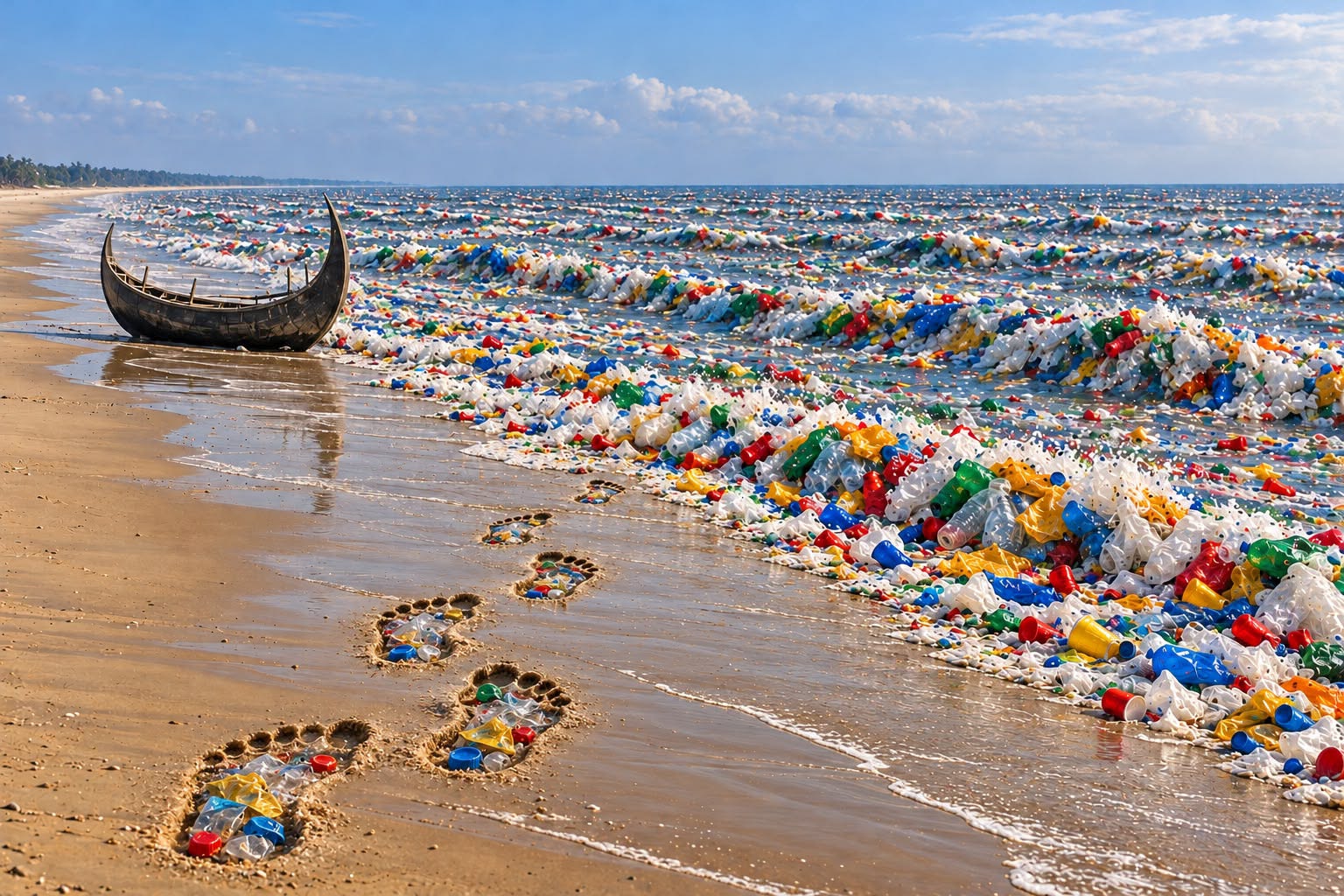
The sea sustains Cox’s Bazar’s tourism, fisheries and coastal livelihoods. Yet plastic waste accumulates along its shores every day. Bangladesh promises a thriving blue economy and world-class tourism. How credible are those ambitions when the institutions responsible cannot keep the beach clean?
BRAC’s 2024 baseline study estimated that 34.5 metric tons of plastic waste were mismanaged daily in Cox’s Bazar municipality. This is a failure of collection, disposal and oversight. The rubbish reaching the coast exposes the distance between national promises and local services.
Water bottles, polythene bags, food wrappers, disposable cups, cigarette filters and discarded fishing nets pollute the shore. Tourists contribute, but so do hotels, restaurants, markets, fishing vessels and waste carried downstream. Blaming visitors alone allows businesses and public authorities to escape scrutiny.
Marine animals swallow plastic, become entangled in abandoned nets and suffer habitat damage. Larger debris breaks down into microplastics, spreading contamination. Concerns about long-term human health effects are growing. Damage to the sea threatens the food supplies, livelihoods and natural surroundings on which tourism depends.
Bangladesh introduced its ban on thin plastic shopping bags in 2002. Existing restrictions provide grounds for action; enforcement must be consistent. The European Union’s approach combines prohibitions on selected products with collection requirements and producer responsibility. Cox’s Bazar needs the same connection between restrictions and practical waste management.
Unnecessary single-use plastics should be phased out, beginning at major beach entrances and busy tourist areas. Restrictions on disposable plastic bottles, cups, plates and bags must follow the provision of safe drinking-water refill points and affordable alternatives. Designated vending areas with collection facilities would help beach sellers comply without sacrificing their livelihoods.
Hotels, restaurants and shops must separate waste and arrange proper collection. Drain traps should intercept rubbish without obstructing water flow and must be cleaned regularly. Fishing vessels need facilities ashore for returning damaged nets and other waste.
One-day cleanup campaigns and enforcement drives staged for publicity will not resolve this crisis. Authorities must assign responsibilities, enforce existing laws and prepare businesses for new restrictions. Success must be measured by reduced waste, not fine revenue.
Quarterly public reports should show changes in beach litter, business compliance and waste intercepted before reaching the sea. Without transparent reporting, accountability remains a slogan. If Cox’s Bazar cannot protect its beach, the blue economy will remain another promise on paper.
By Salam Abu
Editor