

Cox’s Bazar’s tourism success cannot be measured by visitor numbers or hotel revenues alone. The more telling question is how much reaches betel leaf farmers, dried-fish workers and fishing families along the coast. Community-based tourism could give them a fairer share of the blue economy.
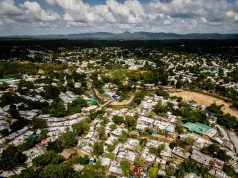
Tourism remains concentrated in beachfront districts. A hotel owners’ association estimates that more than eight million tourists visited in 2025, although reliable official figures are unavailable. Kolatoli reportedly has 538 accommodation establishments within three square kilometres. Yet nearby communities’ livelihoods and traditions receive limited attention in tourism planning, leaving opportunities for broader participation untapped. Tourism should create markets for village products and services, not merely draw visitors to established hotels.
Maheshkhali’s betel leaf gardens, salt fields, dried-fish yards and traditional fishing boats could offer experiences beyond the beach. Comparable bundles of betel leaves reportedly sell for Tk200–300 locally and Tk500–600 in Dhaka. Tourism cannot resolve this price gap, but farm visits, direct purchases, local food and community-led tours could supplement rural incomes.
Participation, however, is not community control. A 2025 study in Forest and Society found that only three of 53 government-recognised homestay communities in north-eastern Thailand—5.7 per cent—met its criteria for community-based tourism. Without local ownership, decision-making power and transparent revenue-sharing, outside operators may capture the profits while villagers provide the labour. Residents must also control how their traditions are presented, with consent and cultural dignity protected.
Homestays could contribute, but should not define the model. Hotel operators may fear losing customers, a concern worth addressing. Yet demand fluctuates between holiday peaks and quieter months. Managed homestays could provide additional accommodation during holidays. Their greater value, however, lies in connecting visitors with local livelihoods, food and culture. Families need earnings beyond room rentals, especially when occupancy falls outside the peak season.
A practical start would be a one- to two-year pilot involving 100–150 families in selected parts of Maheshkhali, Ramu and Teknaf, subject to safety and environmental screening. Independent evaluation should measure net household income, tourism revenue retained locally, women’s participation and environmental impact. Expansion towards 1,000 families should follow demonstrated results, not publicity.
The district administration should coordinate site selection and safety; the Bangladesh Tourism Board, training and marketing; local government and community committees, participation and accountability; and the Department of Environment, ecological assessment and approvals. Public funding, development partners or suitable small loans could finance the pilot, but commitments and clear responsibilities must precede implementation.
Teknaf’s border insecurity and conditions near Rohingya camps require careful screening; unsafe sites must be excluded. Sonadia, designated an Ecologically Critical Area in 1999, requires conservation and legal safeguards before any tourism development.
Coastal communities must become partners in Cox’s Bazar’s tourism success, not merely the backdrop against which it unfolds.
By Salam Abu
Editor