The Bakkhali, the main river flowing through Cox’s Bazar, has long played a vital role in protecting coastal settlements and sustaining local ecosystems. Its banks were once covered by green mangrove belts that helped shield communities from natural disasters, while the river supported a wide variety of native fish.
However, encroachment, pollution and other environmentally harmful activities have pushed the river into a serious crisis. Speakers at a discussion in Cox’s Bazar on Wednesday said restoring the river requires proper implementation of High Court directives as well as political and administrative commitment.
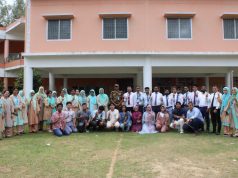
The Bangladesh Environmental Lawyers Association (BELA) organised the discussion titled “Bakkhali River devastated by encroachment and pollution: What should we do?” in Cox’s Bazar city to discuss protecting the river and implementing the High Court judgment. Cox’s Bazar Civil Society president Abu Morshed Chowdhury Khoka chaired the event.
BELA legal coordinator and Supreme Court lawyer S Hasanul Banna presented the keynote paper.
District Fisheries Officer Md Nazmul Huda, Department of Agricultural Extension deputy director Dr Bimal Kumar Pramanik, Cox’s Bazar Municipality executive engineer Parakram Chakma, Bangladesh Water Development Board sub-assistant engineer Atikul Rahman and Cox’s Bazar Sadar Upazila assistant commissioner (land) Md Mashiur Rahman spoke at the event. River and environmental experts, journalists and civil society representatives also attended.
Environment activist Shantunur said parts of the riverbank at Kostura Ghat, which had been occupied after mangrove forests were cleared, were later freed from encroachment, but the mangrove vegetation had not returned.
He called for steps to restore the mangrove forest in the area.
Sunil Barua, Cox’s Bazar correspondent of Maasranga Television, said illegal sand extraction was continuing in the Chengrakhata area of Ramu along the Bakkhali, alongside tobacco cultivation.
He urged the authorities to stop both activities.
Journalist Sourav Deb alleged that government institutions were providing different forms of legitimacy to illegal occupants. He referred to electricity connections being provided to encroachers and land revenue allegedly being collected by the assistant commissioner (land) office.
Dr Bimal Kumar Pramanik said immediate steps were needed to address all major problems facing the Bakkhali before they became too difficult to resolve.
“Clean river water is essential for people, as well as for crop production,” he said, stressing the need to free the river from pollution.
District fisheries officer Md Nazmul Huda said 35 fish species and 10 other aquatic species were found in the Bakkhali.
“These species will disappear soon if the river is not freed from pollution,” he said, adding that liquid waste entering the river was contaminating its water and affecting the food chain.
He also called for restoring the river’s navigability.
Sadar Upazila assistant commissioner (land) Md Mashiur Rahman spoke about coordinated action among government agencies against sand extraction, hill cutting and river encroachment and pollution in Cox’s Bazar.
He urged journalists to identify and report people involved in activities that damage the environment.
Chairing the discussion, Abu Morshed Chowdhury Khoka described the Bakkhali as a glaring example of a human-made environmental disaster.
He said the Water Resources Ministry’s project for protecting the river should be widely discussed in the public sphere.
He also stressed the need to properly preserve areas that had previously been freed from encroachment.
“Unless the Bakkhali is freed from encroachment and its navigability restored, the city may face various risks, including waterlogging,” he said.
Cox’s Bazar Life Report
Photo: Courtesy