

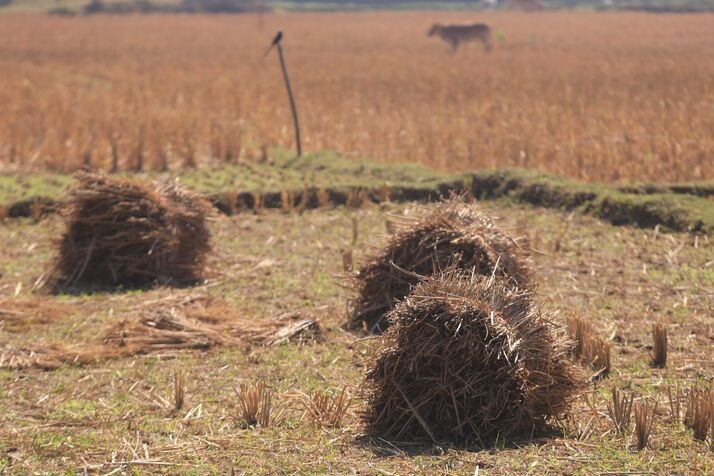
Agriculture in Cox’s Bazar is gradually transforming as changing weather patterns make farming increasingly uncertain. Fields that once produced seasonal crops now face erratic rainfall, prolonged dry spells and rising soil salinity. These changes affect not only what farmers grow, but also when they plant, how they irrigate, and how they sustain their livelihoods.
The district’s coastal areas, hillsides and plains support rice, vegetables, fruits and various cash crops, and farmers have developed generations of experience in working with the local climate and soil. But that familiarity is becoming less reliable as traditional farming calendars come under pressure.
The challenge is not simply declining production. It is a growing mismatch between established farming practices and increasingly unpredictable environmental conditions. Farmers must now decide on crops, planting schedules, and irrigation with greater uncertainty than before.
Erratic rainfall disrupts farming cycles
Excessive monsoon rain, combined with runoff from the hills, can inundate low-lying farmland, and prolonged waterlogging damages standing crops and soil conditions. At the other end, extended gaps between rainfall leave fields short of water. The problem is particularly acute in the dry season, when irrigation demand rises, but access to sufficient water is not assured.
Such uncertainty complicates decisions once guided by seasonal experience. Farmers must consider whether to sow earlier or later, which crops will withstand prevailing conditions, and when irrigation will be needed. A change in rainfall can therefore affect an entire production cycle, not just a single crop.
Salinity puts coastal farmland under pressure
Tidal water, saline intrusion and declining soil moisture in the dry season can raise salt concentrations in coastal farmland. Excessive salinity can restrict seed germination, hinder plant growth and reduce yields, so land once suited to particular crops may become less productive or need different cultivation methods.
The implications go beyond lost crops. Farmers may have to invest more in irrigation, soil management and alternative seeds, adding to costs at a time when their income is already exposed to weather risks.
Expanding salt-tolerant rice varieties and suitable vegetables could help. Still, such decisions need to be based on local soil conditions, irrigation water quality and the suitability of crops for individual areas. Without reliable information and technical support, changing crops can itself become a costly gamble.
Crop choices are changing, but adaptation has limits
Farmers in different parts of the district are increasingly considering vegetables, fruits, short-duration crops and other alternatives alongside traditional cultivation. Crops requiring less irrigation may suit water-scarce areas, while short-duration varieties let farmers complete a production cycle in a narrower window and reduce exposure to weather risks.
However, changing crop patterns is not simply a matter of replacing one seed with another. Land characteristics, market demand, seed availability, production costs, and access to buyers all determine whether an alternative is commercially viable. A crop that withstands local weather may still fail to provide a reliable income if farmers cannot sell it at a reasonable price.
This highlights a gap in climate adaptation: agricultural advice must address both environmental suitability and economic viability. Farmers need to know not only what they can grow, but whether growing it will sustain their livelihoods.
Small farmers face greater exposure
When crops are damaged by flooding, excessive rain or drought, farmers lose income and may struggle to finance the next planting season. Rising prices of inputs, labour and irrigation add to the pressure.
Small and marginal farmers are particularly exposed, as they often have limited savings, fewer alternative income sources, and less capacity to absorb repeated losses.
A single failed harvest can affect their ability to buy seeds, fertiliser and other inputs for the following season. The pressure can extend to rural employment, household income and food security, making climate change a livelihood and economic concern as well as an agricultural one.
Adaptation requires more than changing crops
Making agriculture resilient will require a combination of measures. Salt-tolerant and drought-tolerant varieties, improved irrigation, rainwater harvesting and better drainage can reduce some risks.
Equally important is timely, locally relevant weather information. Forecasts are useful only when farmers can understand them and translate them into decisions on sowing, harvesting and irrigation. Regular agricultural advice, soil salinity testing and information on water quality can help farmers select crops suited to their land.
Research and modern technology also need to be connected with farmers’ practical experience. Solutions developed for one part of the district may not work in another, given the differences between coastal land, hillsides and plains, so adaptation plans must reflect local conditions rather than a uniform approach.
Support after climate-related disasters is another consideration. If farmers cannot recover quickly from a damaged harvest, even suitable adaptation measures may remain out of reach. Affordable inputs, technical assistance and timely recovery support can prevent temporary losses from becoming long-term livelihood crises.
The future of coastal agriculture
The extent of climate change’s impact will depend partly on how effectively farmers and institutions respond. Changes in crop selection, water management and cultivation practices can reduce exposure, but they require investment, reliable information and sustained institutional support.
The district’s agricultural future cannot be secured by asking farmers to adapt on their own. Research institutions, agricultural extension services, local authorities and market actors all have a role in making adaptation practical and affordable.
Agriculture remains an important source of food, employment and income in Cox’s Bazar, so protecting it is essential for the district’s wider rural economy and food security. The challenge is to move beyond short-term responses to weather-related losses and build a farming system that can adjust to changing conditions.
By Delwar Hossain, Pekua