
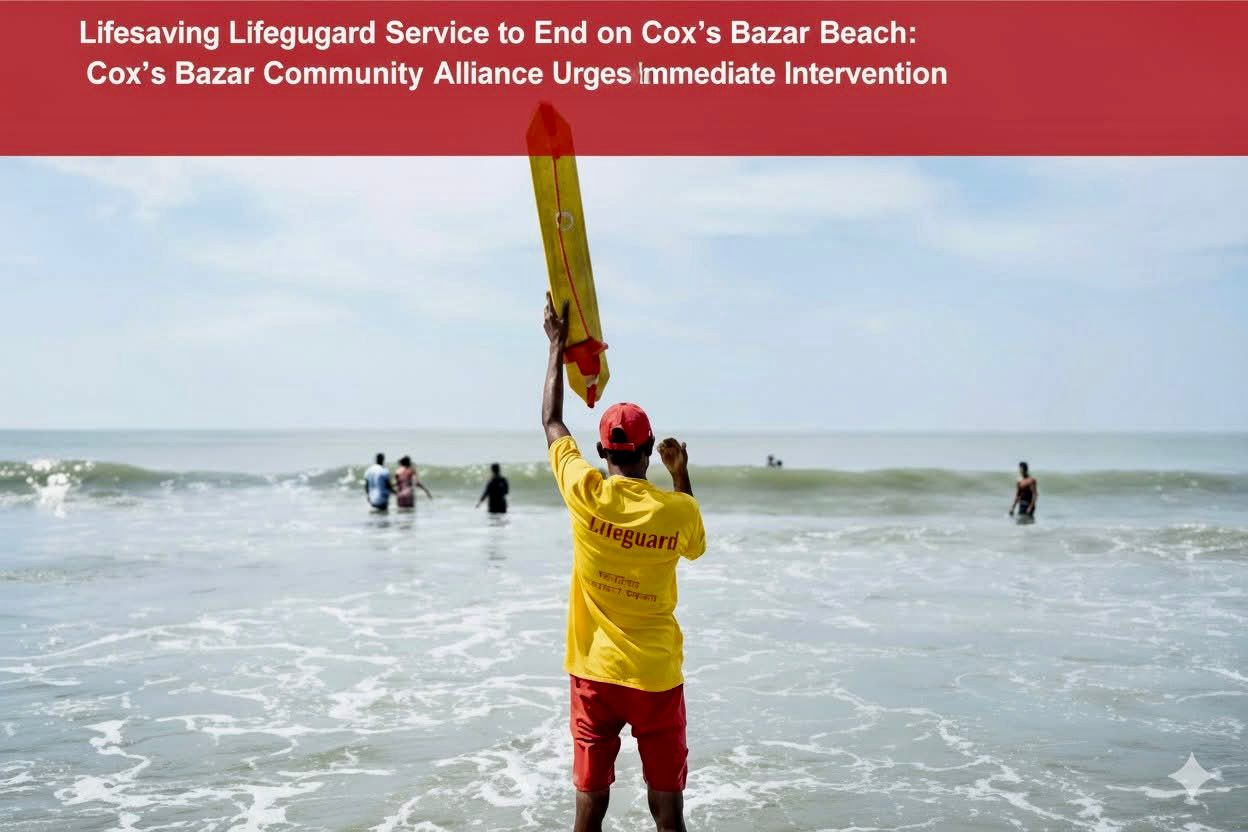
The decision to halt lifeguard services at Bangladesh’s premier tourist destination, Cox’s Bazar beach, has sparked serious concerns over visitor safety.
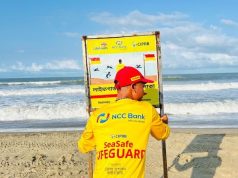
The Sea Safe Lifeguard program, funded by the Royal National Lifeboat Institute (RNLI) and overseen by the Centre for Injury Prevention and Research Bangladesh (CIPRB) since 2012, is scheduled to cease operations from September 30.
Experts warn that this could pose a significant threat to the country’s tourism sector and the safety of millions of visitors.
Since its inception in 2014, 27 trained lifeguards have worked across three major beach points.
Their efforts have saved 795 tourists from inevitable death between 2015 and July 7. Unfortunately, 63 tourists lost their lives during the same period.
Last year alone, lifeguards rescued 143 people—the highest in a decade—while 12 tourists died. In the first six months of this year, 11 fatalities and 53 rescues have already been recorded, highlighting the critical importance of the service.
The government’s proposal to shift the financial responsibility for lifeguard operations to hotel owners is deemed impractical.
With nearly seven million domestic and international visitors annually, lifeguard services cannot depend on private or commercial entities—they are a national responsibility, falling squarely under the Ministry of Tourism.
The Cox’s Bazar Community Alliance emphasized that lifeguard services are essential public safety measures, not commercial offerings.
They called on the government to establish a permanent fund immediately, place the service under direct ministry oversight, and implement long-term strategies.
“Tourism thrives on trust and safety; without them, Cox’s Bazar’s dream of world-class tourism could collapse,” the alliance warned.
By Mohammad Morshed
Photo: Mohammad Morshed