

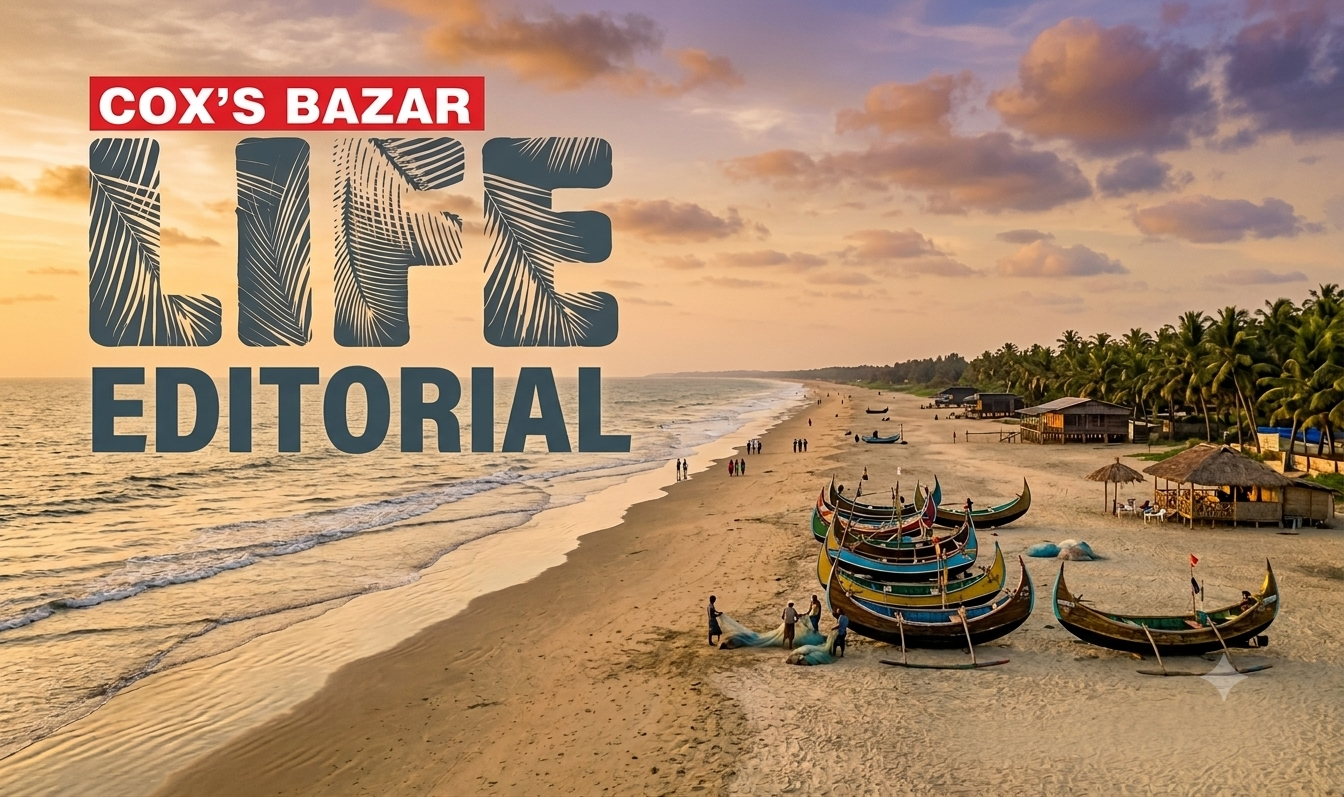
The sea off Cox’s Bazar is not merely a source of beauty and tourism; it is also the livelihood of a vast population and a vital pillar of Bangladesh’s fisheries economy. The recent capsizing of a fishing trawler near Sonadia-Nazirar Tek, which left two fishermen dead and two others missing, therefore cannot be treated as an isolated accident.
Bangladesh has more than 1.7 million registered fishermen. Protecting such a large population cannot be reduced to rescue operations after disasters occur. The more fundamental question is whether we are doing enough to identify and manage risks before an accident takes place.
Our proposal, therefore, is not another long-term plan to be placed in a file and revisited later. It is an urgent call for action—now. Every fisherman going to sea must be brought under a reliable registration and information system. Authorities should know who has gone to sea, on which vessel, and when they are expected to return. Such a system would not only strengthen rescue operations but also help establish the identity and status of missing fishermen and ensure that their families can access whatever assistance they are legally entitled to. It would also make age verification possible and help prevent children from being exposed to hazardous fishing work.
Every fishing vessel must, likewise, be equipped with functioning GPS and reliable communication systems. Installing a GPS device and leaving it unchecked is no solution; its functionality must be regularly verified. The problem is particularly serious because weather warnings often fail to reach fishermen already at sea. Issuing a warning is not enough. A warning is meaningful only when it reaches the person whose life depends on it.
Mandatory vessel fitness certification must also be enforced, covering structural integrity, carrying capacity, engines, communications, life jackets and emergency equipment. Regular as well as surprise inspections should be conducted, and no unfit vessel should be permitted to sail.
But safety cannot be separated from livelihood. When rough weather keeps fishermen ashore for several days, many face immediate financial hardship. An officially supported Fishermen’s Safety and Livelihood Fund, financed through modest contributions from registered fishermen alongside government support, could provide emergency assistance or short-term livelihood loans during such periods.
There is also a deeper question of accountability. Fishermen bear the greatest physical risk in a value chain from which vessel owners, intermediaries and traders derive income. Yet their safety is too often treated as an additional cost rather than a fundamental obligation.
There is no time to wait for the next fishing season, the next committee, or another tragedy. Action must begin now. Issuing a warning is an administrative responsibility; ensuring that fishermen receive it and have the means to act upon it is a responsibility of the state.
The sea may sustain an economy. It must never be allowed to sustain it at the cost of fishermen’s lives.
By Salam Abu
Editor