
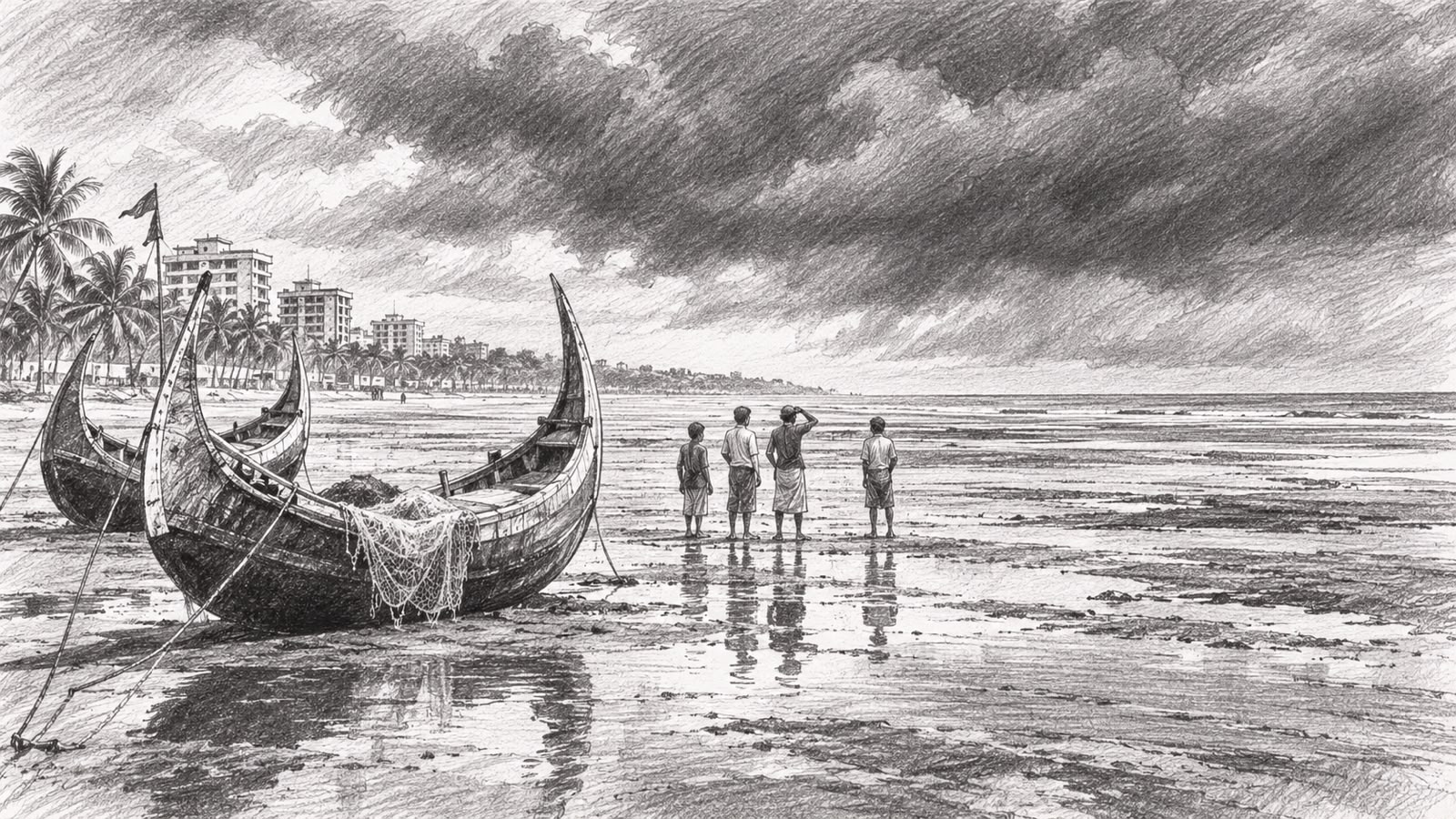
Every year, World Tsunami Awareness Day on 5 November reminds coastal communities that preparedness cannot wait. For Cox’s Bazar, where the sea sustains tourism, livelihoods and the regional economy, the message is urgent. The waters that define this coastline could also bring catastrophe.
The Arakan Subduction Zone in the eastern Bay of Bengal poses a significant seismic threat. A powerful earthquake could trigger a destructive tsunami. ThinkHazard classifies Cox’s Bazar’s tsunami hazard as moderate, estimating roughly a 10 per cent probability of a damaging event within 50 years. Accounts of the 1762 Arakan earthquake and coastal flooding reinforce the warning.
Today, much more is at stake. Hundreds of hotels, resorts and businesses have made Cox’s Bazar Bangladesh’s leading seaside destination. A 2020 estimate cited in a Japan International Cooperation Agency (JICA) report put annual tourism-related economic activity at approximately US$1.3 billion. A major tsunami could endanger this economic foundation, coastal aquaculture and thousands of livelihoods.
Yet how prepared is Cox’s Bazar?
A locally generated tsunami can reach shore within minutes, leaving little time to evacuate. A 2007 BRAC study found weaknesses in evacuation arrangements following a tsunami warning in southeastern Bangladesh. Nearly two decades later, authorities should demonstrate what has improved, particularly as peak seasons draw large crowds to the beachfront.
Recognising natural warning signs can save lives. Strong or prolonged ground shaking, a sudden retreat or rise in sea level, or an unusual ocean roar may signal an approaching tsunami. People should immediately seek higher ground or move inland, without waiting for an official alert. But do visitors and hospitality workers know how to respond? Every beachfront hotel should be able to answer that question with a practical evacuation plan, not merely a notice displayed in the lobby.
Cox’s Bazar needs a coordinated preparedness strategy, not another declaration of concern. Authorities should publish an updated assessment of evacuation routes, accessible shelters, warning systems and emergency response capacity. Clearly marked routes, multilingual instructions and regular drills are essential, including exercises that account for children, older people and visitors unfamiliar with the area. Hotels and resorts must maintain evacuation plans and train staff to guide guests. Disaster management agencies, local authorities and tourism operators need defined responsibilities, while land-use planning must prevent unsafe development in exposed areas.
The 2026 World Tsunami Awareness Day message, “Be Tsunami Ready: Resilience Starts With You”, stresses individual responsibility. Yet awareness alone cannot replace institutional readiness. Government, businesses and communities must prepare together.
No one knows when a tsunami might strike. But uncertainty cannot justify delay. The future safety of Cox’s Bazar depends on the decisions we make today.
By Salam Abu
Editor