
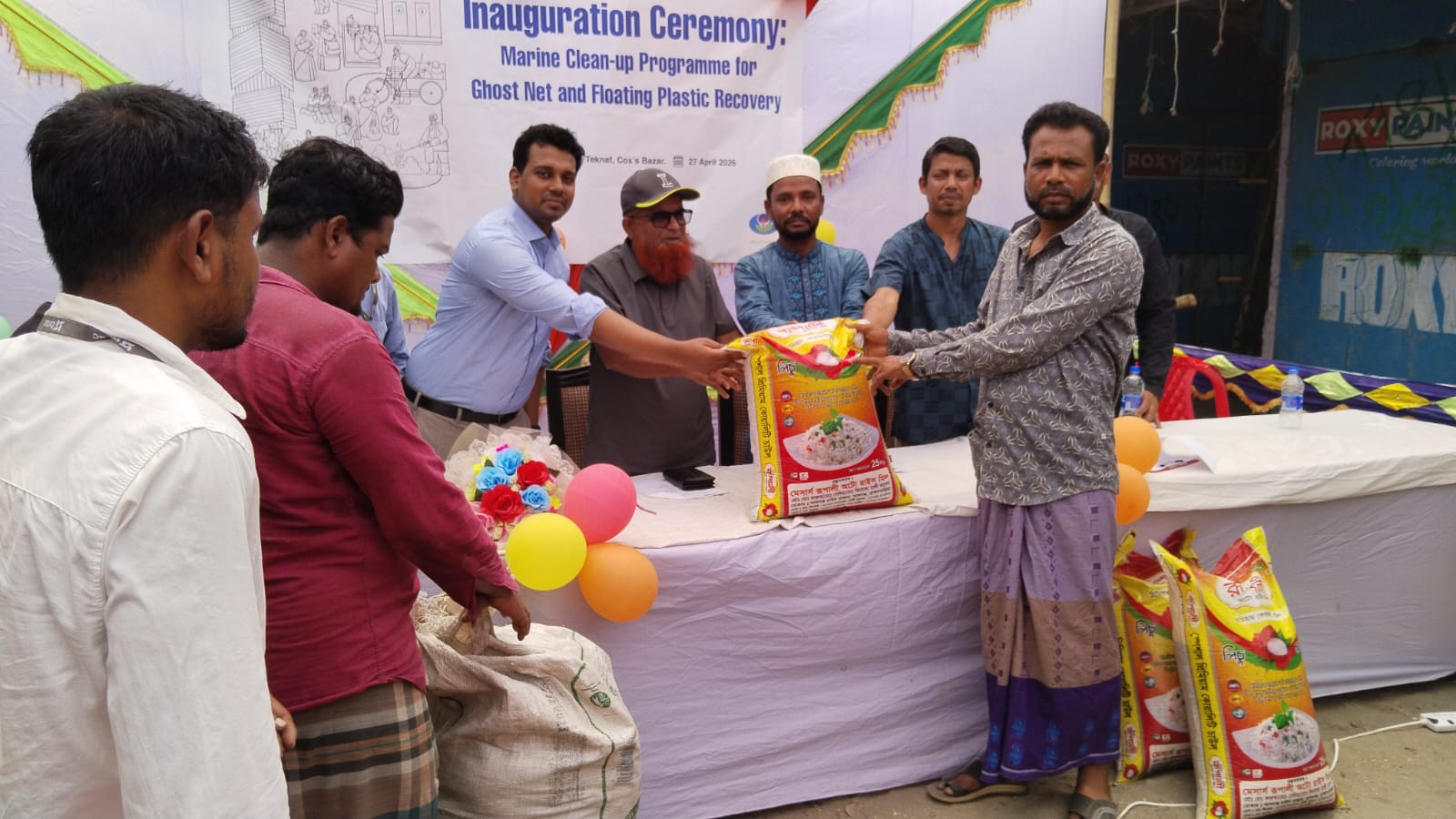
A campaign to protect marine biodiversity and the coastal environment was officially launched on St Martin’s Island, focusing on the collection of abandoned fishing nets—commonly known as “ghost nets”—and floating plastic waste.
The Department of Environment and BRAC are jointly implementing the initiative.
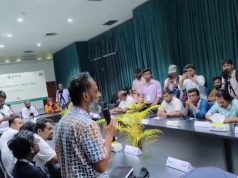
Project Director Mohammad Kamrul Hasan of the Department of Environment, Chattogram, virtually inaugurated the programme on Monday (April 27).
Special guest Mohammad Abdul Latif Jony, Assistant Director of the Cox’s Bazar Department of Environment, also spoke at the event.
BRAC representatives included Green Initiatives Specialist Anwar Iqbal (Dhaka), City Coordinator Mostak Ahmed (Cox’s Bazar), and Project Coordinator Mongwanline (St Martin’s). Local leaders including St Martin’s BNP president Nurul Alam Arman and youth leader Ali Haider were also present.
Around 50 fishermen took part in the initial phase of the campaign, collecting approximately 150 kilograms of abandoned fishing nets.
Speakers said ghost nets and marine plastic waste pose a serious threat to biodiversity, often trapping and killing turtles and other marine species, disrupting ecological balance. They stressed the importance of engaging fishing communities in removing such harmful materials.
The initiative is part of the “Climate Change Impact Mitigation and Biodiversity Conservation in St Martin’s Island” project, implemented by BRAC under the supervision of the Department of Environment and funded by the Bangladesh Climate Change Trust Fund. The long-term goal is to transform the island into a “zero waste island.”
St Martin’s, the only coral island of Bangladesh, is known for its natural beauty and rich biodiversity. However, it is increasingly under pressure from climate change and waste mismanagement. During peak tourist seasons, it generates an estimated 2–3 tons of waste daily, much of which is not properly managed, impacting both the environment and public health.
Under the project, activities include training local communities and stakeholders, raising tourist awareness, regular waste collection and management, infrastructure improvement, and marine cleanup operations.
A buy-back scheme has also been introduced, allowing fishermen to deposit their collected nets and plastic waste at designated centers in exchange for incentives. This is expected to reduce marine pollution while creating additional income opportunities for local fishermen.
At the end of the program, rice was distributed among participating fishermen in exchange for collected waste, which the organisers said would further encourage community participation in the initiative.
Cox’s Bazar Life Report
Photo: Courtesy