

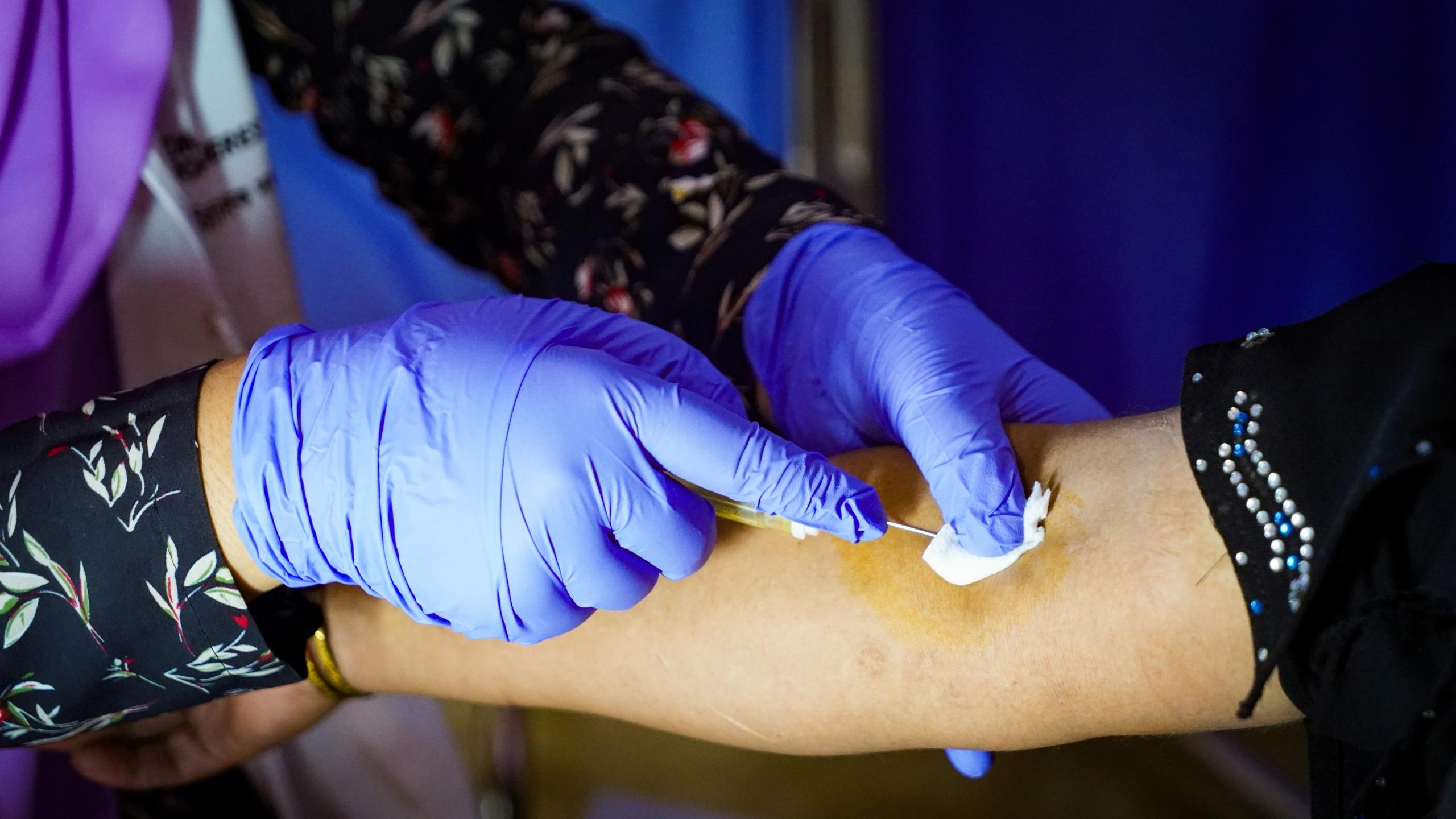
To address concerningly high levels of hepatitis C in the Rohingya refugee camps in Cox’s Bazar, Bangladesh, 30,000 people will receive care by the end of 2026 as Médecins Sans Frontières (MSF) significantly expands its treatment programmes.
The initiative improves access to hepatitis C care for a group of stateless people who are particularly exposed to this curable, but potentially fatal, disease. MSF is establishing three specialized hepatitis C treatment centres within existing health facilities inside the camps, as part of a “test and treat” campaign covering an estimated third of all people living with hepatitis C in the camps.
Between October 2020 and December 2024, MSF treated over 10,000 people for hepatitis C at our clinics in the camps in Jamtoli and Hospital on the Hill.
However, a 2023 MSF study published last month in The Lancet Gastroenterology & Hepatology found that nearly one in five adults—an estimated 86,000 people—are living with chronic active infection, highlighting the urgent need for a more robust response.
“Access to hepatitis C care in the camps, where more than a million refugees have been living for the past eight years, has been extremely limited,” says Dr. Wasim Firuz, MSF deputy medical coordinator.
“Treating hepatitis C is not part of the package of healthcare provided by over-stretched health care facilities. People are also not allowed to freely leave the camps to access healthcare, and even if they could, it’s unlikely they would be able to afford the cost of treatment.”
By Abdur Rashid Manik
Photo: Courtesy